

Last updated: March 27, 2026
Seeing your dog suffer from acid reflux, vomiting, or stomach ulcers is heartbreaking. As a dog guardian with a Ph.D. in Immunology and 10+ years caring for 30+ street dogs (plus my current pack — Delta, Zeus, and Alpha), I know how quickly gastrointestinal issues can affect quality of life. The worst thing for a dog guardian is seeing their pup sitting in a corner, not engaging or playing, and unable to voice what’s bothering them. Dogs are not immune to gastrointestinal issues.
Their tendency to put everything in their mouth also adds to this problem. Gastrointestinal issues can cause some serious discomfort and health complications, and can be fatal if not treated soon. Omeprazole is a human medication that can be given to dogs suffering from gastrointestinal issues. In this blog post, I will discuss omeprazole for dogs, and its benefits for resolving gastrointestinal issues. benefits and potential side effects. This will allow you to make an informed decision about the well-being of your pup.
Omeprazole is a proton pump inhibitor that reduces stomach acid production (GoodRx, 2026). In this 2026 updated guide, you’ll find:
- Exact dosage chart by weight
- How long omeprazole takes to work
- Common and serious side effects
- Uses for ulcers, gastritis, acid reflux & more
Quick Answer: Most dogs show imp

Topics covered in this blog post
What is Omeprazole for dogs?
Omeprazole for dogs is a proton pump inhibitor that works by reducing the production of stomach acid. When the production of stomach acid is reduced, the symptoms associated with stomach issues like gastritis, peptic ulcers, and acid reflux also reduce.
Omeprazole for dogs works by reducing the H+ ion movement. H+ is a constituent of hydrochloric acid that is produced in the stomach. Omeprazole boosts the pH of the stomach, makes the environment more alkaline, and allows ulcers to heal.
Onoprazole for dogs is only available on a prescription from a veterinarian. It is not available as an over-the-counter drug. The effect of this medicine lasts for 24 hours. Even though the FDA has not signed off on omeprazole for dogs, it is prescribed by veterinarians nevertheless.
How does omeprazole for dogs work?
Most of the antacids available in the market neutralize the stomach acid. Thus, they work after the stomach acid production to neutralize the stomach’s pH. However, Omeprazole directly stops the production of stomach acid. It acts on the parietal cells of the stomach that are responsible for H+ production and inhibits them.
Under normal conditions, the parietal cells of the stomach exchange hydrogen ions for potassium ions via a proton pump. The H+/K+ ATPase pump is responsible for this exchange and the result is the production of hydrochloric acid.
When a dog is administered omeprazole, it reaches the stomach via the bloodstream. In the stomach, it diffuses into the parietal cell when it irreversibly binds to H+/k+ ATPase and inhibits its function.
Since this binding cannot be reversed, the stomach has to make more H+/K+ ATPase to compensate for the ones lost. However, this takes time to replenish. This is why omeprazole administration allows for a longer stomach acid suppression.
Omeprazole in dogs: uses
As I mentioned before, omeprazole diffuses in parietal cells and stops the entry of H+ in the stomach. This in turn reduces the production of stomach acid. The reduction of stomach acid is helpful in various ways.
In stomach and intestinal ulcers:
Omeprazole for dogs is used to treat ulcers in the small intestine and stomach. In some cases, they may also use a combination of sucralfate and omeprazole for dogs suffering from ulcers. Sucralfate is generally a short-term addition in the case of dogs since it helps to protect and promote the healing of ulcers. Omeprazole reduces acid production promoting further healing.
Omeprazole is also administered to dogs who are generally prone to developing ulcers; as a preventive medication. In some cases, dogs who are taking non-steroidal anti-inflammatory (NSAID) drugs are more likely to suffer from ulcers. One of my earlier blog posts covered how NSAIDs contribute to stomach problems in dogs. If you want to know more you should check out that blog post (Kingsdale Animal Hospital, 2026).
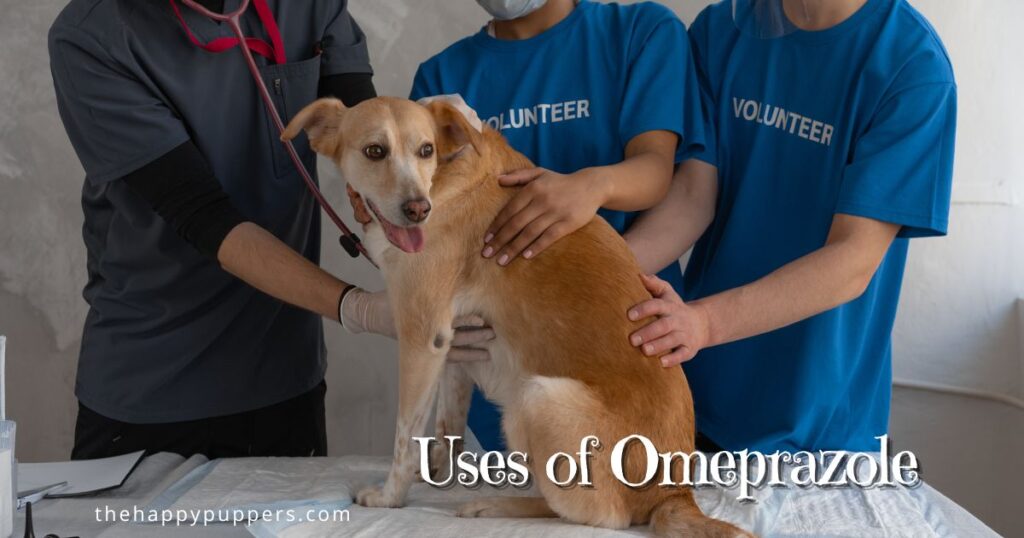
Steroids also boost the chances of stomach ulcers. Thus, if your vet is prescribing steroids to your pup, they may also prescribe omeprazole to keep ulcer formation at bay.
Esophagitis or Acid Reflux
In case your pup has a tendency of acid reflux or esophagitis, omeprazole can be extremely beneficial. The esophagus is a tube that connects the mouth to the stomach. This region is quite susceptible to erosion and ulcers. There is a higher chance of ulcers and erosions if the cardiac sphincter (valve between esophagus and stomach) is faulty and allows stomach acid to go back up into the esophagus. Preventing acid secretion in the stomach by omeprazole will keep the esophagus from damage and promote healing (Bersenas, A. M. E., et al., 2024).
Treatment of Helicobacter.
Despite the stomach being very acidic, certain bacteria thrive in highly acidic environments. One such bacteria is Helicobacter spp. Some common symptoms of this infection are lack of appetite and vomiting. Furthermore, this bacteria can cause stomach lining infection.
Gastritis
Another health condition where omeprazole for dogs may be used is gastritis related to the following contributing factors: –
- Exercise-induced gastritis in dogs who race professionally and sled dogs.
- Dogs suffering from chronic stress have a compromised mucosal layer in their stomach.
- Your dog has a stomach tumor that causes stomach acid production (Frontiers in Veterinary Science, 2024).
Hydrocephalus
Hydrocephalus is a condition where there is excessive production of cerebrospinal fluid (CSF) in dogs. Omeprazole for dogs is very useful in such conditions since it reduces the production of cerebrospinal fluid. Omeprazole is also helpful in the case of dogs with syringohydromyelia, a condition in which case spinal cord cavities develop CSF-filled swelling.
Kidney disease
Dogs who suffer from kidney diseases may also find omeprazole beneficial. This helps reduce the stomach irritation caused by kidney issues. Kidney problems cause the production of toxins that would normally be filtered out by the kidney (and released in urine) to go back up into the body via the bloodstream. Since these toxins are mostly acid-based, omeprazole can help your dog feel better.
How long does omeprazole take to work?
In some cases, omeprazole for dogs may take around 24 to 40 hours to provide relief from esophagitis and gastritis. However, in other cases, omeprazole may take 2-4 days to show effects. The reason behind this is that omeprazole requires a few days to inhibit enough proton pumps for a big difference to be seen.
If you want maximum efficacy, you should administer omeprazole to your dog on an empty stomach. Thus, give omeprazole one hour before your dog’s breakfast time. The longer your dog has stayed on an empty stomach, the more the number of H+/K+ ATPases are present in the parietal cells. Therefore, when you administer omeprazole one hour before breakfast, it will work better to reduce acid production.
- Initial relief: 1–3 days (less vomiting/reflux)
- Noticeable improvement: 5–7 days
- Full effect: 7–14 days
Give it consistently on an empty stomach for fastest results. If no improvement after 7 days, contact your vet.
Track Your Dog’s Progress with This Free Printable
Starting omeprazole is only half the journey — knowing whether it’s truly helping your dog is equally important.
To make monitoring simple and effective, I’ve created a free printable Omeprazole for Dogs Daily Dosage & Symptom Tracker.
This one-page PDF helps you:
- Record the exact dose given each day
- Track changes in vomiting, appetite, diarrhea, and energy levels
- Spot early improvement or concerning red flags
- Bring organized data to your next vet appointment
Many dog guardians find that consistent tracking leads to faster adjustments and better outcomes.
Print as many copies as you need and start tracking from day one.
Is Omeprazole the right medication for your dog’s acid reflux, vomiting, or stomach issues?
Before starting any treatment, it’s important to understand whether this proton pump inhibitor is suitable for your pup.
Take this short 8-question quiz based on common veterinary scenarios and real dog parent experiences. It will help you assess the likelihood that omeprazole could help and prepare you for a more informed conversation with your veterinarian.
Remember: This quiz is for educational purposes only and is not a substitute for professional veterinary advice. Always consult your vet before giving any medication to your dog.
Ready? Let’s begin!

This quiz is for educational purposes only and does not replace professional veterinary advice.
Administration of omeprazole for dogs
For dogs, omeprazole is available in different forms like capsules, oral suspensions, or tablets. Your veterinarian will determine the right amount of dose for your dog. Always follow the dosage prescribed by your veterinarian and do not change it on your own.
Omeprazole may be administered alone or compounded with other drugs depending on the needs of your dog. You must administer omeprazole to your dog on an empty stomach before breakfast. In case your dog vomits after giving him omeprazole empty stomach, give him omeprazole with food. Do not crush the capsule or tablet. Also, do not let your dog chew the medicine.
Dosage information
Never administer any medicine to your dog unless it is prescribed by your veterinarian. The typical dose of omeprazole for dogs is 0.25 to 0.5mg/Ib. The medicine should be administered either once daily or every 24 hours. The duration of omeprazole administration will depend on the condition that is being treated, how the dog responds to the medicine, and finally, the occurrence of adverse effects. Even if your dog starts to feel better, you must keep administering the drug to prevent any form of relapse.
Omeprazole Dosage for Dogs by Weight (2026 Guidelines)
Typical veterinary dose: 0.5–1 mg per kg body weight once daily.
| Dog Weight | Low Dose (0.5 mg/kg) | Standard Dose (1 mg/kg) |
|---|---|---|
| 5 kg (11 lbs) | 2.5 mg | 5 mg |
| 10 kg (22 lbs) | 5 mg | 10 mg |
| 20 kg (44 lbs) | 10 mg | 20 mg |
| 30 kg (66 lbs) | 15 mg | 30 mg |
| 40 kg (88 lbs) | 20 mg | 40 mg |
Give on an empty stomach (30–60 minutes before food) for best results. Never adjust dose without vet advice (Tolbert, M. K., et al., 2022).
Interaction of omeprazole with other drugs
The interaction of omeprazole with other drugs may affect their effectiveness or even lead to adverse reactions. You must inform your vet of any medication or supplement that your dog is on before your veterinarian writes the prescription. This will help prevent any adverse reaction toward any drug your dog is taking.
Antacids
Antacids neutralize the existing stomach acid. On the other hand, omeprazole prevents the production of stomach acid itself. when omeprazole is used alongside antacids, it can show a synergistic effect in controlling gastric acid production.
Digoxin
In the case of dogs, digoxin treats heart conditions in dogs. Omeprazole boosts the absorption of digoxin. This can in turn lead to elevated levels of digoxin in your dog’s blood. Your vet may need to adjust the dose of digoxin to keep the levels stable.
Warfarin
Warfarin is an anticoagulant. It is supposed to reduce the chances of blood clot formation in dogs. If your dog is on omeprazole and warfarin, you must monitor the blood clot formation in your dog.
Ketoconazole
Omeprazole for dogs is known to reduce the absorption of ketoconazole, which is an anti-fungal medication. To ensure that both treatments continue simultaneously, your veterinarian may have to adjust the medication timing or prescribe an alternative medicine to ketoconazole
Sucralfate
This is another medicine for the treatment of duodenal and stomach ulcers. As has been mentioned before, this medicine works by forming a protective layer over the ulcers to allow their healing. Since these two medicines tend to interact with one another, you should always discuss your options with your vet before starting your dog on the same.

Other medications
Omeprazole also interacts with other medicines like anti-seizure drugs, antibiotics, and osteoporosis drugs. Either way, always provide all of your dog’s medical history and past medications to your veterinarian before they prescribe any new medication.
Potential side effects of administering omeprazole for dogs
Common (usually mild & temporary):
- Diarrhea or constipation
- Reduced appetite
- Nausea
Rare but serious (stop and call vet):
- Severe lethargy
- Yellowing of gums/eyes (liver concern)
- Persistent vomiting
Long-term use (>4 weeks) requires vet monitoring for vitamin B12 deficiency and bone health (Whole Dog Journal, 2026).
Precautions and considerations when administering omeprazole for dogs
As I mentioned before, you must consult your veterinarian before administering any medication to your dog. They will assess your dog’s health, decide if the medicine is right for your dog, depending on your dog’s previous medications, interactions of the medicine with others, and finally, any potential side effects.
Omeprazole for dogs addresses gastrointestinal symptoms. However, they do not address the root causes of your dog’s digestive issues. The vet will determine the causes after physical examinations and diagnostic tests.
Important Precautions
- Omeprazole is prescription-only
- Tell your vet about all medications (especially digoxin, warfarin, ketoconazole, sucralfate)
- Not a substitute for diagnosing the root cause
Supportive Lifestyle Changes
- Feed smaller, more frequent meals
- Elevate food bowls
- Maintain healthy weight
- Reduce stress
Lifestyle changes for your dog’s better digestive health.
A few lifestyle changes can be of immense help in allowing your pup’s digestive tract to heal faster. However, the changes should be made alongside the meds. These are in no way alternatives to meds. Here are some lifestyle changes you can implement for long-run canine health benefits:-
- Provide a suitable and balanced diet
- Reduce the quantity of each meal and increase meal frequency.
- Elevate the food and water bowls so you can prevent air swallows while your dog swallows his food.
- Manage the weight of your dog.

Conclusion
Omeprazole for dogs is a pretty valuable tool that can help manage gastric issues in your dog by reducing the production of stomach acid. However, before you start your dog on any medication, you must talk to your vet about the same. This will allow you to avoid many complications in the future.
If you wish to know more about dog care, psychology, training, and health, please subscribe to The Happy Puppers. The subscription option is present in the sidebar. Your subscription will allow me to notify you of new blog post releases. If you like watching videos, subscribe to the YouTube channels of The Happy Puppers, Shruti and Delta. Do not forget to ring the notification bell and set it to ALL.
See you in my next blog post
The typical dose is 0.5–1 mg per kg body weight once daily. Use the weight chart above and always follow your vet’s exact instructions.
Most dogs show improvement within 1–3 days, with full effects in 7–14 days when given on an empty stomach.
Common mild effects include diarrhea, constipation, or reduced appetite. Serious side effects are rare but require immediate vet attention.
Only under veterinary guidance. Human formulations may contain unsafe additives.
Short courses are generally safe. Long-term use needs regular vet monitoring for vitamin deficiencies and bone health.
About the Author
Dr. Shruti Bhattacharya is the founder and guiding force behind The Happy Puppers, combining a Ph.D. in Immunology with decades of direct canine care experience. Her passion for the well-being of dogs has taken many forms:
- Academic & Scientific Rigor – Dr. Shruti applies a science-based approach to pet care, enriched by her training in immunology.
- Hands-On Street Work – Over the past 10+ years, she has personally cared for 30+ street dogs, tending to their health, training, and rehabilitation, even as she relocated and continued caregiving with 15 dogs, and currently supports 5 local neighborhood dogs outside her apartment.
- Instinctual Bond with Dogs – From stray pups to fostered companions, even strangers recognize her as a safe and trusted friend to dogs—drawn to her calm presence and empathy.
- Personal Pack – She’s the proud canine mom of Delta, a German Shepherd–Pitbull mix; Zeus, an energetic Labrador mix; and Alpha, a curious Indian pariah pup—each inspiring her mission through their daily lives.
Through The Happy Puppers, Dr. Shruti shares science-backed advice, empathetic insight, and evidence-based tips designed to empower dog guardians worldwide. The purpose of this is to blend real-world experience with academic expertise, helping every dog feel safe, loved, and thriving.
Learn More…
🏆 The Happy Puppers was named one of the Top 100 Best Pet blogs on Feedspot in 2025.

Disclaimer
This content is for informational purposes only and not a substitute for professional veterinary or grooming advice. Consult a veterinarian for specific dietary conce
References:
- Bersenas, A. M. E., et al. (2024). Omeprazole in canine gastroenterology. PMC.
- Frontiers in Veterinary Science. (2024). Omeprazole significantly reduced gastric acid secretion….
- GoodRx. (2026). Omeprazole for dogs.
- Kingsdale Animal Hospital. (2026). Omeprazole for dogs: Reducing stomach acid and more.
- Tolbert, M. K., et al. (2022). Pharmacokinetics of omeprazole in dogs. PMC.
- Whole Dog Journal. (2026). Is omeprazole safe for dogs?
