


Last Updated on: Dec 8, 2025
Gabapentin, a pharmaceutical initially created for epilepsy treatment, is a highly utilized medication recognized for its capacity to regulate brain electrical activity and impact the nervous system. Most often, Gabapentin is used for managing seizures. However, gabapentin has become a versatile medication in human medicine, often prescribed for a range of different conditions. It has additional uses for treating nerve-related pain, such as pain caused by shingles, diabetic neuropathy, and peripheral neuropathy. In addition, gabapentin is well-known for its ability to effectively manage postoperative pain. It can also provide support in treating anxiety and mood disorders. The versatility of this substance highlights its unique way of working, as it interacts with GABA neurotransmitters in the brain, although it doesn’t precisely replicate the natural production of GABA. Thus, for dog guardians, it is crucial to understand the Gabapentin dosage for dogs.
Topics covered in this blog post
Gabapentin for dogs
Gabapentin has many applications in veterinary medicine, similar to its uses in humans. It is commonly used for pain management and controlling seizures. Gabapentin is commonly prescribed for dogs to help manage chronic pain conditions, especially those associated with neuropathic pain. It can also be used as a supportive treatment for arthritis and other joint-related discomforts. Its role also includes managing seizures in dogs, either on its own or more commonly in combination with other anticonvulsants. In addition, gabapentin is frequently prescribed by veterinarians to help alleviate anxiety and stabilize dogs with fear-based behavior problems. This makes it a versatile tool in the field of canine healthcare, according to PetMD.

At a Glance: Quick Tips for a Calm Dog During Vet Visit
Hey there, fellow pup parent! If you’re short on time but want the essentials for helping your furry friend stay relaxed at the vet, this table sums it up. Drawn from real experiences with my pack (Delta, Zeus, and Alpha) and expert-backed advice on dog psychology and health, it’s your go-to quick reference. Tailor it to your dog’s needs, and always chat with your vet for personalized guidance.
| Aspect | Key Tips | Why It Helps |
|---|---|---|
| Understanding Anxiety | Spot triggers like unfamiliar smells, noises, or past bad experiences. | Builds empathy so you can prepare and prevent escalation during visits. |
| Signs of Stress | Look for yawning, lip licking, trembling, or hiding. | Early detection lets you intervene fast, keeping your pup from getting overwhelmed. |
| Immediate Techniques | Distract with treats or toys; use T-touch massages; stay calm yourself. | Provides on-the-spot relief to maintain composure in the waiting room or exam. |
| Reducing Stress | Pre-walk for energy burn; use pheromone sprays; choose quiet spots. | Lowers sensory overload for a smoother journey and clinic experience. |
| Advance Planning | Desensitize at home; schedule happy visits; pack familiar items. | Creates positive associations over time, making low-stress appointments routine. |
| Calming Strategies | Try counter-conditioning; positive muzzle training; thunder shirts. | Targets deep fears with gentle, effective tools for scared pups. |
| Long-Term Approaches | Enroll in relaxation classes; add omega-3s to diet; consult behaviorists. | Builds lasting trust and reduces overall anxiety for future vet trips. |
| Clinic Selection | Pick Fear Free® certified vets with dog-friendly setups. | Controls the environment to minimize triggers right from the start. |
| Meds & Supplements | Vet-approved options like trazodone or L-theanine; always trial first. | Offers extra support when behavioral methods need a boost for severe cases. |
| Expert Insights | Emphasize happy visits and desensitization (from pros like Cornell, AKC). | Ensures evidence-based steps for better veterinary care and pup well-being. |
Aim of this post
In this blog post, I aim to offer a complete guide to using gabapentin for dogs. I will cover its main uses, proper dosage, and essential safety precautions to keep in mind. Let’s delve into gabapentin dosage for dogs and the factors that veterinarians take into account when prescribing it. I will also provide comprehensive instructions on the proper gabapentin dosage for dogs to ensure that dog guardians can safely administer this medication with vet guidance. Finally, I will explore the possible side effects and precautions to ensure the safety and well-being of dogs receiving gabapentin. I aim to provide dog guardians with the necessary information to have open and informed discussions with their veterinarians about the use of gabapentin for their dog’s health management.
If you wish to be the best guardian to your dog, subscribe to The Happy Puppers. The subscription option is present in the sidebar. If you like watching videos, subscribe to the YouTube channel of The Happy Puppers, Shruti and Delta. Remember to ring the notification bell and set it to ALL. This way YouTube does not miss out on notifying you about new video releases from the channel.
Introduction to Gabapentin dosage for dogs
What is Gabapentin?
Gabapentin is a pharmaceutical drug that was created to address epilepsy. This medication belongs to a superfamily of drugs called anticonvulsants or antiepileptics. With its versatile applications, this treatment has proven effective in managing seizures and addressing various neurological and pain-related conditions. Stabilizing electrical activity in the brain and modifying nerve communication, it offers a wide range of benefits.
Understanding the Mechanism of Action of Gabapentin in the Nervous System
Gabapentin functions by imitating the actions of γ-aminobutyric acid (GABA), a neurotransmitter in the brain that aids in soothing nerve activity. Although it shares a structural resemblance with GABA, gabapentin does not directly affect GABA receptors or modify GABA uptake or degradation. Instead, it attaches to a particular site on voltage-gated calcium channels found on nerve cells. This action has the effect of reducing the release of various neurotransmitters, such as glutamate, norepinephrine, and substance P. These neurotransmitters play a role in transmitting signals related to pain and seizures in the brain and nervous system. Gabapentin is effective in reducing nerve pain and controlling seizures by decreasing the release of certain neurotransmitters.
Various Types of Gabapentin
There are multiple formulations of gabapentin, allowing for flexibility in its usage and catering to different patient requirements:
Capsules
The Gabapentin capsule comes in a variety of dosages, making it easy to find the right one for you. Choose from a range of 100 mg to 800 mg options. Many vets favor capsules due to their versatility in dosing and user-friendly administration.

Tablets:
Similar to capsules, tablets are available in different gabapentin dodosagesor dogs. This option may be preferable for certain patients who find them easier to swallow.
Fluid
This form is especially helpful for those who struggle with swallowing pills or require precise dosing. With the liquid formulation, you have the flexibility to make precise dose adjustments using a syringe or dropper.
Tablets with a prolonged release:
These are commonly used in the field of human medicine to treat specific conditions such as postherapeutic neuralgia. The extended-release form of gabapentin ensures a consistent and gradual release of the medication, promoting stable blood levels over time.
There are various forms of gabapentin, each with its own unique uses and advantages. The selection of the appropriate form depends on factors such as the dog’s condition, age, and preference, and the prescribing doctor’s expertise and judgment. When it comes to dogs, different forms of medication can be prescribed depending on factors such as the size of the dog and how easy it is for the guardian to give the medication.
Exploring the Versatility of Gabapentin Dosage for Dogs
Gabapentin has become a highly versatile medication in the field of veterinary medicine, especially when it comes to treating dogs. Its uses range from managing pain to controlling seizures and modifying behavior. In this section, I will delve into the primary uses of these applications and also discuss some noteworthy off-label applications that have become popular in veterinary practices.
Managing Pain
Gabapentin is frequently prescribed for dogs for pain management. This medication is highly effective in treating a wide range of pain conditions, such as:
- Gabapentin is commonly prescribed to assist with pain management after surgery. It aids in pain control during the dog’s recovery process.
- Gabapentin is a great option for dogs dealing with chronic joint pain caused by arthritis. It helps alleviate nerve pain that accompanies joint degeneration, offering much-needed relief.
- Conditions such as intervertebral disc disease (IVDD) can lead to neuropathic pain in the spine. Fortunately, gabapentin can provide relief from this discomfort (AVMA Journals).

Managing Seizures
Additionally, gabapentin can be used as a complementary treatment to help manage seizures in dogs. This is especially crucial in cases where other anticonvulsant medications may not provide complete relief. Although it may not be the top choice for managing seizures, it can be a valuable addition to a combination of medications to assist in controlling chronic epilepsy in dogs (VIN).
.
Gabapentin is an adjunctive therapy when SSRIs or TCAs alone are insufficient for conditions like generalized anxiety or phobias.
Dr. John J. Ciribassi (DVM 360)
Dealing with Anxiety and Phobias
In addition to treating physical ailments, gabapentin is commonly prescribed to help manage a range of behavioral issues associated with anxiety and phobias:
- Dealing with regular anxiety and stress
- For dogs dealing with chronic anxiety, gabapentin can be a helpful solution to bring them some much-needed calmness.
- Gabapentin is effective in managing these phobias as it helps to decrease anxiety and fear responses in dogs when they suffer from anxiety.
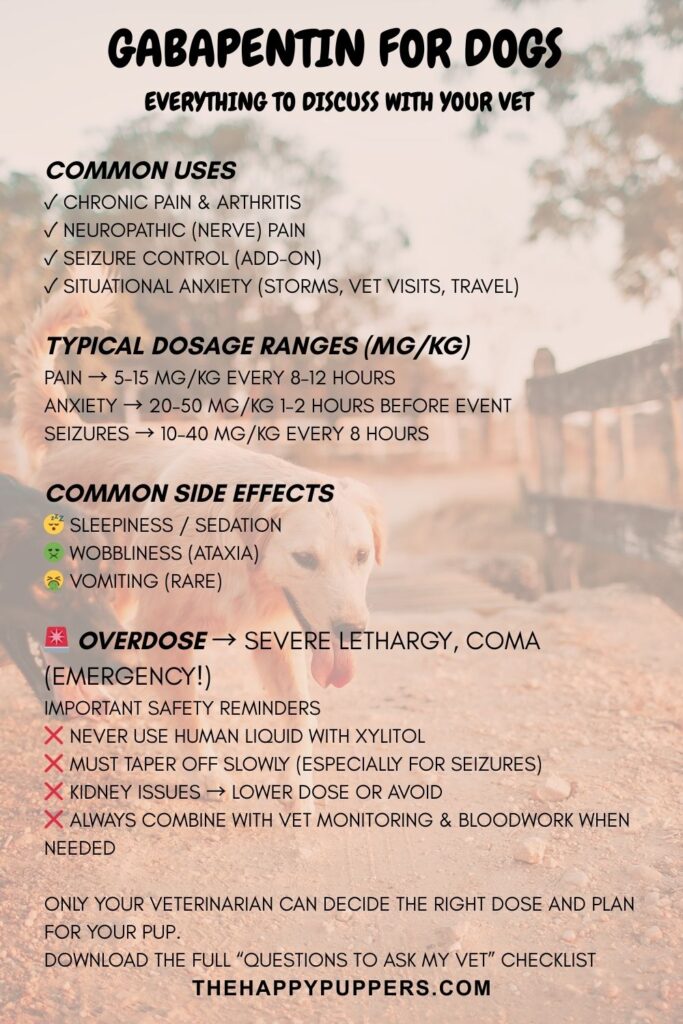
If your furry friend struggles with thunderstorms, fireworks, or vet visits—like my cousin’s dog, Millie does—gabapentin can be a gentle helper for short-term relief. The typical gabapentin for dogs anxiety dosage ranges from 5-30 mg/kg up to three times daily for ongoing issues, or a higher single dose of 30-60 mg/kg given 1-2 hours before the stressor. Always start low to gauge tolerance, and combine with behavior training for long-term calm. Vets like Dr. John J. Ciribassi note that it’s great as an adjunct when other meds aren’t enough, helping reduce fear without full sedation.
Pin this article for later
Off-Label Uses in Veterinary Practices
The FDA has not approved Gabapentin for veterinary use. However, it is commonly prescribed by veterinarians legally and creatively. Here are some alternative uses:
- Gabapentin can be prescribed by veterinarians to assist in managing behavioral conditions that may not be primarily anxiety-related but can still lead to stress or restlessness.
- Gabapentin is a helpful option in end-of-life care for dogs, ensuring their comfort and freedom from pain.
- At times, gabapentin is given along with other medications to boost effectiveness or address multiple symptoms in intricate cases.
Gabapentin is a versatile medication that can effectively address a wide range of conditions in dogs, including both physical pain and emotional distress. Nevertheless, it is important to consult with a knowledgeable veterinarian to guarantee the safety and efficacy of its use, customizing it to suit the unique requirements of each dog.
Guidelines for Gabapentin Dosage for Dogs
Ensuring the correct dosage of gabapentin is essential to maximize its efficacy and ensure the safety of dogs. In this section, I will explore the general guidelines for determining dosages, the typical dosage ranges for various conditions, and the factors that can affect dosage adjustments.
Basic Principles for Calculating Gabapentin Dosage for Dogs
The dosages for gabapentin in dogs primarily depend on the dog’s weight, the specific condition being treated, and how the dog’s response to the medication. Veterinarians will also take into account the intensity of the symptoms and any additional medications or health concerns. The initial dosing approach is typically cautious, and any necessary modifications are determined by the dog’s reaction to the treatment and the presence of any observed side effects (PMC).
.

Recommended Gabapentin Dosage for Dogs for Pain, Seizures, and Anxiety
Managing pain
When it comes to chronic pain, like arthritis or neuropathic pain, the recommended dosage usually falls between 1.5 to 5 mg per pound (3 to 10 mg/kg) every 8 to 12 hours. When it comes to post-operative pain, doses may be on the higher side of this range or given more frequently.
Managing seizures
For seizures, gabapentin can be used as an adjunct therapy and administered at a dosage of approximately 1.5 to 5 mg per pound, given every 8 to 12 hours. The precise dosage required may vary depending on the specific characteristics of the seizures and the concurrent use of other anticonvulsant medications.
Dealing with anxiety and phobias
Lower doses are typically effective for anxiety issues, usually starting at approximately 1.5 mg per pound and adjusted according to the dog’s response (Good Rx, Single Care).
Weight-Based Dosage Table (ClearView Veterinary Imaging)
| Dog Weight (kg) | Condition | Dosage Range (mg/kg) | Example Total Dose (per administration) | Frequency | Notes |
|---|---|---|---|---|---|
| 5 kg (Small) | Pain (e.g., Arthritis/Neuropathic) | 5-15 mg/kg (start low) | 25-75 mg | Every 12 hours | Safe for small dogs; titrate up if needed. Avoid if kidney issues. |
| 5 kg | Anxiety | 30-50 mg/kg (short-term) | 150-250 mg | Single dose 1-2 hours before event | For storms/vet visits; monitor ataxia. |
| 5 kg | Seizures | 10-20 mg/kg | 50-100 mg | Every 8 hours | Adjunctive; taper off gradually. |
| 10 kg (Small-Medium) | Pain | 5-15 mg/kg | 50-150 mg | Every 12 hours | Effective for IVDD; combine with NSAIDs if vet-approved. |
| 10 kg | Anxiety | 30-50 mg/kg | 300-500 mg | Single dose | Higher for acute; start with treats for positive association. |
| 10 kg | Seizures | 10-20 mg/kg | 100-200 mg | Every 8 hours | Useful in refractory cases per Di Cesare study. |
| 20 kg (Medium) | Pain | 5-15 mg/kg | 100-300 mg | Every 12 hours | For chronic pain; up to 40 mg/kg if tolerated. |
| 20 kg | Anxiety | 30-50 mg/kg | 600-1,000 mg | Single dose | Adjunctive with behavior mods for phobias. |
| 20 kg | Seizures | 10-20 mg/kg | 200-400 mg | Every 8 hours | Increases interictal periods in trials. |
| 50 kg (Large) | Pain | 5-15 mg/kg | 250-750 mg | Every 12 hours | For osteoarthritis; watch for sedation in seniors. |
| 50 kg | Anxiety | 30-50 mg/kg | 1,500-2,500 mg | Single dose | Rare for large breeds; consult for alternatives if drowsy. |
| 50 kg | Seizures | 10-20 mg/kg | 500-1,000 mg | Every 8 hours | Higher doses possible under supervision. |
How Veterinarians Modify Gabapentin Dosage for Dogs
Veterinarians take into account various factors when determining the appropriate dosage of gabapentin:
Larger dogs may need higher total doses, but lower doses per pound, in comparison to smaller dogs.
As dogs age, their metabolism and renal function may slow down. This can impact the processing and elimination speed of the drug. It is necessary to adjust the initial dosage
For dogs with kidney or liver issues, it may be necessary to adjust the dosage of gabapentin. Gabapentin is eliminated through the kidneys, and if their function is impaired, it can result in higher levels of the drug in the bloodstream for extended periods.
Gabapentin can be effective for anxiety, seizures, and arthritis in dogs, but always consult your vet for tailored dosing.
Dr. Ray Spragley
Safe Gabapentin Dose for Small Dogs
For our pint-sized pups under 10 kg—like Chihuahuas or Yorkies—precision is key to avoid side effects like wobbliness. A safe gabapentin dose for small dogs starts at 5-15 mg/kg every 12 hours for pain, or up to 30-50 mg/kg for anxiety bursts. Use liquid forms if capsules are too big, and watch closely for sedation. As Dr. Caroline Cofer from Zen Dog Veterinary Care explains, ‘Gabapentin can be effective for anxiety, seizures, and arthritis in dogs, but always consult your vet for tailored dosing.

The Significance of Adhering to a Veterinarian’s Prescription Diligently
Following the veterinarian’s recommended dosage and schedule is crucial to ensure the dog’s safety and well-being. Straying from the recommended dosage can result in reduced effectiveness or potentially harmful side effects. In dogs receiving a high dosage or long-term treatment, the discontinuation of gabapentin may lead to withdrawal symptoms. Thus, it is crucial to consult a veterinarian before making any modifications to the dosing regimen. By adhering to these guidelines, you can ensure the safe and effective use of gabapentin, maximizing its benefits while minimizing any potential risks.
Managing the use of Gabapentin
Proper administration of medication is just as crucial as ensuring the correct dosage is prescribed. In this section, I will explore effective strategies for administering gabapentin to dogs. I will discuss techniques to ensure that the dose is fully consumed, the importance of timing the dose correctly, and what to do if a dose is accidentally skipped.
Effective Strategies for Administering Gabapentin to Dogs
Make sure to obtain the correct type of gabapentin as prescribed by the veterinarian, whether it comes in the form of capsules, tablets, or liquid. Every form may have its own set of administration guidelines.
Exercise caution when dealing with gabapentin. Before giving the liquid form, make sure to shake the bottle thoroughly. To ensure accurate dosing, it is recommended to use a proper pill cutter when dividing tablets or capsules.
Enhancing Food Mixing Techniques to Maximize Dose Consumption
Exploring the Culinary World
A lot of dogs tend to be more open to taking medication when it’s combined with their food. One option is to crush tablets or open capsules and combine the powder with a small amount of wet food or a tasty treat. Ensure that the portion size is appropriate to ensure your dog consumes all of their food.
Innovative Cuisine
Experiment with a variety of delectable options such as peanut butter, cheese, or a specialized dog treat paste to cleverly conceal the taste of the medicine. It is advisable to seek advice from your veterinarian regarding any extra food options, particularly if your dog has specific dietary needs.

Administration with a unique approach
If your dog is not receptive to food mixed with medication, you might have to directly administer the dose into its mouth. Position the tablet towards the rear of the tongue and delicately close the mouth while caressing the throat to facilitate swallowing.
Understanding the Timing and Frequency of Gabapentin dosage for dogs
Consistent Routine
Gabapentin dosage for dogs is typically set at administering two to three times daily. It depends on the specific condition being treated. Administering the medication at regular intervals is essential for maintaining consistent drug levels in your dog’s system.
Consistency in Timing
Vets recommend administer gabapentin at consistent times every day to establish a routine. This can be beneficial in reducing potential side effects and optimizing its effectiveness.
What to Do If You Forget to Give a Dose?
Protocol for Missed Dose
If you happen to forget a dose and it’s nearing the time for the next dose, skip the missed one and stick to your usual dosing schedule. It is important not to exceed the recommended dose, as doing so may result in overdose.
Seek advice from your veterinarian
If you happen to miss more than one dose, reach out to your veterinarian for guidance on how to proceed. It is essential to ensure a consistent level of medication in your dog’s system, particularly when it comes to managing conditions such as seizures or chronic pain.

By adhering to these guidelines, you can guarantee that your dog will fully benefit from gabapentin. Compliance is crucial for the treatment to be effective. It’s important to maintain a strong line of communication with your vet, particularly if you run into any challenges when giving your pet their medication.
Tips for Staying Safe and Taking Precautions
It is important to have a thorough understanding of the possible side effects, signs of overdose, interactions with other medications, and long-term use considerations when administering gabapentin to dogs. In this section, you will find essential safety tips and precautions to keep your dog healthy and secure throughout their treatment (Drugs).
Noteworthy Side Effects to Monitor in Dogs
Gabapentin is typically well-tolerated by dogs, although, as with any medication, it can potentially lead to side effects. Typical adverse reactions may include:
- Feeling drowsy or sluggish. This side effect is frequently observed, especially when the dog begins taking the medication or when the dosage is increased.
- Ataxia (loss of coordination): Your dog’s walking may seem a bit unsteady or clumsy.
- Gastrointestinal upset, such as diarrhea, can be a possible occurrence in some dogs.
- Occasionally, vomiting may accompany diarrhea, although it is not as frequent.
It is important to closely observe your dog, particularly when initiating gabapentin or adjusting dosages. The majority of side effects are generally mild and typically diminish as the dog’s body adapts to the medication as per Telavets.
What to Do if You Suspect an Overdose of Gabapentin Dosage for dogs
A dangerous overdose of gabapentin is possible. Possible symptoms of an overdose include:
- Extreme drowsiness or tranquility
- Noticeable loss of balance or collapse
- Excessive secretion from salivary glands
- Intense agitation or restlessness
- Severe lethargy
- Severe vomiting, diarrhea
Accidents happen, but knowing overdose signs can save your pup’s life. If your dog ingests more than prescribed (e.g., over 40 mg/kg), rush to the vet immediately. Dr. Ray Spragley warns, ‘Overdose is uncommon but can lead to profound sedation; immediate care is essential.’
Prevention: Store meds securely and follow exact doses. To guarantee your pup’s protection, swift action is essential.

How It May Interact With Other Drugs And Chemicals?
The effectiveness or safety of gabapentin may be compromised if it interacts with other drugs. Key interactions encompass:
- Provide antacids at least two hours apart from gabapentin since they can decrease gabapentin absorption.
- When used with gabapentin, narcotic pain medicines can have an even more sedative impact.
- Additional sedatives or anxiety drugs are examples of other depressants that act on the central nervous system.
To ensure proper management of any interactions, it is imperative that you inform your veterinarian of all drugs and supplements that your dog is currently receiving.
Factors to Consider When Using and Withdrawing Over the Long Term
Under veterinary care, gabapentin can be safely used for the long-term management of illnesses such as chronic pain or seizures. However, there are a few things to keep in mind:
- To check on the efficacy and make any necessary dosage adjustments, regular vet checkups are required.
- It is not advisable to suddenly cease taking gabapentin. If you suddenly stop giving it to your dog, your dog may experience withdrawal symptoms. The illness may also get worse.
- To minimize withdrawal symptoms, your veterinarian will prescribe a tapering regimen to help you gradually reduce the dosage of gabapentin if you decide to stop giving medication.
Following these guidelines will guarantee that your dog gets the most benefit from gabapentin with the least amount of risk. When using this medication, it is imperative that you adhere to your veterinarian’s instructions.
Printable Vet Discussion Guide: Questions to Ask Your Vet About Gabapentin
I never want you or your pup to feel lost when you walk into the vet clinic.
That’s why I created this simple, one-page printable checklist — fill in your dog’s details, take it with you, and make sure nothing important gets missed.
What’s inside
- Space for your dog’s name, weight, breed, and age
- 10 of the most important questions to ask (dose, tapering, side effects, bloodwork, alternatives, etc.)
- Room for your vet’s answers and follow-up date
Feel free to print as many copies as you need — one for gabapentin, one for any future medication discussions!
Have you used a similar checklist before? Let me know in the comments if it helped — I read every single one! 🐶
Keeping Tabs and Following Up
To keep your dog healthy while they are taking gabapentin, it is important to monitor their vitals regularly. You must also schedule regular checkups with your vet. You will get optimal results through regular veterinary checkups, gradual dosage adjustments, and close monitoring of therapy efficacy.

Consistent Veterinary Examinations and Their Significance
Several reasons highlight the importance of regular veterinarian check-ups:
- The efficacy of gabapentin and the improvement in your dog’s condition will be assessed by your vet.
- By scheduling checkups at regular intervals, your veterinarian can keep an eye out for any adverse reactions to gabapentin. Following this, the treatment can be planned accordingly.
In addition to keeping an eye on the treated problem, your vet can evaluate your dog’s general health and deal with any additional issues that crop up during checkups.
Modifying Dosage Over Time in Response to Effects and Sides
As your dog’s reaction to gabapentin and any adverse effects are observed, it may be required to make dosage changes. Things that your vet will take into account include:
- If your dog’s symptoms aren’t getting better with gabapentin, your vet may increase the dosage or look at other therapy options.
- Your veterinarian may reduce the dosage or prescribe an alternative medicine if your canine exhibits severe adverse reactions.
- Different dogs have varying responses to medicine. Thus, your veterinarian may need to adjust the dosage based on your dog’s individual requirements.
Evaluation of Results and Modification of Therapy Programs
To get the best result for your dog, it’s important to watch how well gabapentin is working over time. To determine whether a therapy has been successful, your veterinarian may utilize a number of tools, such as:
- The effectiveness of gabapentin will be determined by your veterinarian based on your observations of your dog’s symptoms and behavior.
- Blood tests to track kidney and liver function, imaging scans to track illness progression, and other diagnostic procedures can help doctors objectively quantify your dog’s health status.
- Regular check-ups with your veterinarian are essential. To ensure that your vet can adapt the treatment plan to your dog’s needs, inform them of any changes in his condition or any concerns you may have.

Make sure your dog gets the finest care possible. Ensure that gabapentin is helping their condition as much as possible by being proactive and working closely with your physician. A key component of this approach that contributes to treatment success is regular monitoring and follow-up appointments.
Alternatives to Gabapentin
If gabapentin isn’t the right fit—maybe due to side effects or interactions—consider vet-approved alternatives. For pain: NSAIDs like carprofen (Rimadyl) or natural options like CBD (vet-formulated). For anxiety: Trazodone for events or SSRIs like fluoxetine for chronic issues. From the Di Cesare study: ‘Gabapentin is useful for epilepsy, pain, and anxiety in dogs, but further trials are needed for optimal combos.’ Always discuss with your vet to match your dog’s needs (Paoli Vet Care).
In dogs, gabapentin was useful in the treatment of epilepsy, as well as chronic, neuropathic, and post-operative pain and anxiety.
Di Cesare et al. (2023)
Exploring More on The Happy Puppers
At The Happy Puppers, I cover everything a dog parent needs to know—from training and psychology to health and beyond. Check out these six main hubs
This hub is all about fun, hands-on projects you can do at home to enrich your dog’s life without breaking the bank. Think homemade toys, enrichment games, or simple setups to boost mental stimulation. It’s perfect for guardians who love getting creative to keep their pups engaged and happy.
Focused on preventive care, treatments, and overall wellness, this category dives into common health issues, vet advice, and how to spot early signs of trouble. From vaccinations to managing chronic conditions, it’s your go-to for keeping your dog thriving physically.
Here, we decode those quirky habits and behaviors that make our dogs unique—from tail wags to whining. Drawing from canine psychology, we explore why they act the way they do and how to guide them positively. Ideal for understanding and addressing things like fear or excitement.
Explore the traits, needs, and fun facts about different breeds (and mixes like my Delta!). Whether you’re adopting or just curious, this hub helps match lifestyles to breeds and offers breed-specific tips on care, training, and health.
All about keeping your pup looking and feeling their best—from nail trims to coat care. We cover at-home routines, professional services, and how grooming impacts health and comfort, with gentle techniques for sensitive dogs.
Nutrition is key to a happy, healthy dog! This hub breaks down balanced diets, treat ideas, supplements, and how food affects energy, mood, and immunity. We focus on age-specific, breed-tailored advice to fuel your pup right.
Conclusion
To sum up, gabapentin is an adaptable method for treating a wide range of canine ailments. This makes it an important veterinary medicine tool. Many canine patients have reported an improvement in quality of life after using gabapentin for pain management, seizure control, and anxiety alleviation.
I have covered the signs and symptoms of side effects, gabapentin dosage for dogs, how to keep them safe, and what to watch out for when giving them the drug throughout this article. You can make sure your dog gets the most out of gabapentin with the fewest possible negative effects by following these guidelines and cooperating closely with your physician.
It is critical to keep in mind the significance of routine veterinary examinations, making necessary dosage adjustments according to your dog’s reaction and side effects, and tracking the treatment’s efficacy over time. The best way to get advice and support for your dog that is specific to his or her requirements is to talk to your vet openly.
Gabapentin, when administered with the right kind of care, can help you keep tabs on your dog’s health and even improve their quality of life. If you and your vet are on the same page, you can do all you can to give your dog the best life possible.

If you wish to be the best dog guardian, subscribe to The Happy Puppers. The subscription option is present in the sidebar. If you like watching videos subscribe to the YouTube channel of The Happy Puppers, Shruti and Delta. Remember to ring the notification bell and set it to ALL so that YouTube never misses out on notifying you about the release of new videos from the channel.
See you in my next blog post
Frequently Asked Questions
My response is: Poodles need their own special place where they can relax and unwind, therefore it’s crucial to make sure yours is nice and snug. They are able to unwind, alleviate tension, and improve their general health in this setting.
My response is: The fundamental components consist of cozy bedding (e.g., orthopedic or memory foam), secure housing (e.g., cages or gates), temperature regulation (e.g., keeping the environment at a comfortable level), and individualized touches (e.g., blankets that carry your fragrance, favorite toys).
Using positive reinforcement tactics, you may teach your poodle to respect their personal space. Gradually increase the amount of time you spend praising and rewarding them whenever they visit their space. Create a schedule that allows you to unwind and recharge at certain intervals.
Regularly clean your poodle’s quarters. Wash the bedding and toys weekly in order to eliminate dirt, allergies, and parasites. Inspect the area for signs of wear and tear on a regular basis and make sure it is clean and pest-free.
Establishing regular rest and relaxation times and planned social and recreational activities with the family will help your poodle maintain a healthy balance in their personal space. As a result, they’ll get just the right amount of time alone and with people.
About the Author
Dr. Shruti Bhattacharya is the founder and guiding force behind The Happy Puppers, combining a Ph.D. in Immunology with decades of direct canine care experience. Her passion for the well-being of dogs has taken many forms:
- Academic & Scientific Rigor – Dr. Shruti applies a science-based approach to pet care, enriched by her training in immunology.
- Hands-On Street Work – Over the past 10+ years, she has personally cared for 30+ street dogs, tending to their health, training, and rehabilitation, even as she relocated and continued caregiving with 15 dogs, and currently supports 5 local neighborhood dogs outside her apartment.
- Instinctual Bond with Dogs – From stray pups to fostered companions, even strangers recognize her as a safe and trusted friend to dogs—drawn to her calm presence and empathy.
- Personal Pack – She’s the proud canine mom of Delta, a German Shepherd–Pitbull mix; Zeus, an energetic Labrador mix; and Alpha, a curious Indian pariah pup—each inspiring her mission through their daily lives.
Through The Happy Puppers, Dr. Shruti shares science-backed advice, empathetic insight, and evidence-based tips designed to empower dog guardians worldwide. The purpose of this is to blend real-world experience with academic expertise, helping every dog feel safe, loved, and thriving.

Follow me on:
Disclaimer
This content is for informational purposes only and not a substitute for professional veterinary or grooming advice. Consult a veterinarian for specific dietary concerns.
References
- Drugs.com, 2025. Gabapentin for dogs: Uses, dosage and side effects.
- PetMD, 2023. Gabapentin for Dogs: Uses, Dosage, and Side Effects.
- PMC, 2023. Gabapentin: Clinical Use and Pharmacokinetics in Dogs, Cats, and Horses.
- SingleCare, 2025. Gabapentin dosage for dogs by weight.
- GoodRx, 2024. Gabapentin for Dogs: Uses, Side Effects, and Dosage.
- TelaVets, 2025. Gabapentin for Dogs: Dosage by Weight, Safety & Side Effects.
- dvm360, 2019. The use of gabapentin to help manage anxiety in dogs.
- Veterinary Partner, 2025. Gabapentin (Neurontin).
- Clearview Vet Imaging, N/A. Sedative Protocols.
- Paolo Vet, 2024. All You Need to Know About Gabapentin for Dogs.
- AVMA Journals, 2022. Evaluation of gabapentin in combination with acepromazine for premedication in dogs undergoing surgery or a diagnostic procedure: A prospective, randomized, double-blinded, placebo-controlled clinical trial.
