

Last Updated On: January 1, 2026
Hey there, fellow dog lovers! As someone who’s knee-deep in the world of pups every day, I know how rewarding it can be to keep your furry friend looking sharp and feeling great. Dog grooming tips aren’t just about aesthetics—they’re essential for your dog’s overall well-being. Whether you’re dealing with a playful mix like my Zeus, who loves rolling in the grass, or a more laid-back companion, mastering these dog grooming tips can prevent issues down the line and strengthen that unbreakable bond you share. In this guide, we’ll dive deep into practical, hands-on advice tailored for 2026, drawing from real experiences and trusted sources to help you navigate everything from basic routines to advanced trends.
I’ve pulled together insights from various experts and my own life with Delta (my energetic German shepherd-pitbull mix), Zeus (my goofy Labrador mix), and Alpha (my spirited exotic Indian pup). Remember that time Delta got into a muddy puddle during a walk? It turned into a full grooming session that saved us from a bigger mess later. Stories like these remind me why dog grooming tips are a game-changer. Let’s get started on making grooming a stress-free part of your routine.
Topics covered in this blog post
Why Prioritizing Dog Grooming Tips Matters for Your Pup’s Health
Dog grooming tips go beyond a shiny coat—they’re about spotting problems early and keeping your dog comfortable. Regular sessions help distribute natural oils, remove dead skin, and stimulate circulation, which can ward off infections and irritations. For instance, when Zeus started scratching more than usual last spring, a closer look during grooming revealed some dry patches we caught before they escalated.
Let’s look at the stats
From a stats perspective, in the US, pet guardians spend over $15 billion annually on grooming and boarding services, reflecting how seriously folks take their dogs’ care (Ankura, 2024). There are more than 300,000 pet groomers nationwide, with an average salary of $50,000, showing the industry’s growth (Dogster, 2025). The US pet grooming services market hit $2.06 billion in 2024 and is projected to grow at 6.7% CAGR through 2030 (Grand View Research).
According to the American Pet Products Association (APPA), the pet industry is projected to reach $157 billion in sales for 2025, with grooming services playing a key role as 51% of U.S. households (68 million) that own dogs. Additionally, APPA reports that 66% of U.S. households owned a pet in 2024, up from 56% in 1988, with grooming expenditures contributing significantly to the $112.3 billion spent annually on pets. The pet grooming market alone was valued at USD 14.8 billion in 2024, expected to reach USD 22.7 billion by 2033 at a CAGR of 4.84%. Globally, markets like India’s are expanding rapidly too, reaching $246.9 million in 2024 and expected to hit $415.8 million by 2030, as more families embrace pet care (Grand View Research. India).
Ignoring grooming can lead to matted fur, causing pain or even mobility issues, as my reader Sammy learned when her pup’s coat got tangled after a rainy play session. By incorporating dog grooming tips into your weekly habits, you’re investing in your dog’s longevity and happiness.
Quick Answer Box: Essential Dog Grooming Tips at a Glance
What are the top dog grooming tips for keeping your pup healthy and happy?
Regular grooming prevents issues like mats, infections, and discomfort. Key tips: Brush 2-3 times a week to distribute oils and remove debris; bathe every 4-8 weeks with dog-specific shampoo; trim nails every 2-4 weeks avoiding the quick; clean ears and eyes weekly; and brush teeth 2-3 times a week. Tailor to your dog’s breed—e.g., daily for curly coats like Poodles. Always use positive reinforcement with treats for stress-free sessions. For 2026 trends, incorporate ergonomic tools and smart tech for easier at-home care. Check our full guide below for step-by-step details!
DIY Dog Grooming Kit Essentials for At-Home Dog Grooming Session
Starting with at-home dog grooming? The right tools make all the difference. Your DIY dog grooming kit essentials should include a slicker brush for detangling, a pin brush for longer coats, nail clippers or a grinder, ear cleaner, dog-specific shampoo, and a towel or blow dryer on low heat. For 2026, look into ergonomic options like cordless clippers with adjustable speeds to reduce strain on both you and your pup. Building a basic kit starts with affordability—focus on multi-use items like a combo brush for versatility (Pawspace). I keep mine organized in a dedicated bin for quick access.
My cousin Millie, who has a toy poodle, swears by a simple kit she keeps in her bathroom. When her poodle got a knot behind the ears, a quick session with thinning shears fixed it without a trip to the pros. Invest in quality—cheap tools can cause discomfort, turning grooming into a battle.
Grooming by Dog Breed: Tailored Dog Grooming Tips with Comparison Table
Grooming by dog breed ensures you’re addressing specific needs, from coat texture to shedding patterns. Short-coated breeds like Beagles, Staffordshire Bull Terriers, or Boxers thrive with weekly brushing to remove loose hair and distribute natural oils, plus professional grooming every 8-12 weeks for baths, nail trims, and ear cleans (Bark Avenue Dog Grooming, 2025). These low-maintenance pups shed moderately, but regular sessions keep their skin healthy and reduce allergens in your home.
Medium or Long Coated Breeds
For medium or long-coated breeds such as Cavoodles, Spaniels, or Golden Retrievers, aim for brushing 3-4 times a week to prevent matting, with pro grooms every 6-8 weeks to maintain tidiness. I remember a reader with a Golden who skipped brushing for a week—mats formed quickly, leading to an uncomfortable shave-down. Double-coated breeds like Huskies, Border Collies, or German Shepherds need brushing several times weekly, ramping up to daily during shedding seasons, and professional de-shed treatments every 8-10 weeks. Poodle mix has that double coat influence, so I would suggest to use a de-shedding rake to manage his undercoat without stripping it, avoiding hot spots from buildup.
Curly or Dense Coated Breeds
Curly or dense-coated dogs, think Poodles, Oodles, or Bichons, require daily brushing or combing, especially in friction areas like under collars or armpits, paired with pro clips every 4-6 weeks for shape and comfort. Poodle’s coat leans curly in spots, so you must focus on those areas to prevent tangles that could pull on his skin. Lifestyle factors play in too—active dogs like Zeus, who loves hikes, might need more frequent checks for debris, while indoor pups can stretch intervals. Always brush before bathing to loosen tangles, and use detangling sprays for easier sessions. Tailoring grooming by dog breed not only keeps them comfy but spots breed-specific issues early, like skin folds in Bulldogs or seasonal allergies in Shepherds.
Breed-specific Grooming Frequency
For a quick visual comparison, here’s a breed-specific grooming frequency table inspired by expert guides:
| Coat Type | Example Breeds | Recommended Tools | Professional Grooming Frequency | At-Home Brushing Frequency | Specific Tips |
|---|---|---|---|---|---|
| Short Coats | Beagles, Staffies, Boxers | Rubber curry brush, bristle brush | Every 8–12 weeks (bath, nails, ears) | Weekly | Focus on oil distribution; minimal shedding management |
| Medium/Long Coats | Cavoodles, Spaniels, Golden Retrievers | Pin brush, slicker brush | Every 6–8 weeks | 3–4 times a week | Prevent matting; use detangling spray |
| Double Coats | Huskies, Border Collies, Shepherds | Undercoat rake, de-shedding tool | Every 8–10 weeks (de-shed treatment) | Several times a week (daily in shedding season) | Ramp up during seasonal blows; avoid shaving |
| Curly/Dense Coats | Poodles, Oodles, Bichons | Slicker brush, metal comb | Every 4–6 weeks | Daily | Check friction areas; clip for shape |
This table provides a handy reference for grooming by dog breed, helping you customize your approach based on coat type.
For rescues or mixed breeds, start with basics and observe their responses to refine your approach (Best Friends). This was key for figuring out Zeus’s preferences early on.
Step-by-Step Dog Grooming Tips for Beginners: From Brushing to Finishing Touches
Let’s break down dog grooming tips into actionable steps. Start in a calm space with treats handy to build positive associations—my dogs now wag their tails at the sight of the brush.
Brushing: The Foundation of Dog Coat Care
Brush every few days to remove loose fur and dirt. For dog coat care, use a brush suited to their type—slickers for mats, rakes for undercoats, bristle for short hair, or detangling for long. Brush in the direction of growth, then against for thoroughness, but go gently to avoid skin irritation. Comb against hair on the back to lift dead hairs and dander, then smooth along once clear. Alpha loves this part; it feels like a massage and keeps his exotic fur glossy.
One scenario: Zeus came home from a hike covered in burrs. Gentle brushing not only cleaned him up but revealed a small tick we removed early. For wiry coats like Schnauzers, incorporate hand-stripping every few months to maintain texture.
Bathing: Mastering Dog Bathing Tips for a Fresh Coat
Dog bathing tips emphasize frequency—every 4-8 weeks unless they’re dirty, adjusting for greasy coats or no-hair breeds. Use lukewarm water and a gentle, pet-specific shampoo to avoid stripping oils—never human products, as dog skin pH is around 7.5 (alkaline) versus human’s acidic 5.5-6.5, which can cause itching or toxicity if ingested. Wet from the neck down, massage in, avoiding eyes and ears, rinse thoroughly until water runs clear, and dry with a towel or low-heat dryer.
Millie’s poodle had a skunk encounter once—following dog bathing tips with a de-skunk formula saved the day without harsh chemicals. For floppy-eared dogs, clean ears post-bath to remove trapped water and prevent infections. Always prioritize safety by using products free from harmful ingredients (ASPCA)
Nail Care: Safe Dog Nail Trimming Techniques to Avoid Injuries
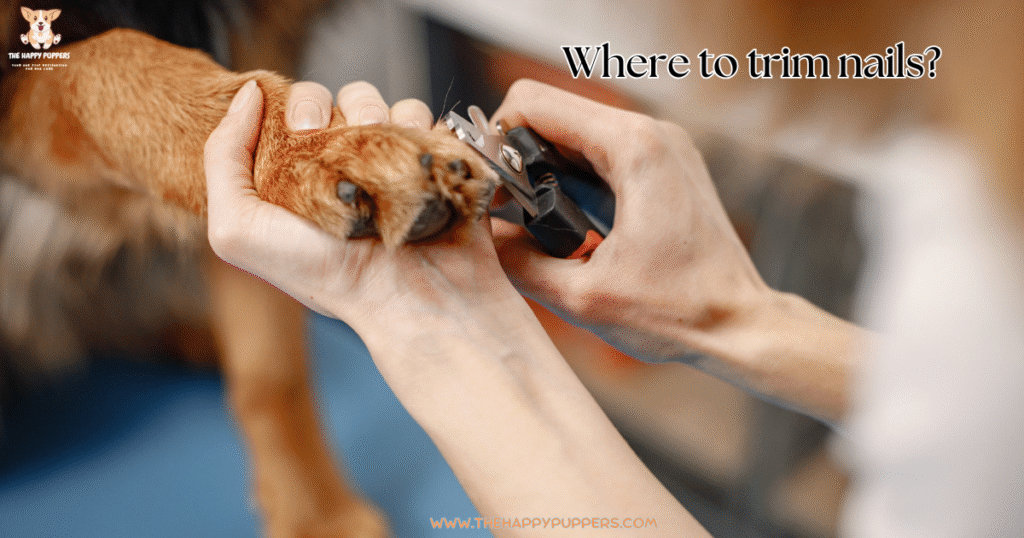
Dog nail trimming prevents overgrown nails from causing pain or misshapen feet. Clip every 2-4 weeks, avoiding the quick—use a grinder for precision and smoothing edges. For dark nails, trim small slices until the center darkens, signaling you’re close. If you nick it, styptic powder or cornstarch stops bleeding fast.
Delta’s nails grow quick from our walks; trimming them regularly keeps him comfy. A reader shared how ignoring this led to their dog’s limp—lesson learned! Start young to build tolerance, using treats to make it fun.
Ear and Eye Cleaning: Keeping Sensory Areas Healthy
Wipe ears weekly with a damp cotton ball and vet-approved solution—don’t go deep; clean monthly or more for floppy ears or water lovers. For eyes, use a soft cloth to remove discharge, checking for redness or swelling that might indicate infection—vet visit if so. Zeus’s floppy ears need extra checks to prevent buildup from yeast or bacteria.
Gentle handling during these steps builds trust; start with short sessions if your pup is anxious to make it positive (Animal Humane Society). Zeus used to fidget, but patience paid off.
Teeth and Paw Maintenance: Essential for Overall Comfort
Brush teeth 2-3 times a week with dog toothpaste and a finger brush to prevent dental disease—daily for best results. Check paws for cracks, debris, or burns from hot surfaces; trim fur between pads and apply balm in dry weather. Provide paw protection like boots for extreme conditions.
Addressing Common Skin and Coat Issues in Dog Coat Care: From Dryness to Infections
Dog coat care involves watching for dry skin, hot spots, or allergies, which affect up to 20% of dogs yearly. Dry skin shows as flaking or dull fur, often from poor diet, dry air, or overbathing—boost with omega-3/6 fatty acids from salmon or flaxseed for inflammation reduction and shine. Hot spots are red, moist areas from scratching; treat with aloe (if not lickable) or vet meds, preventing with flea control.
Parasites like fleas or mites cause itching and scabs—daily brushing checks help spot them early. Infections bring sores and odor; allergies (food like beef/dairy or environmental) account for 10-15% of issues, leading to red patches or hair loss—try elimination diets or hypoallergenic foods. For dog coat care, biotin and zinc from eggs or liver aid repair; vitamin E from fish oils provides antioxidants.
When Alpha showed dull fur, adding supplements per vet advice revived it. Real-life tip: Oatmeal baths soothe irritations naturally, and seasonal adjustments like paw balms in winter or sunscreen in summer protect vulnerable skin. Early vet intervention for persistent problems is key—don’t wait for worsening.
Flea Prevention in Dog Grooming Tips
Regular grooming is your first line of defense against fleas. Use a fine-tooth comb during sessions to check for fleas or flea dirt (those black specks that turn red when wet). If spotted, treat with vet-approved spot-ons or shampoos, and wash bedding hot. Prevent year-round with monthly preventatives, especially in warmer months when fleas thrive. One time, Zeus picked up fleas from a park—quick grooming caught it before spreading.
Allergies and Skin Sensitivities
Allergies can stem from pollen, food, or contact irritants, causing excessive scratching or chewing. Grooming helps by removing allergens from the coat—brush outdoors in spring when pollen peaks. Use hypoallergenic shampoos and consider antihistamines per vet. Delta once had a flare-up from grass; switching to medicated baths and diet tweaks cleared it up. Monitor for signs like red skin or hair loss, and consult a pro if needed.
Incorporating natural remedies can also help; for example, herbal supplements or essential oils tailored for skin health can soothe irritations without harsh chemicals (North Hound Life, 2026). When Alpha had a flaky patch, a vet-approved herbal shampoo turned things around quickly.
Avoiding Common Mistakes
Don’t over-bathe, as it dries skin—stick to monthly unless needed, and always use dog shampoo to match pH. Avoid brushing too harshly or in the wrong direction, which irritates; not brushing before bathing tightens tangles. Using the wrong tools, like budget scissors on dense coats, leads to uneven cuts or split ends—invest in quality.
Rushing sessions stresses dogs; go slow with praise, and never force a high-energy pup into complex trims without pro help. Neglecting daily maintenance piles up issues, like mats or infections; leaving water in ears post-bath invites otitis. For dog nail trimming, cutting too deep hits the quick—trim gradually. I once hurried with Zeus and nicked a nail—now I always double-check lighting and tools, using positive reinforcement like treats to keep it calm.
Another tip: Create a calm environment with non-slip mats and familiar scents to reduce stress during home sessions (Humane World). This helped when Delta was skittish at first.
Emerging Pet Grooming Trends 2026: Innovations Shaping the Future
Pet grooming trends 2026 lean into wellness with dermatology-inspired products like sulfate-free shampoos, hypoallergenic options, and skin-microbiome balancers, reflecting “pet humanization” where dogs get human-like care. Hell! They deserve every bit of it. High-end grooming surges with fancy products, spas, and boutique services for pampered pups. Eco-friendly tools, like recyclable packaging and sustainable materials, are rising as owners demand green options.
Mobile grooming services are also booming, with apps connecting owners to on-demand pros for convenience (eTailPet, 2025). My cousin Millie uses one for her poodle during busy weeks—it’s a lifesaver!
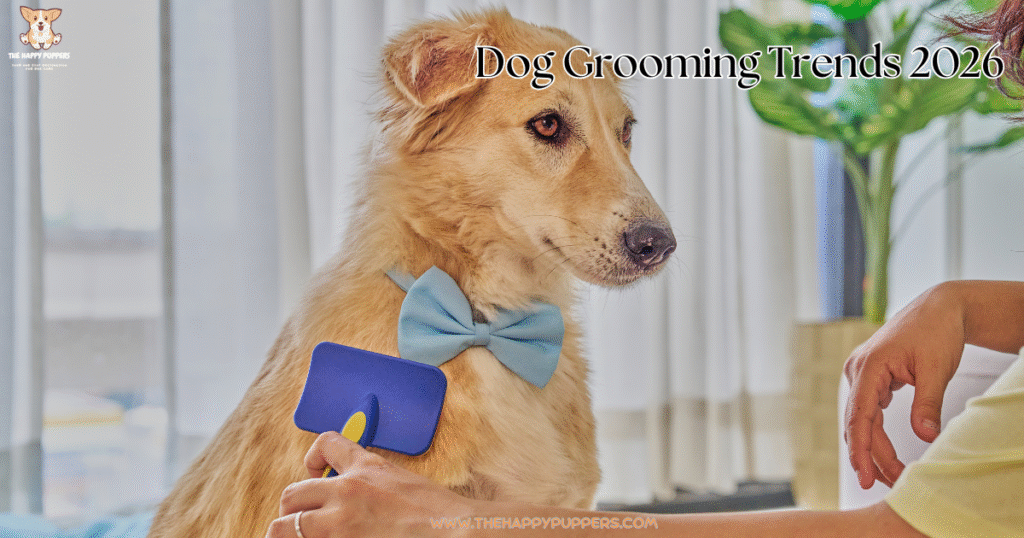
Tech integrations include smart dryers with auto-temperature control and IoT clippers for maintenance tracking, cutting time by up to 35%. Pickup and delivery services make pro grooms convenient, while supplements tie into grooming for coat health. For at-home, vacuum-equipped tools reduce mess, aligning with busy lifestyles.
Professional Dog Grooming Tools 2026 for Home Use
For pros or advanced home groomers, 2026 brings ergonomic dog grooming tools like adjustable electric tables with vibration-free frames for back strain reduction, high-velocity blasters for quick drying, and hands-free stand dryers for fluffing (Groomica. 2026). Curved scissors for rounded cuts, straight for precision, and thinning shears for blending are essentials—opt for Japanese 440C steel with convex edges for clean slices without crushing fibers (Elite Trim Grooming).
Include blade sets (#10 for sanitary, #7F for dense coats) and metal guards for lengths. Ergonomic dog grooming features like offset handles and swivel thumbs minimize fatigue. For bathing, SPA hydro-massage systems improve circulation; de-shedding rakes handle double coats. Smart tech like sensors for air quality enhances safety. Millie upgraded her kit with these—her poodle’s trims are salon-quality now.
What experts have to say on Dog Grooming Tips?
“Grooming is more than a haircut. We are the first eyes a lot of the time… We notice personality changes, we notice skin changes, we can sense that there are ear issues before they become a big problem. That’s why grooming is so important.” – Tammy Myers, Professional Groomer (AKC)
“Every dog is different, so it’s always best to chat with your groomer about how often your pup should be booked in. We can recommend a schedule tailored specifically to your dog’s coat type, age, and activity level — making sure they’re comfortable and looking their best all year round.” (Bark Avenue Dog Grooming, 2025)
“The skin pH of humans and cats and dogs is different. The skin of cats and dogs is slightly alkaline (pH value is about 7.5), while human skin is slightly acidic (pH value of female skin is about 5.5, male skin pH value is about is 6.5). So it’s best not to bathe pets with human shampoo.” (Neakasa)
“Regularly brushing a dog removes the dead coat and keeps circulation on the outer layer of skin, which promotes health.” – Jacki Panzik, Owner of Riverside Pet Grooming
“Dogs need to be groomed all year long… If a dog isn’t brushed or combed regularly, they may become more sensitive to touch, start growling, and cower when people try to pet them, as brushing makes their skin healthy and ensures their hair isn’t matted.” – Tammy Myers, AKC S.A.F.E. Certified Salon Owner at Bark’n Bubble Day Spa
“Grooming is especially important in the spring because pollen and other allergens are most active during this time, particularly in areas that had a lot of winter moisture.” – Jacki Panzik, Owner of Riverside Pet Grooming
Seasonal Dog Grooming Tips: Spring and Beyond
Grooming isn’t one-size-fits-all—seasons change, and so do your pup’s needs. Adjusting your dog grooming tips based on the time of year keeps them comfortable, healthy, and ready for whatever weather throws their way. Let’s break it down by season, with practical dog grooming tips to make transitions smooth.
Spring: Shedding Season and Fresh Starts
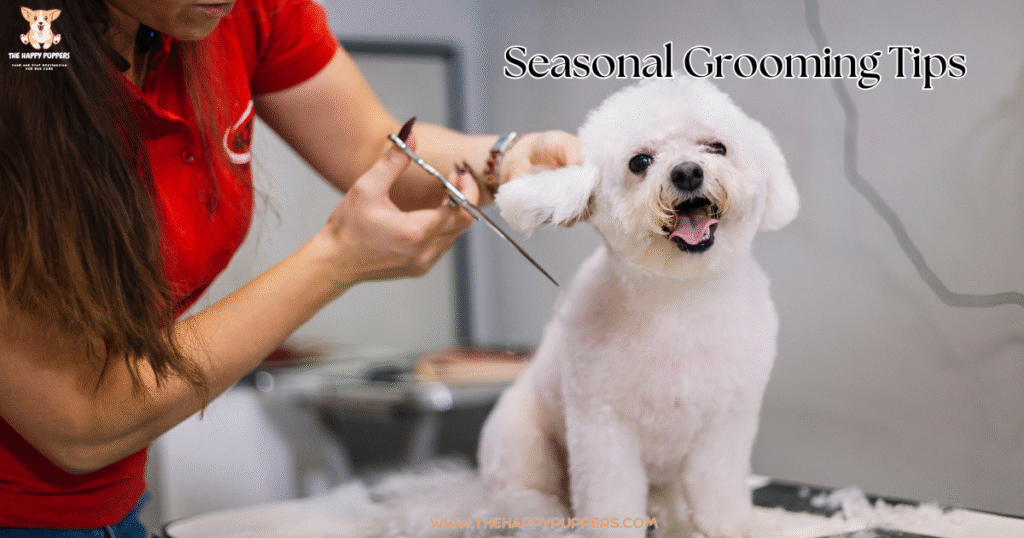
Spring dog grooming tips focus on tackling heavy shedding as dogs blow their winter undercoat—ramp up brushing to daily with a de-shedding tool to remove loose fur, prevent mats, and stimulate skin. Check for fleas and ticks after outdoor play, trim nails more often due to softer ground, and give a moisturizing bath every 4-6 weeks to wash away grime without drying skin.
Summer: Keeping Cool and Pest-Free
Summer dog grooming tips emphasize heat relief with regular brushing (2-3 times weekly for short coats, daily for long) to promote airflow, but avoid shaving double-coated breeds to prevent sunburn—instead, opt for light trims around paws and belly (The Hairy Sofa, 2025). Protect pads from hot pavement with balm, check daily for ticks using a flea comb, and rinse after swims to avoid irritation; limit full baths to preserve oils. Alpha’s coat gets oily in humidity, so dry shampoos and ergonomic tools from pet grooming trends 2026 make quick refreshes easy for Millie’s poodle too.
[Video Placeholder: Quick demo of summer paw trimming and tick check on a dog, with tips for heat safety]
Fall: Recovery and Prep for Cooler Days
Fall dog grooming tips shift to healing summer damage with weekly moisturizing baths using hypoallergenic shampoo to restore hydration and thorough rinses to avoid residue (AKC, 2025). Brush to manage shed and distribute oils, apply paw balm for cooling weather, and clean ears to clear leaf debris; for grooming by dog breed, detangle long-haired pups to prevent damp-weather mats. Delta’s tangled fur after a rainy day was fixed with a conditioner spray, keeping sessions stress-free.
[Image Placeholder: A dog getting a fall bath with autumn leaves outside the window, showing moisturized coat]
Winter: Protection from the Elements
Winter dog grooming tips prioritize moisture by reducing baths to every 6-8 weeks, using humidifiers indoors, and brushing frequently to remove snow or salt buildup—daily for fluffy coats to avoid ice balls (Black Sheep Organics, 2025). Wipe paws post-walks to remove chemicals, trim nails as indoor life slows wear, and use oatmeal formulas for dry patches; clean ears and eyes to prevent infections. Zeus’s floppy ears stayed clear with regular wipes, tying into overall dog coat care for my trio’s comfort.
In-Between Grooming: Quick Dog Grooming Tips
For maintenance, use wipes for faces and paws. Brush teeth daily if possible (Holiday Barn). Quick touch-ups like spot-cleaning with a damp cloth can extend time between full grooms (ABK Grooming, 2021). It’s a staple for keeping Alpha fresh after muddy adventures.
Grooming Schedule Calendar: A Monthly Text-Based Guide
To stay organized, here’s a simple text-based grooming schedule calendar you can adapt:
- January (Winter Focus): Weekly brushing, monthly bath if needed; apply paw balm daily for cold weather.
- February: Check ears/teeth weekly; trim nails every 3 weeks; focus on indoor shedding.
- March (Spring Start): Increase brushing to 3-4 times/week for shedding; flea check begins.
- April: Full groom monthly; eye/ear clean weekly; add allergy monitoring.
- May: Bath every 4-6 weeks; daily brushing for heavy shedders.
- June (Summer Prep): Paw checks for heat; sunscreen on noses if pale.
- July: Light brushing; trim fur between pads; hydrate skin.
- August: Flea prevention ramp-up; nail trims bi-weekly.
- September (Fall Transition): Weekly full checks; prepare for coat thickening.
- October: Monthly pro groom; teeth brushing 3x/week.
- November: Increase moisture with oils; ear cleans for damp weather.
- December: Holiday stress reduction; gentle sessions with treats.
Print this calendar and mark it up for your pup’s needs!
Printable Grooming Checklist
This printable calendar helps you adapt dog grooming tips to each season’s challenges—like extra brushing in spring or paw balm in winter. Based on the seasonal guide above, jot notes for your pup’s breed or needs (e.g., “Daily de-shed for Delta’s double coat”). Print it, pin it up, and mark key tasks monthly. Pro tip: Cross-reference with your grooming by dog breed table for personalized tweaks! Download and print for your fridge!
Quiz: Test Your Dog Grooming Knowledge – Score Yourself!
Hey, readers! Ready to put those dog grooming tips to the test? This fun quiz is based on the key points from the guide above. It’s multiple-choice with 8 questions, and each correct answer is worth 1 point (total possible: 8 points). At the end, tally your score and check the interpretations to see how you stack up. No peeking at the answers until you’re done—let’s see if you’re a grooming pro like me with Delta, Zeus, and Alpha! Share your score in the comments and tell me about your pup’s grooming quirks.

How many points did you rack up? Drop it in the comments, and if you aced it, tell me your top dog grooming tip from experience. For more interactive fun like this, check out the Dog Behaviors category on The Happy Puppers!
Exploring More on The Happy Puppers
Check out these six main hubs, each packed with practical advice to help you and your pup live your best lives together.
DIY for Dogs
This hub is all about fun, hands-on projects you can do at home to enrich your dog’s life without breaking the bank. Think homemade toys, enrichment games, or simple setups to boost mental stimulation. It’s perfect for guardians who love getting creative to keep their pups engaged and happy—like the puzzle feeders I make for Zeus to channel his food-loving energy.
Dog Health
Focused on preventive care, treatments, and overall wellness, this category dives into common health issues, vet advice, and how to spot early signs of trouble. From vaccinations to managing chronic conditions, it’s your go-to for keeping your dog thriving physically.
Dog Behaviors
Here, we decode those quirky habits and behaviors that make our dogs unique—from tail wags to whining. Drawing from canine psychology, we explore why they act the way they do and how to guide them positively.
Dog Breeds
Explore the traits, needs, and fun facts about different breeds (and mixes like my Delta!). Whether you’re adopting or just curious, this hub helps match lifestyles to breeds and offers breed-specific tips on care, training, and health.
Dog Grooming
All about keeping your pup looking and feeling their best—from nail trims to coat care. We cover at-home routines, professional services, and how grooming impacts health and comfort, with gentle techniques for sensitive dogs.
Dog Nutrition
Nutrition is key to a happy, healthy dog! This hub breaks down balanced diets, treat ideas, supplements, and how food affects energy, mood, and immunity. We focus on age-specific, breed-tailored advice to fuel your pup right—think omega boosts for shiny coats, which have worked wonders for Delta’s mix fur.
Level Up Your Dog Grooming Tips Today!
Ready to put these dog grooming tips into action? Grab your tools and start small—your pup will thank you with extra tail wags! For more visual demos, head over to my YouTube channel, Shruti and Delta, where Delta and I share real grooming sessions. Subscribe for tips, and drop a comment on what you’d like next. If this helped, share with a fellow dog parent—let’s keep our pups happy together!

Frequently Asked Questions
Depending on breed and activity, every 4-8 weeks is ideal to maintain oils without drying skin. Adjust for dirty pups, but include thorough rinsing and conditioning for all coat types.
Start with a brush, nail clipper, shampoo, and ear cleaner. Include treats for positive vibes, and consider ergonomic options for comfort across all sessions.
Go slow with treats, touch paws daily to desensitize, and use a grinder for less pressure. If needed, pair with a vet visit for all breeds.
Yes, more frequent in muddy seasons but always use lukewarm water and dry fully to prevent chills or skin issues for every dog.
Tailor to coat type—short coats need less, curly more clipping. Research your breed’s needs for comprehensive care.
Regular brushing removes debris, spots issues early, and promotes oil distribution, benefiting all pups from puppies to seniors.
About the Author
Dr. Shruti Bhattacharya is the founder and guiding force behind The Happy Puppers, combining a Ph.D. in Immunology with decades of direct canine care experience. Her passion for the well-being of dogs has taken many forms:
- Academic & Scientific Rigor – Dr. Shruti applies a science-based approach to pet care, enriched by her training in immunology.
- Hands-On Street Work – Over the past 10+ years, she has personally cared for 30+ street dogs, tending to their health, training, and rehabilitation, even as she relocated and continued caregiving with 15 dogs, and currently supports 5 local neighborhood dogs outside her apartment.
- Instinctual Bond with Dogs – From stray pups to fostered companions, even strangers recognize her as a safe and trusted friend to dogs—drawn to her calm presence and empathy.
- Personal Pack – She’s the proud canine mom of Delta, a German Shepherd–Pitbull mix; Zeus, an energetic Labrador mix; and Alpha, a curious Indian pariah pup—each inspiring her mission through their daily lives.
Through The Happy Puppers, Dr. Shruti shares science-backed advice, empathetic insight, and evidence-based tips designed to empower dog guardians worldwide. The purpose of this is to blend real-world experience with academic expertise, helping every dog feel safe, loved, and thriving.

Follow me on:
Disclaimer
This content is for informational purposes only and not a substitute for professional veterinary or grooming advice. Consult a veterinarian for specific dietary concerns.
References
- North Hound Life, 2025. Ultimate Guide to Skin and Coat Dog Care 2026.
- Bark Avenue Dog Grooming, 2025. How Often Should Your Dog Be Groomed? A Guide by Breed & Coat Type.
- DogIDs. 3 Spring Grooming Tips for a Happy Dog.
- eTailPet, 2025. 7 Pet Industry Trends To Watch in 2026.
- Animal Humane Society. Dog Grooming Tips to Keep Your Pet Looking and Feeling Their Best.
- ASPCA. Dog Grooming Tips.
- Holiday Barn, 2020. 7 Dog Grooming Tips to Keep Them Looking Good in Between Groomings.
- Humane World. How to Groom Your Dog at Home.
- Pawspace, 2025. At-Home Dog Grooming Guide.
- Neakasa, 2023. Top 12 Dog Grooming Tips for Pet Owners.
- Groomica, undated. 2026 Groomer Starter Kit: Complete Professional Equipment Guide.
- ABK Grooming, 2021. 10 Dog Grooming Tips at Home.
- Best Friends. Dog Grooming Tips: How to Groom Your Pet at Home.
- AKC, 2024. Spring Dog Grooming Tips
- Elite Trim Grooming, 2025. Best Dog Grooming Scissors in 2026: Straight, Curved & Thinning Picks.
- Ankura, 2024. The Consolidation of Pet Grooming & Boarding is Imminent: Industry Growth, Trends, and Current Market Opportunities.
- Dogster, 2025. 16 Interesting Pet Grooming Industry Statistics: 2025 Update.
- Grand View Research, 2024. U.S. Pet Grooming Services Market Report.
- Grand View Research, 2024. India Pet Grooming Services Market Outlook.
- The Hairy Sofa, 2025. Summer Dog Grooming Tips to Keep Your Pup Cool and Comfortable.
- AKC, 2025. Fall Dog Grooming Checklist: How to Heal Your Dog Post-Summer.
- Black Sheep Organics, 2025. Seasonal Grooming Tips: Transition Your Dog from Summer to Fall.
