

Short answer: It’s not a good idea. Ham is high in fat and salt, so AKC says it’s not advisable for dogs, though a little sliver once in a while probably won’t hurt (AKC). The bigger holiday dangers are ham bones, sweet glazes and fatty scraps.
Ham is the centerpiece of many holiday tables, and dogs know it. Here’s why ham isn’t a great treat, which parts are risky, and what to do if your dog helps themselves.
Topics covered in this blog post
Is ham bad for dogs?
Ham isn’t toxic, but AKC lists several reasons to skip it:
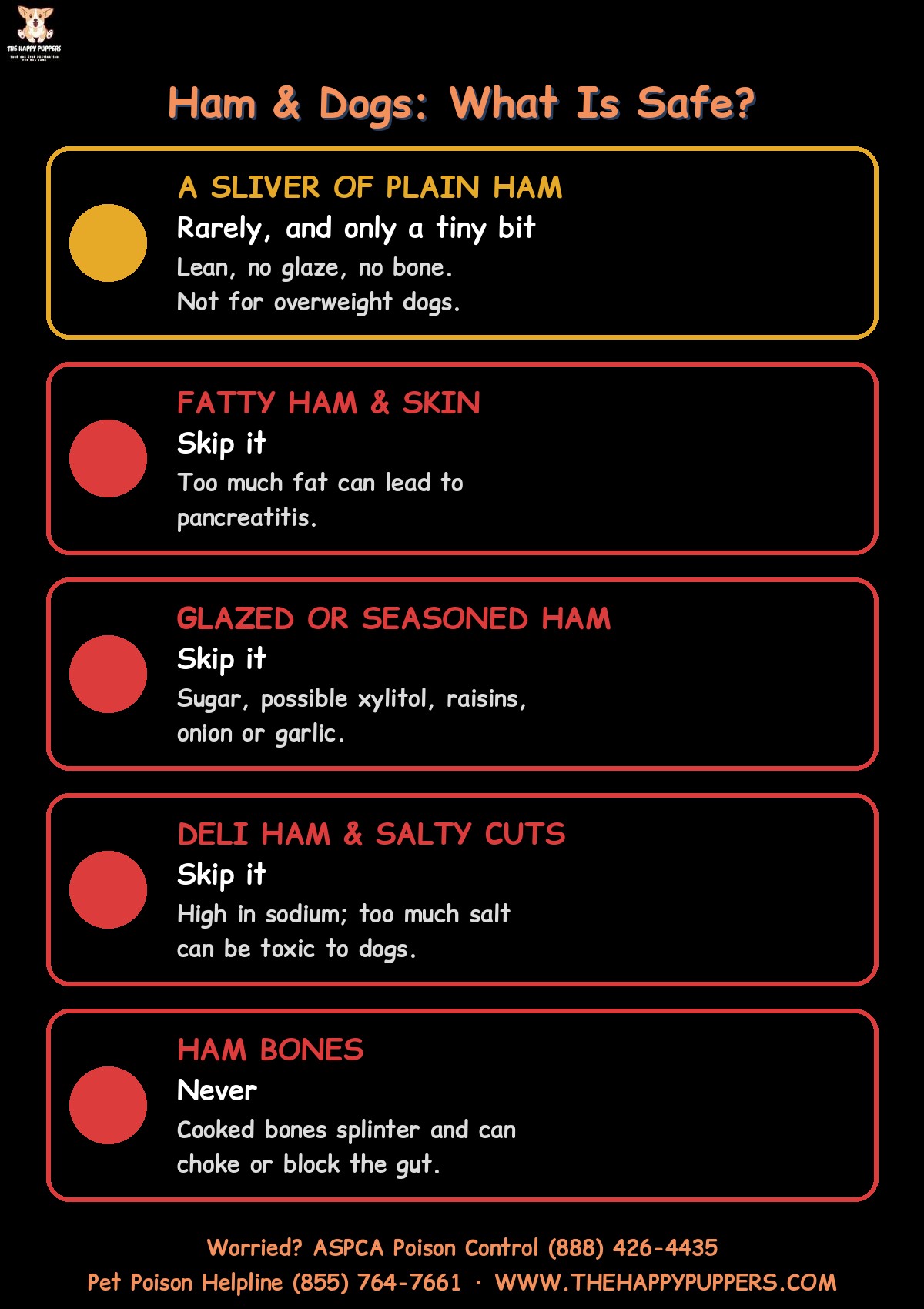
- Fat: ham has a higher fat content than many other meats, is hard for dogs to digest, and too much fat can lead to pancreatitis and other digestive upsets (AKC).
- Salt: store-bought ham contains a great deal of sodium, and even its preservatives (nitrates and nitrites) are sodium-based (AKC).
- Better proteins exist: dogs need protein, but there are much better sources than ham (AKC).
- Weight: if your dog is overweight, sharing holiday ham does them no favors (AKC).
Fat and pancreatitis
Veterinarians at the University of Georgia College of Veterinary Medicine say pancreatitis, a life-threatening inflammation of the pancreas, is one of the most common holiday problems, and it’s often triggered by fatty table scraps. Ham fat and skin are exactly that kind of scrap.
AKC lists the usual signs of pancreatitis as vomiting, lethargy, diarrhea and loss of appetite. Severe cases can be deadly, so see your vet right away if you suspect it.
Salt and sodium
AKC warns that excess salt can be toxic to dogs and can cause serious problems such as kidney damage, seizures, coma and even death. Pet Poison Helpline says salt poisoning can cause vomiting and diarrhea, and neurological signs such as stumbling, disorientation, tremors and seizures.
Can dogs eat deli ham or lunch meat?
Deli ham is still processed, salty, cured pork, so the same sodium concerns apply. Don’t make it a regular treat.
Glazed ham: sugar, xylitol, raisins, onion and garlic
The glaze and stuffing can be more dangerous than the ham itself:
- Xylitol: the FDA warns that xylitol, found in some candy, peanut butters and baked goods, can cause life-threatening problems for dogs. If a sugar-free glaze or dessert may contain it, check the label and call your vet right away.
- Raisins: grapes, raisins, sultanas and currants are toxic to dogs. Poisoning starts with stomach upset, followed closely by kidney injury (Pet Poison Helpline).
- Onion and garlic: garlic, onions, chives and leeks (the Allium family) are poisonous to dogs. Toxic doses damage red blood cells, leading to anemia, and cause stomach upset (Pet Poison Helpline).
- Sugar: brown sugar, honey and pineapple glazes add sugar and calories your dog doesn’t need.
Can dogs have ham bones?
No. AKC explains that cooked bones splinter into shards that can cause choking and serious damage to the mouth, throat or intestines. Bone fragments can also block the gut, and blockages can quickly lead to severe illness and death.
The FDA adds that if a bone lodges in the stomach or intestines, symptoms may not show for hours to days: vomiting, diarrhea, low energy, not wanting to eat and stomach pain. Your vet may need x-rays, an endoscope or even surgery to remove the pieces.
My dog stole ham. What should I do?
- Work out what they ate: plain ham, fat and skin, glaze, stuffing or the bone. Check for raisins, onion, garlic or xylitol in anything that came with it.
- Call your vet right away if your dog ate a bone, a glaze or dish that may contain xylitol, raisins, onion or garlic, or a large amount of fatty ham.
- Don’t try to make your dog vomit unless your vet tells you to. Pet Poison Helpline warns that salt or salt water should never be used to induce vomiting because of the risk of salt poisoning.
- Watch for signs over the next few days: vomiting, diarrhea, lethargy, loss of appetite or stomach pain (AKC; FDA).
To prevent it, the FDA suggests wrapping up scraps and bones after the meal and putting them in a trash bin your pets can’t get into.
In our house, with Delta, Zeus, Alpha and Archie around, the ham platter never sits within reach.
If your dog ate something risky
Call your vet, or the ASPCA Animal Poison Control Center at (888) 426-4435 or Pet Poison Helpline at (855) 764-7661 (fees may apply). Tell them what your dog ate, how much, and your dog’s weight.
Related reading: Can dogs eat tomatoes? · Garlic for dogs · Can dogs eat blueberries?
Frequently asked questions
It’s not advisable. Ham is high in fat and sodium (AKC). A tiny sliver of plain ham once in a while probably won’t hurt, but skip the fat, glaze and bone.
No. Cooked bones splinter and can cause choking, injuries to the mouth, throat or intestines, and blockages (AKC). Symptoms of a blockage may take hours to days to appear (FDA).
It’s best not to make it a habit. Processed ham is high in sodium, and excess salt can be toxic to dogs (AKC).
Skip it. Glazes add sugar, and some recipes or sugar-free versions may include raisins or xylitol, which are dangerous for dogs (Pet Poison Helpline; FDA).
Yes, it can. Too much fat can lead to pancreatitis (AKC), and fatty table scraps are a common holiday trigger (University of Georgia CVM).
Call your vet. Watch for vomiting, diarrhea, low energy, not eating or stomach pain over the next few days, since bone blockages can show up hours to days later (FDA).
Very little. AKC says a little sliver once in a while probably won’t hurt, but overweight dogs shouldn’t have it, and there are much better protein sources.
Sources
- AKC: Can Dogs Eat Ham?
- AKC: Can Dogs Eat Bones? Be Careful Before Giving Your Pup a Bone
- U.S. FDA: Keep Your Dogs and Cats Safe From Holiday Hazards
- University of Georgia College of Veterinary Medicine: Paws Off the Plate: Holiday Pet Safety Tips
- Pet Poison Helpline: Salt
- Pet Poison Helpline: Grapes
- Pet Poison Helpline: Garlic
