

Short answer: Yes, in small amounts. Ripe, red tomatoes are considered non-toxic to dogs (ASPCA; Pet Poison Helpline). The parts to avoid are the green ones: unripe tomatoes, leaves and stems, which contain plant toxins (AKC).
Tomatoes turn up everywhere: in salads, sandwiches, pizza, pasta sauce and backyard gardens. Here’s what’s safe, what isn’t, and what to do if your dog gets into the tomato plants.
Topics covered in this blog post
Are tomatoes safe for dogs?
It depends on which part and how ripe it is.
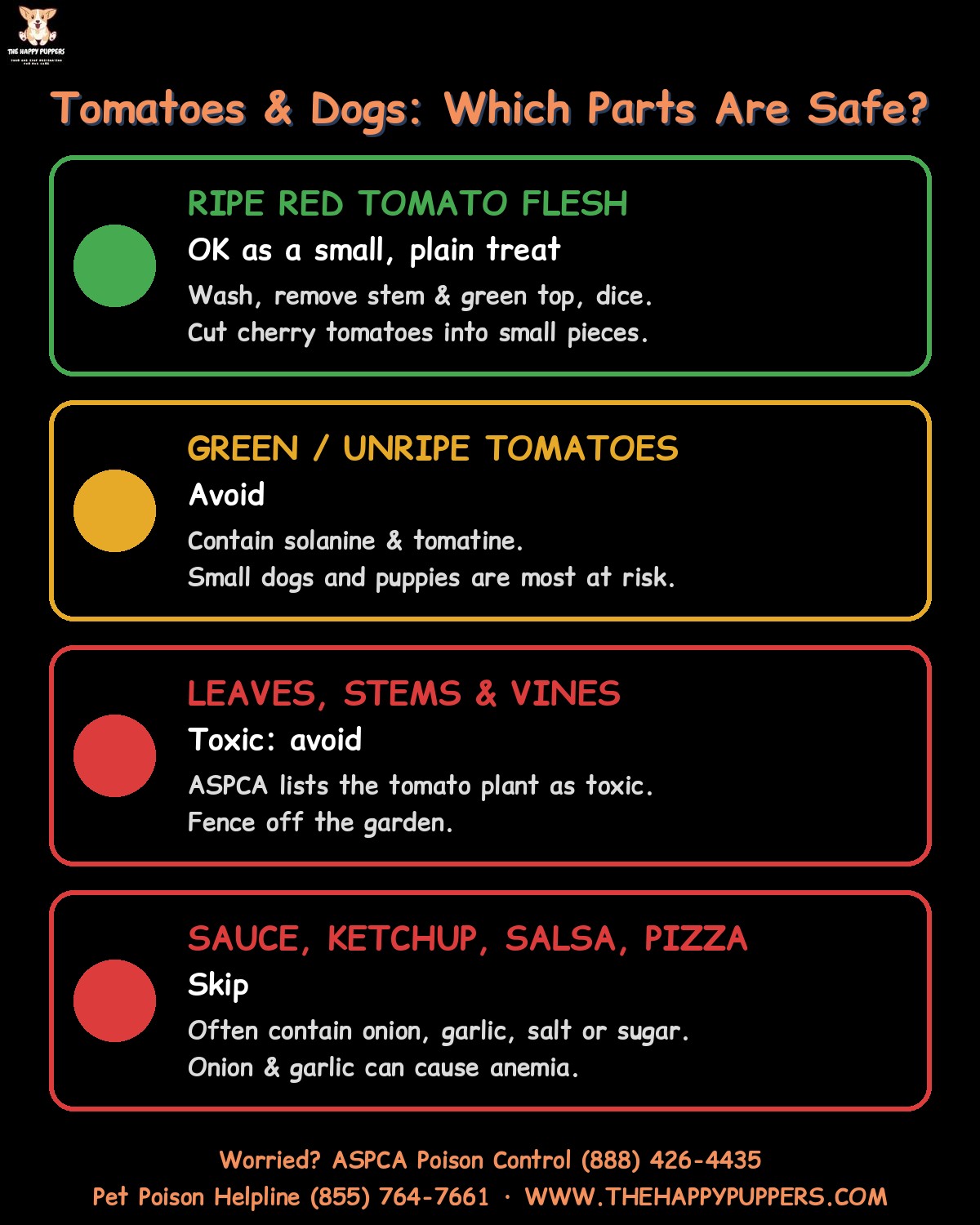
- Ripe red tomato flesh: non-toxic, fine as an occasional small treat (ASPCA; Pet Poison Helpline; AKC).
- Green (unripe) tomatoes: avoid (AKC).
- Leaves, stems and vines: avoid. The tomato plant is listed as toxic to dogs by the ASPCA, even though the ripe fruit isn’t.
Why the green parts are a problem
Tomatoes belong to the nightshade family (Solanaceae). Pet Poison Helpline explains that toxic plant alkaloids are found in all parts of the tomato plant, but ripe tomatoes have the least and are considered non-toxic. AKC names the toxins as solanine and its cousin tomatine, found mostly in the green parts of the plant.
AKC also notes that serious poisoning is unlikely, because a dog would need to eat a large amount of the plant, but small breeds and puppies can be affected by smaller amounts.
Signs of tomato plant poisoning in dogs
If your dog eats green tomatoes, leaves or stems, watch for:
- Drooling (hypersalivation)
- Loss of appetite
- Vomiting, diarrhea or severe stomach upset
- Weakness, lethargy, depression
- Stumbling, disorientation, loss of coordination
- Dilated pupils
- Slow heart rate or other heart rhythm changes
- Tremors or seizures
Sources: ASPCA (tomato plant entry); Pet Poison Helpline; AKC.
AKC says tomatine poisoning is rare in dogs, usually isn’t fatal, and most dogs recover fully. Vets may examine your dog, run blood work or an ECG, and may induce vomiting or monitor your dog.
Allergic reactions
AKC notes that some dogs may react to tomatoes. It’s rare, but signs include hives, coughing, wheezing and difficulty breathing. Difficulty breathing is always an emergency.
When to call the vet
Call your vet, or a poison line, if your dog:
- Ate a large amount of tomatoes, or any amount of green tomatoes, leaves or stems, especially if your dog is small or a puppy
- Shows any of the signs above
- Ate tomato sauce, salsa, pizza or ketchup that may contain onion or garlic
US poison lines (24/7; a fee applies):
- ASPCA Animal Poison Control Center: (888) 426-4435
- Pet Poison Helpline: (855) 764-7661
How to feed tomatoes to your dog safely
- Ripe and red only. No green tomatoes.
- Remove all green parts: stems, leaves and the green top (AKC).
- Wash and dice the flesh. Cut cherry tomatoes into small pieces to reduce the choking risk (AKC).
- Plain only. No salt, oil, dressing or seasoning.
- Start small and see how your dog reacts. Too much can upset the stomach because of the acidity (AKC).
- Keep it to a treat. Tufts Petfoodology recommends that treats make up no more than 10% of your dog’s daily calories. For scale, Tufts lists 5 cherry tomatoes (85 g) at about 15 calories.
- If your dog has a medical condition, ask your vet before adding new foods.
Are tomatoes good for dogs?
AKC notes that ripe tomatoes contain fiber, antioxidants, potassium, vitamin C, vitamin K and folate, and tomatoes are sometimes used as an ingredient in pet food. That said, your dog doesn’t need tomatoes if they eat a complete and balanced diet. Think of them as an occasional snack, not a supplement.
Can dogs eat tomato sauce, ketchup, soup or salsa?
No. Tomato-based foods often contain garlic, onions, salt or sugar (AKC). The ASPCA warns that onion, garlic and chives can damage red blood cells and cause anemia, and that excessive salt can cause vomiting, diarrhea and, in large amounts, more serious problems. That includes pizza sauce, pasta sauce, salsa and tomato soup.
More on this in our post on garlic for dogs.
Keep dogs out of the tomato garden
AKC suggests:
- Fence off your vegetable garden so your dog can’t reach the plants.
- Keep indoor tomato plants out of reach, where they can’t be knocked over.
- Watch your dog while you cook with tomatoes.
With our four dogs, anything growing in the garden is fenced off.
Related reading: Can dogs eat strawberries? · Can dogs eat blueberries? · Superfoods for dogs
Frequently asked questions
Yes, if they’re ripe and given in moderation. Cut them into small pieces to reduce the risk of choking (AKC).
Yes, if they’re fully ripe and red. Avoid unripe or green tomatoes (AKC).
A small amount may not cause serious harm, but larger amounts can cause vomiting, weakness or tremors (AKC). Call your vet, especially if your dog is small or a puppy, or if you notice any signs.
The tomato plant is toxic to dogs (ASPCA). Call your vet or a poison line, tell them how much your dog ate and your dog’s size, and watch for drooling, vomiting, weakness or stumbling.
No. They often contain garlic, onions, salt or sugar (AKC).
Only small amounts as an occasional treat. Start with a bite-sized portion and see how your dog responds (AKC), and keep all treats under 10% of daily calories (Tufts Petfoodology).
Be extra careful: AKC notes that small breeds and puppies can be affected by smaller amounts of the toxins in the plant. Skip green tomatoes and plants entirely, and ask your vet before adding new foods.
Sources
- AKC: Can Dogs Eat Tomatoes?
- ASPCA: Tomato Plant (Toxic and Non-Toxic Plants)
- Pet Poison Helpline: Tomato
- Tufts Petfoodology (Cummings School of Veterinary Medicine): Treat Options for Dogs and Cats Without Unbalancing Their Diet
- ASPCA: People Foods to Avoid Feeding Your Pets
- ASPCA Animal Poison Control Center
