


Short answer: Yes, in moderation. Dogs can have fresh apple slices as an occasional treat after the core, seeds and stem are removed (AKC; PetMD; Chewy). Treats, apples included, should make up no more than 10% of your dog’s daily calories (PetMD; Chewy). A whole apple is too much because of the sugar; about one or two slices is enough (AKC). Skip apple pie and apple products with added sugar, spices or xylitol (AKC; PetMD; Chewy).
Apples can be a good treat when they’re prepared properly, but the core, seeds and stem need to come out first, and apple pie is a different story.
Topics covered in this blog post
Can dogs eat apples?
PetMD says yes: dogs can safely eat apples when the core, seeds and stem have been removed, and fresh slices are the safest option. AKC and Chewy agree apples are a safe treat in moderation when they’re washed, cut into slices or small cubes, and served with the seeds, core and stem taken out. Chewy recommends checking with your veterinarian before you add any new food.
The main concerns are:
- Seeds: they contain a small or trace amount of cyanide (PetMD; AKC; Chewy).
- The core and stem: these can choke a dog, and a large piece of core may contribute to a blockage (PetMD; AKC; Chewy).
- Natural sugar: too much can upset the stomach, and dogs with diabetes or weight problems need extra care (PetMD; Chewy).
- Apple products: pie, sweetened applesauce and some sugar-free products are not the same as plain fruit (AKC; PetMD; Chewy).
Benefits of apples for dogs
Apples can be a healthy snack when they stay in the treat category and don’t replace a complete and balanced diet (PetMD).
PetMD says the fiber in apples may help support healthy digestion, and that apples are relatively low in calories and fat compared with many processed treats. AKC describes them as a great source of vitamin C, vitamin A, potassium and antioxidants, and “chock full of fiber, especially in the peels.” Chewy also lists vitamins A, C and K. Most dogs already get enough vitamin C from a balanced diet, so an apple is only a small extra source (PetMD). Chewing an apple may help clean teeth a little, but it is not a substitute for daily brushing or veterinary dental care (AKC; Chewy).
Risks of apples for dogs
Apple seeds and cyanide
Apple seeds contain a small or trace amount of cyanide (PetMD; AKC; Chewy). A dog would need a significant number of seeds for poisoning (PetMD), and a small number is unlikely to cause harm (AKC). Chewy also says it would take many seeds to reach a toxic amount. All three still say to remove the seeds before serving.
The core and stem: choking and blockage
Don’t give your dog the core or the stem. They can choke a dog, especially a small one, and a large piece of core may be difficult to digest and could contribute to intestinal obstruction (PetMD; AKC; Chewy).
Sugar, diabetes and overweight dogs
The natural sugars in apples are generally safe in moderation (PetMD), but each apple has about 19 grams of sugar, so a whole apple will likely be too much (AKC). Too many may contribute to weight gain, digestive upset and blood sugar concerns. Dogs with diabetes or other conditions needing a strict diet should have apples only with veterinary approval (PetMD). Overweight dogs may also be sensitive, so introduce apples slowly (Chewy).
Too much apple and digestive upset
Too much apple, or introducing it too quickly, can cause digestive upset such as diarrhea, gas, bellyache, vomiting or bloating (PetMD; AKC; Chewy). Contact your veterinarian if these signs appear (Chewy). Our guide to upset stomach in dogs covers when to call the vet.
How to prepare and serve apples
To feed apples safely:
- Wash them thoroughly to remove dirt, pesticide residue and contaminants (PetMD; AKC). Rinse well; some supermarket apples are treated with pesticides (AKC). Organic apples are a better choice if they’re available (Chewy).
- Remove the core, seeds and stem, then cut the fruit into small slices or cubes (PetMD; AKC; Chewy).
- Peel the apple if your dog has a sensitive stomach (PetMD); peeling also makes it easier to digest (AKC).
Apple skin is safe for most dogs and adds fiber, though sensitive stomachs may do better with peeled apples (PetMD), and too much skin can cause stomach upset (Chewy). Green apples are also fine (PetMD; Chewy); Chewy notes they are a little lower in sugar and a little higher in vitamin A than red apples.
Once prepared, offer fresh slices as a snack or training treat, chop a little into regular food, or freeze apple pieces or unsweetened applesauce cubes (PetMD; Chewy; AKC). You can also blend apple with bananas, blueberries and strawberries and freeze the mix in a KONG-style toy (PetMD). Raspberries are another fruit many dogs can have in small amounts. If you mix apple with yogurt or peanut butter, use a plain, xylitol-free product (PetMD; Chewy).
How much apple can a dog have?
AKC says just an apple slice or two is enough, and a whole apple is likely too much because of the sugar. Treats should account for no more than 10% of daily calories, with the rest coming from a complete and balanced dog food (PetMD; Chewy).
PetMD also gives a size-based serving chart as a general guideline. Each apple piece should be about 1 inch wide and 1/4 inch thick:
| Dog size | Serving size | Frequency |
|---|---|---|
| Extra-small dogs (2–10 pounds) | 1–2 pieces | Daily |
| Small dogs (11–20 pounds) | 2–3 pieces | Daily |
| Medium dogs (21–50 pounds) | 3–4 pieces | Daily |
| Large dogs (51–90 pounds) | 4–5 pieces | Daily |
| Extra-large dogs (91+ pounds) | 5–6 pieces | Daily |
The first time, start with a small amount and watch for digestive upset (PetMD; Chewy). If your dog tolerates it, you can work up to the recommended serving. Ask your veterinarian about the right portion if your dog has a health condition. PetMD still treats apples as an occasional snack.
Can puppies eat apples?
Yes. AKC says puppies can eat apples in small amounts. If they haven’t had apple before, start with a slice or a small cube and watch for an allergic reaction or digestive problems. If problems appear, stop offering apples and contact a veterinarian as needed. Chewy notes that rapidly growing puppies may be sensitive to the natural sugar, so introduce apples slowly.
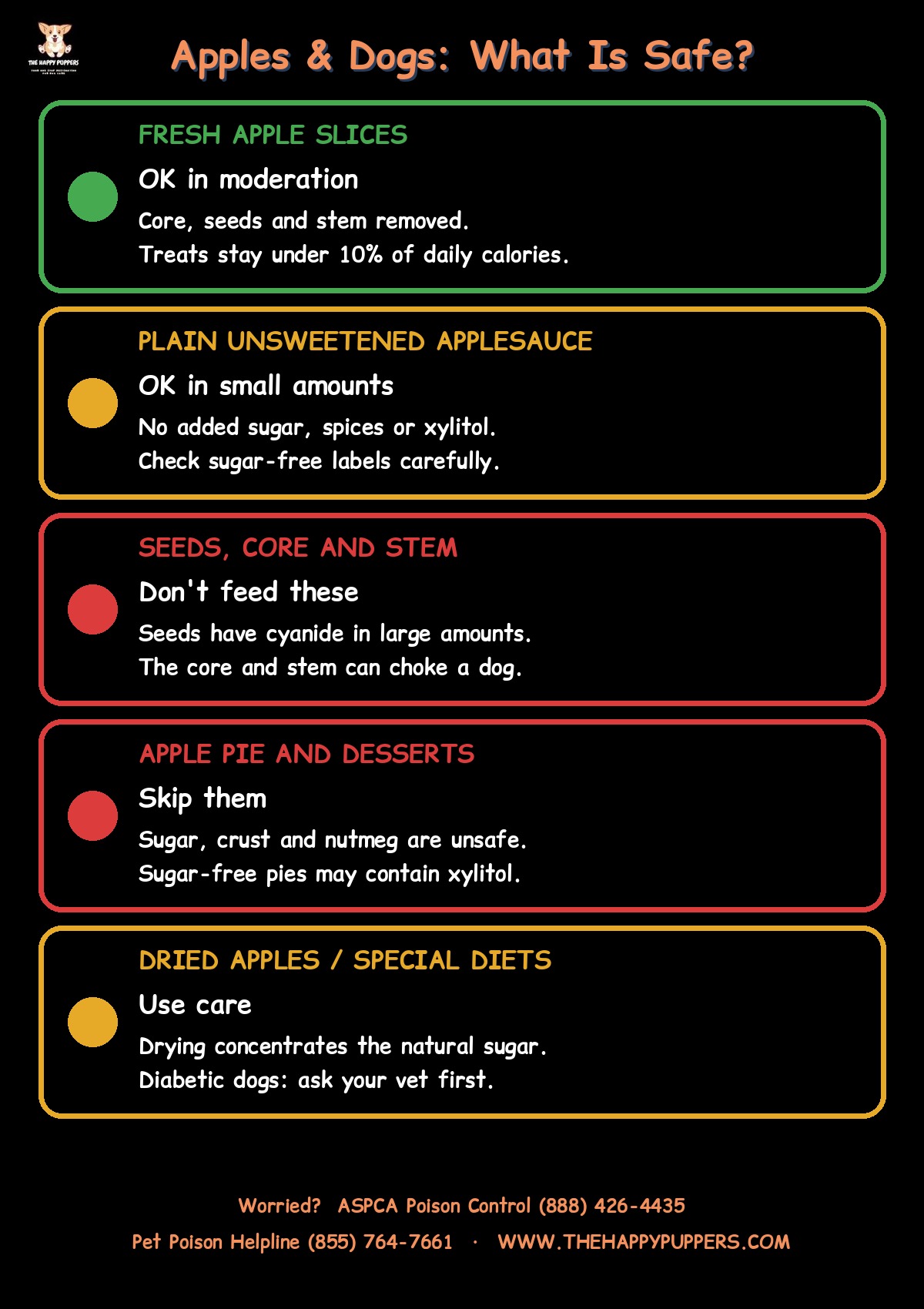
Can dogs eat applesauce, apple pie or dried apples?
Applesauce
Yes, but only plain, unsweetened applesauce, in small amounts (PetMD; AKC). Applesauce often includes added sugars, so always choose unsweetened (AKC). Avoid added sugar, spices, preservatives or artificial sweeteners such as xylitol, which is toxic to dogs (PetMD). Chewy adds that many “sugar-free” applesauces contain xylitol.
Apple pie
No. AKC says dogs should not eat apple pie: the added sugar and crust are too much. If the pie includes nutmeg, it contains myristicin. According to AKC (citing Pet Poison Helpline), nutmeg in small doses might cause mild gastrointestinal distress; in very large doses, it can cause hallucinations, high blood pressure and seizures.
Sugar-free pies and other “diet” desserts may also contain xylitol (birch sugar or wood sugar). The FDA says it can be found in baked goods, candy, gum and some peanut butters, and that symptoms can occur quickly: vomiting, then weakness, staggering, collapse or seizures from a sudden drop in blood sugar. Call your veterinarian immediately if the product contains xylitol (FDA). AAHA and the ASPCA also warn that xylitol in sugar-free desserts can cause low blood sugar, liver failure and even death.
Dried apples
If you offer dehydrated apples, use smaller portions than fresh apple, because drying concentrates the natural sugars. Skip store-bought dried apples with added sugar, preservatives or other unsuitable ingredients (PetMD).
Apples at Thanksgiving
Plain chopped apples can be a safer holiday treat than fatty table scraps. Kansas State University veterinarian Susan Nelson, DVM, recommends vegetables not cooked in butter, chopped apples, plain pumpkin or sweet potatoes instead of gravy, dark meat, ham, butter and meat drippings, which can lead to gastrointestinal upset and, in some cases, fatal pancreatitis.
The FDA says not to give pets high-fat scraps such as fat trimmings or skin from a roasted turkey or chicken. Rich foods can cause an upset stomach and a potentially life-threatening pancreatitis. Signs in dogs include vomiting, stomach pain, restlessness, shaking, diarrhea, fever and weakness (FDA). AAHA and the ASPCA likewise warn that high-fat holiday foods can trigger pancreatitis; the ASPCA recommends staying close to your pet’s normal diet.
A few bite-size apple pieces, with the core, seeds and stem removed, are a better share than gravy, skin or pie, as are dog-safe cranberries. Keep xylitol desserts, gum and candy out of reach (FDA; AAHA; ASPCA; K-State). After the meal, wrap leftovers and bones and put them in a trash bin your pets can’t get into (FDA).
My dog ate apple seeds, a core or apple pie. What should I do?
Work out what they ate and how much, including whether a dessert was sugar-free or made with nutmeg.
- Seeds: A small number is unlikely to cause harm (AKC; PetMD), but watch your dog and contact a veterinarian if you notice symptoms (AKC).
- A core or stem: Watch for choking, digestive trouble or blockage (AKC). A large piece of core may also contribute to intestinal obstruction (PetMD). Call your vet if your dog is choking, vomiting or seems unwell.
- Too much apple: Apples aren’t toxic, but a large amount can cause stomach upset. Contact your veterinarian if you see vomiting, diarrhea, bloating or belly pain (Chewy).
- Apple pie or a sugar-free dessert: If xylitol is possible, the FDA says to call your veterinarian immediately, because symptoms can start quickly. If you’re unsure what was in the dessert, call your vet or a poison control line rather than waiting.
Don’t give a home antidote or try to make your dog vomit unless a veterinarian or Pet Poison Helpline tells you to (Pet Poison Helpline).
If your dog ate something risky
Call your veterinarian or an emergency clinic, or ASPCA Animal Poison Control at (888) 426-4435 (24/7, 365 days a year; a consultation fee may apply) or Pet Poison Helpline at (855) 764-7661 (24/7; $99 USD per incident, follow-ups included). Tell them what your dog ate, how much, and your dog’s weight.
Related reading: Can dogs eat turkey? · Can dogs eat ham? · Can dogs eat cranberries?
Frequently asked questions
Yes, in moderation, after you remove the core, seeds and stem (PetMD; AKC; Chewy). Stay within the 10% treat rule. About one or two slices is enough (AKC).
No. Seeds contain a small amount of cyanide, and the core and stem can choke a dog or contribute to a blockage (PetMD; AKC; Chewy). A small number of seeds is unlikely to poison a dog, but they should still be removed.
AKC says about one or two slices. PetMD uses the 10% treat rule and a size-based chart: 1–2 pieces for extra-small dogs (2–10 pounds) up to 5–6 pieces for extra-large dogs (91+ pounds), with each piece about 1 inch wide and 1/4 inch thick.
Only plain unsweetened applesauce, in small amounts (PetMD; AKC). Many “sugar-free” applesauces contain xylitol, which is toxic to dogs (PetMD; Chewy).
No. Skip it because of added sugar, crust and possible nutmeg (AKC). Sugar-free pies may also contain xylitol (FDA; AAHA; ASPCA).
Yes, in small amounts (AKC). Start with a little and watch for digestive problems. Rapidly growing puppies may be sensitive to the natural sugar (Chewy).
Sources
- AKC: Can Dogs Eat Apples? (updated June 2, 2026)
- PetMD: Can Dogs Eat Apples? (updated September 25, 2025)
- Chewy: Can Dogs Eat Apples? (updated October 6, 2025)
- Kansas State University: K-State veterinarian shares Thanksgiving pet safety reminders (November 25, 2025)
- ASPCA: Thanksgiving Safety Tips That Will Keep Your Pets Feeling Thankful This Holiday (November 20, 2025)
- FDA: Keep Your Dogs and Cats Safe From Holiday Hazards (current as of December 17, 2025)
- AAHA: Thanksgiving Foods Pets Should Avoid (updated September 24, 2026)
- ASPCA Animal Poison Control
- Pet Poison Helpline
