

Short answer: Yes, dogs can eat a small amount of plain, cooked, skinless, boneless turkey meat. What makes Thanksgiving turkey risky isn’t the meat itself; it’s the bones, skin, fat, seasonings, onions, garlic and stuffing that come with it (AKC).
Thanksgiving falls on Thursday, November 26, 2026, and it means plenty of tempting food within your dog’s reach. Here’s how to include your dog without a trip to the emergency vet.
Topics covered in this blog post
Is turkey good for dogs?
Turkey isn’t toxic to dogs. It’s a common ingredient in commercial dog foods and is a lean source of protein, riboflavin and phosphorus (AKC). The problem is the way we cook it for the holidays: rubbed with butter, seasoned with salt, herbs and spices, and stuffed with onions and garlic.
How to feed turkey to your dog safely
- Plain meat only. White breast meat with no seasoning is the safest choice.
- Remove all skin. The skin holds most of the fat, butter, oil and seasonings, and high-fat foods can trigger pancreatitis (AKC).
- No bones at all. Check every piece.
- Small amounts. Tufts Petfoodology recommends keeping treats and table food under 10% of your dog’s total daily calories. For example, a fairly active 25-pound dog needs about 600 calories a day, so no more than 60 calories from treats. For scale, ¼ cup of cooked turkey breast has about 50 calories, and 1 level tablespoon has about 12.
- Skip it if your dog has a health condition like pancreatitis, diabetes, a sensitive stomach or a prescription diet, and ask your vet first.
- Tell your guests not to slip food under the table.
Can dogs eat turkey bones?
No. Cooked poultry bones are brittle and can splinter. Vets warn they can cause (AKC):
- Mouth and tongue injuries
- Choking
- Blockages in the throat, stomach or intestines
- Tears in the stomach or intestinal lining
- Constipation and rectal bleeding
- Blockages that need emergency surgery
Bag the carcass and put it in a lidded outdoor bin right away. Pet Poison Helpline warns that discarded bones, corn cobs and turkey trussing can cause blockages or injury that may need surgery, and Tufts advises securing the trash carefully.
Raw turkey necks? Some owners feed raw meaty bones under vet guidance, but raw poultry carries a risk of bacteria like Salmonella (AKC), for your dog and for your family. Talk to your vet before trying it.
Can dogs eat turkey skin?
No. The skin holds most of the fat, butter and seasoning. AKC warns that high fat content can cause pancreatitis, and Pet Poison Helpline lists fatty drippings, gravies and meat scraps as pancreatitis risks.
Can dogs eat turkey with gravy, stuffing or seasoning?
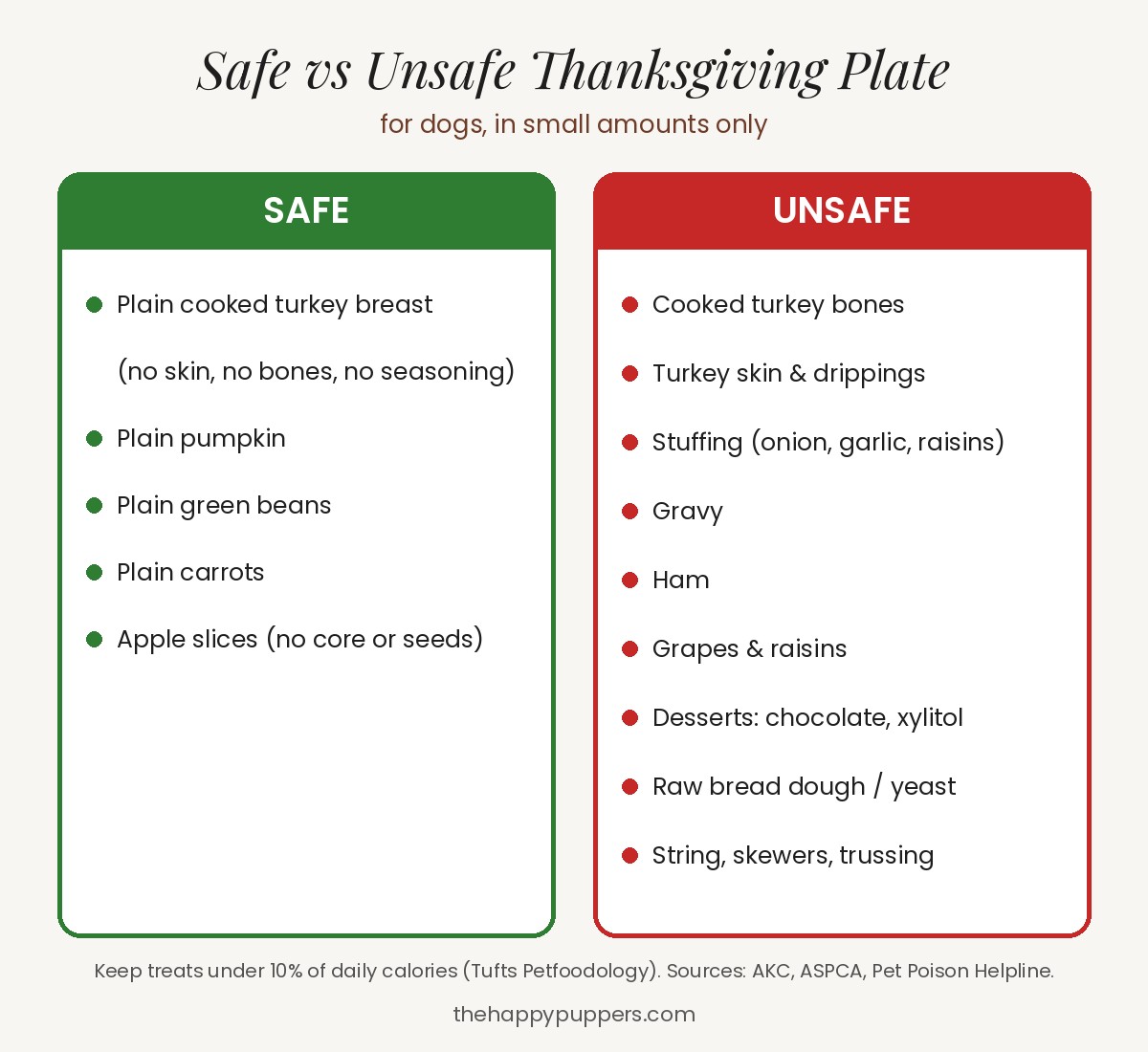
Avoid these Thanksgiving foods:
| Food | Why it’s risky |
|---|---|
| Stuffing | Usually contains onions, garlic, leeks or chives (toxic to dogs) and sometimes raisins |
| Gravy | Fatty and salty; often made with onion |
| Turkey skin and drippings | High fat, pancreatitis risk |
| Cooked bones | Splinters, blockages |
| Ham | Very salty and fatty |
| Raisins / grapes (in salads or stuffing) | Can cause sudden kidney injury |
| Desserts | Chocolate and xylitol (sugar-free baking) |
| Raw bread dough / yeast | Can rise in the stomach, cause bloating, and produce alcohol |
| String, skewers, turkey trussing | Can cause blockages or injury |
Sources: AKC; ASPCA “People Foods to Avoid Feeding Your Pets”; Pet Poison Helpline; Tufts Petfoodology.
Can dogs eat turkey lunch meat, bacon or sausage?
These are processed and usually salty and fatty, and they may be seasoned with garlic or onion (check the label). ASPCA warns that excessive salt can cause vomiting, diarrhea and, in large amounts, more serious problems. Plain home-cooked turkey is a much better choice.
Can dogs eat ground turkey?
Plain, fully cooked, unseasoned ground turkey (drained of fat) can be an occasional small treat. Don’t feed it raw: raw meat can carry bacteria such as Salmonella and E. coli (ASPCA).
Safe Thanksgiving extras for dogs
Tufts Petfoodology lists these as good treat options for healthy dogs, in small amounts and without butter, sauces, salt or seasoning:
- A small amount of cooked turkey breast
- Pumpkin
- Green beans
- Carrots
- Apples
Or skip the people food altogether: a stuffed food toy or a long-lasting dog chew keeps your dog busy while you eat. At our place, with four dogs and a full table, a chew in another room keeps everyone calm.
When to call the vet
Call your vet, an emergency clinic, or a poison line right away if your dog:
- Ate cooked bones, a carcass, string, skewers or a roasting bag
- Ate stuffing, gravy or anything with onion, garlic, raisins, chocolate or xylitol
- Ate a large amount of fatty food (skin, drippings, butter)
- Has repeated vomiting, a painful or bloated belly, hunching (“prayer position”), weakness, straining to poop, or black or bloody stool
US poison lines (24/7; a fee applies):
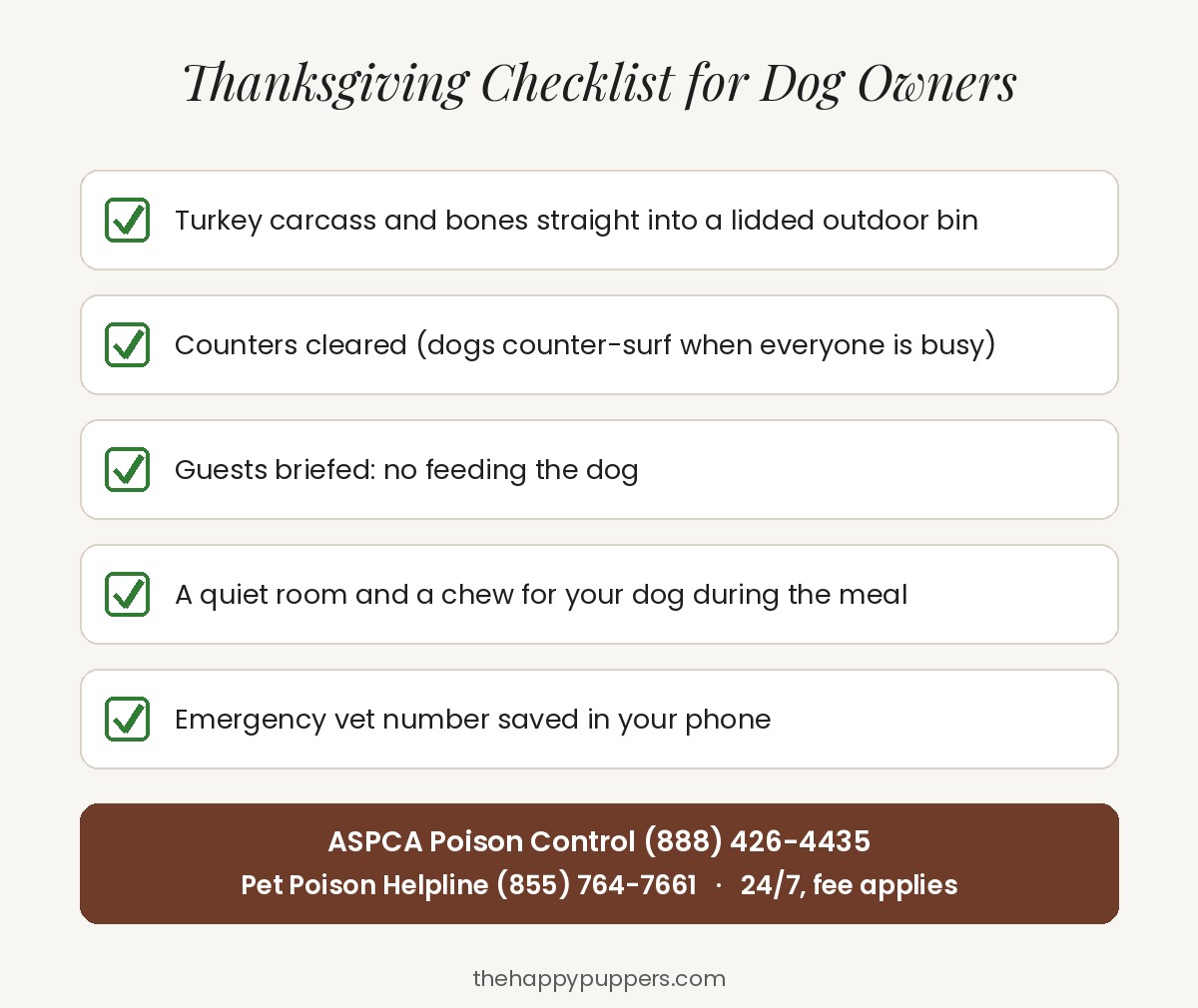
- ASPCA Animal Poison Control Center: (888) 426-4435
- Pet Poison Helpline: (855) 764-7661
Don’t try to make your dog vomit unless your vet tells you to.
Thanksgiving checklist for dog owners
- Turkey carcass and bones straight into a lidded outdoor bin
- Counters cleared (dogs counter-surf when everyone is busy)
- Guests briefed: no feeding the dog
- A quiet room and a chew for your dog during the meal
- Emergency vet number saved in your phone
Related reading: Bone broth for dogs · Superfoods for dogs II · My dog ate chocolate: what to do right now
Frequently asked questions
Plain cooked turkey can be part of a balanced diet; many dog foods contain it. But adding lots of turkey to your dog’s meals can unbalance their diet and add calories. Keep it as a small treat unless your vet recommends otherwise.
Keep it to a tiny amount of plain, boneless, skinless meat, or skip it. Foods a pet doesn’t usually eat can cause diarrhea or vomiting (Tufts Petfoodology), and your puppy’s regular food is the safest choice.
Call your vet, and don’t try to make your dog vomit unless the vet tells you to. Cooked bones can cause choking, blockages, tears in the gut, constipation and rectal bleeding (AKC).
No. Pet Poison Helpline lists gravies among the fatty foods that can cause pancreatitis, and gravy often contains onion.
No. Stuffing usually contains onions, garlic or other toxic ingredients.
Sources
- AKC: Can Dogs Eat Turkey? https://www.akc.org/expert-advice/nutrition/can-dogs-eat-turkey/
- Tufts Petfoodology (Cummings School of Veterinary Medicine): The Most Popular Holiday Foods…That Your Pet Should Avoid! https://sites.tufts.edu/petfoodology/2023/12/08/the-most-popular-holiday-foodsthat-your-pet-should-avoid/
- ASPCA: People Foods to Avoid Feeding Your Pets. https://www.aspca.org/pet-care/aspca-poison-control/people-foods-avoid-feeding-your-pets
- Pet Poison Helpline: Thanksgiving Pet Safety Tips. https://www.petpoisonhelpline.com/uncategorized/thanksgiving-pet-safety-tips/
- Pet Poison Helpline: Thanksgiving Pet Poisons. https://www.petpoisonhelpline.com/uncategorized/thanksgiving-pet-poisons/
- ASPCA Animal Poison Control Center. https://www.aspca.org/pet-care/animal-poison-control
