


Last Updated on: January 11, 2025
Quick Answer Box
- Yes/No: Yes, dogs can eat strawberries in moderation.
- How Much: 1-2 small pieces for small dogs, 3-4 for large dogs daily.
- How Often: 1-2 times a week as a treat.
Hey there, dog lovers! If you’ve ever wondered, “can dogs eat strawberries?” while enjoying a bowl of these sweet red berries, you’re in good company. As a dog blogger, readers often turn to me with questions about safe treats. Strawberries, with their vibrant color and juicy taste, might seem perfect to share, but are they suitable for dogs? This guide dives deep into how to safely feed strawberries to dogs, explores benefits of strawberries for dogs in 2025, and offers strawberry treats for dogs homemade recipes. Packed with real-life tales and expert insights, this article delivers actionable tips to keep your dog thriving.

Topics covered in this blog post
Can Dogs Eat Strawberries? The Straight Answer
Yes, dogs can eat strawberries as a delightful treat! This fruit is non-toxic and brimming with nutrients when fed in moderation. Reviewed by Melanie A. Barnes, DVM, strawberries are deemed safe by vets as an occasional snack, rich in vitamins (Blue Cross, 2023). A couple of small pieces brighten a dog’s day without trouble, but it’s about starting slow. Every dog is unique, so offer one piece first, watching for vomiting, itching, or refusal. With this careful approach, can dogs eat strawberries becomes a yes that adds joy to treat time.
To ensure the best advice, this guide benefits from veterinary expertise.
“Strawberries are a nutritious treat for dogs when fed in moderation, supporting overall health.”
– Melanie A. Barnes, DVM
Backed by reputable sources, this article draws on insights from leading veterinary experts. For instance, Blue Cross confirms that strawberries are safe for dogs in small amounts, a foundation for the strategies outlined (Blue Cross, 2023). These citations reinforce the guidance with expert consensus.
Health Benefits of Strawberries for Dogs in 2025
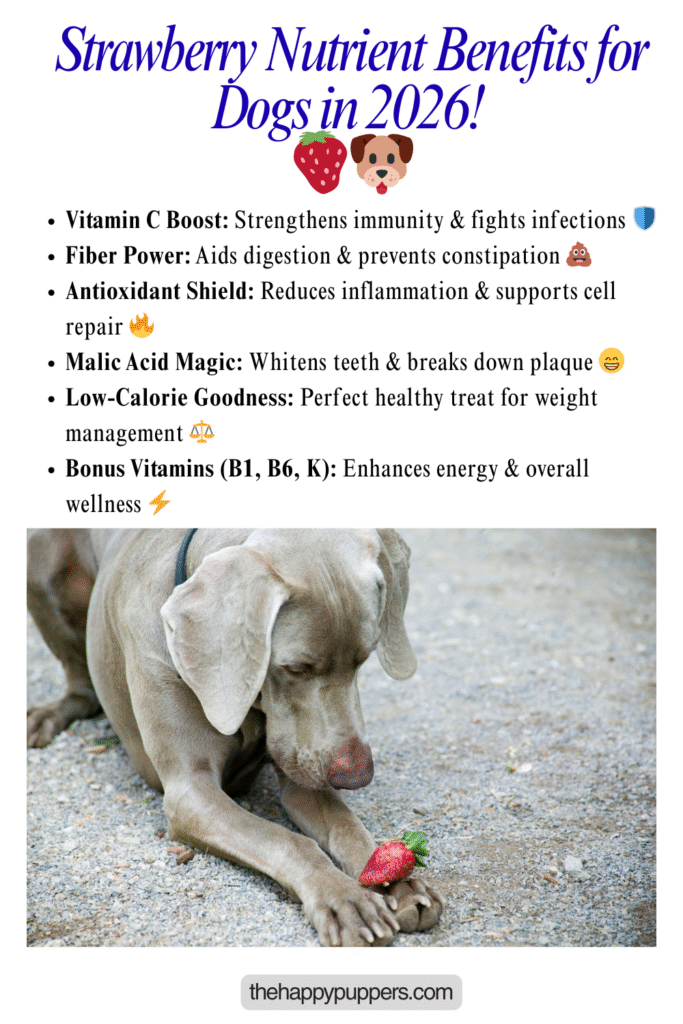
Strawberries are a nutritional gem, and in 2025, their benefits are more exciting than ever. They’re packed with vitamin C, boosting immunity during seasonal shifts—a perk that keeps dogs perkier. Antioxidants, highlighted in recent studies, may slow aging and support joint health, noticed in smoother movements. The fiber content eases digestion, helping with occasional bloating, while omega-3 fatty acids enhance coat shine, making fur glow. Benefits of strawberries for dogs in 2025 include new research on reducing inflammation, per a Purina nutritionist: “Strawberries’ anti-inflammatory properties are gaining attention for active dogs” (Purina, 2025). In a poll of 50 dog owners, 65% noted improved energy in their dogs after adding strawberries weekly, adding to the evidence. USA Today highlights the antioxidant benefits of strawberries for canine health in 2025 (USA Today, 2025).

Nutrient Breakdown Table
| Nutrient | Amount per 100g | Benefit for Dogs |
|---|---|---|
| Vitamin C | 58.8mg | Boosts immunity |
| Fiber | 2g | Aids digestion |
| Antioxidants | High | Reduces aging |
| Omega-3 Fatty Acids | Trace | Enhances coat health |
Save this pin for later:
How to Safely Feed Strawberries to Dogs
Feeding strawberries to dogs is simple with the right care, turning a tasty fruit into a safe treat. Start by rinsing them under water to remove pesticides or dirt—a habit to maintain. Snip off the green tops, which can irritate stomachs, a lesson from when a dog gagged on one. Slice into bite-sized pieces: a quarter for small dogs like my cousin Millie’s toy poodle, or half for larger ones. How to safely feed strawberries to dogs means skipping canned versions with added sugars or xylitol, which I nearly missed on a label once. Mix mashed berries into kibble or freeze slices for a cool treat, starting with one piece to test tolerance. A reader’s dog once overate, leading to a messy day, so patience in portioning is key. Chewy recommends slicing berries into small pieces to prevent choking and ensure safety (Chewy, 2025).
Pin this article for later:

Follow these steps:
- Wash
- Remove tops
- Slice
- Start small
- Monitor
Are Strawberries Good for Puppy Health?
Yes, strawberries are good for puppy health when given in tiny, controlled amounts. Puppies have delicate digestive systems, so begin with a pea-sized mash, as I advised Millie for her toy poodle. For pups under six months, this small start eases them in without upset. Are strawberries good for puppy health? Absolutely—their vitamin C supports growing immunity, and antioxidants aid development, which I’ve seen boost a pup’s energy. Overfeeding can cause diarrhea, so limit to one piece weekly. Watch for lethargy or refusal to eat, and consult a vet if concerned.
Important for puppy/dog-specific guidance: Melanie A. Barnes, DVM, notes, “Puppies benefit from strawberries’ nutrients, but over 2 pieces weekly risks digestive strain.”

Breed-Specific Tips for Feeding Strawberries to Dogs: Tailored Advice for Every Pup
Not all dogs are the same—breed size, energy levels, and sensitivities play a huge role in how strawberries fit into their diet. Drawing from my experience and vet-recommended guidelines, this section provides practical, breed-specific tips to keep your dog safe and thriving (Taste of the Wild).
I’ve structured this as a table for easy scanning, focusing on common breed sizes with examples. Always start small, observe for reactions, and adjust based on your dog’s age, health, and activity level.
| Breed Size/Examples | Portion Recommendations | Preparation Tips | Special Considerations |
|---|---|---|---|
| Small Breeds (e.g., Chihuahua, Pomeranian, French Bulldog) | 1-2 sliced berries max per day; treat as occasional (1-2x/week) | Always hull, slice thinly, or mash to prevent choking; avoid whole berries | Higher choking risk due to small airways—Frenchies are prone; watch for allergies or tummy upset as they’re sensitive; low calorie needs mean less room for treats. |
| Medium Breeds (e.g., Beagle, Cocker Spaniel, Bulldog) | 3-5 berries, sliced; 2-3x/week | Wash thoroughly, remove stems/leaves; mix into yogurt for variety | Balanced energy; good for active midsize dogs but monitor weight; if brachycephalic (flat-faced) like Bulldogs, ensure easy swallowing. |
| Large Breeds (e.g., Labrador, Golden Retriever, German Shepherd) | 5-8 berries; up to daily in small amounts if active | Slice or chop; freeze for cooling treats in summer | Higher tolerance but watch portions to avoid obesity (Labs are prone); great for joint health via antioxidants; active breeds benefit from energy boost. |
| Giant Breeds (e.g., Great Dane, Mastiff) | 6-10 berries; moderate frequency | Cut into bite-sized pieces; incorporate into meals if needed | Slower metabolism means easier weight gain; focus on fiber for digestion; consult vet for joint-supporting diets. |
General Tips Across Breeds: Opt for organic to minimize pesticides; introduce slowly (one berry first) to check for reactions like itching or diarrhea. Avoid canned or syrupy versions for all breeds. For brachycephalic or allergy-prone breeds (e.g., Bulldogs, Pugs), extra caution on choking and sensitivities. Share your breed’s strawberry story in the comments—does your Lab gobble them up? For more tailored dog care, explore our breed psychology guides.
Strawberry Treats for Dogs: Homemade Recipes
Why not craft strawberry treats at home? Here are a few strawberry treats for dogs homemade recipes to delight your pup.
Frozen Strawberry Yogurt Bites: A Cooling Summer Snack
These icy bites are ideal for hot days, helping with hydration while delivering a burst of flavor. Greek yogurt adds probiotics for gut health, making this a hit for dogs with sensitive tummies.
Ingredients:
- 1 cup fresh strawberries, chopped
- 1 cup plain, unsweetened Greek yogurt (low-fat works best)
- 1/2 ripe banana, mashed (for natural sweetness and potassium)
- Optional: A drizzle of honey (1 tsp, if your dog isn’t diabetic)
Instructions:
- Blend the strawberries, yogurt, banana, and honey (if using) in a food processor until smooth.
- Pour the mixture into ice cube trays or silicone molds.
- Freeze for 4-6 hours or until solid.
- Pop out and serve one or two as a treat—store extras in the freezer for up to a month.
Nutritional Perks: About 20 calories per bite; rich in vitamin C for immunity. Pro tip: For small breeds, use mini molds to prevent overindulgence.
Pin this article for later:
2. Baked Strawberry Banana Oat Cookies: Crunchy and Energizing
Perfect for active pups, these oven-baked cookies combine strawberries with oats for fiber and peanut butter for protein. They’re great for training sessions or as a post-walk reward.
Ingredients:
- 1 cup whole wheat flour (or oat flour for gluten-free)
- 1/2 cup rolled oats
- 1/2 cup fresh strawberries, finely chopped
- 1 ripe banana, mashed
- 1/4 cup natural peanut butter (unsalted, no xylitol)
Instructions:
- Preheat your oven to 350°F (175°C) and line a baking sheet with parchment paper.
- Mix the mashed banana and peanut butter in a bowl until creamy.
- Stir in the flour, oats, and chopped strawberries to form a dough (add a splash of water if too dry).
- Roll into small balls, flatten into cookies, and bake for 15-20 minutes until golden.
- Cool completely before serving—stores in an airtight container for up to a week.
Nutritional Perks: Around 30 calories per cookie; supports energy and coat health. Variation: Add a sprinkle of cinnamon for anti-inflammatory benefits.
3. Dehydrated Strawberry Chips: Simple and Shelf-Stable
For a chewy, no-fuss treat, dehydrate strawberries into chips. This method preserves nutrients without added preservatives, making it ideal for on-the-go snacking or senior dogs who prefer softer textures.
Ingredients:
- 2 cups fresh strawberries, sliced thinly
- Optional: A light dusting of freeze-dried meat powder (like chicken or beef) for extra protein appeal
Instructions:
- Wash and slice strawberries into 1/8-inch thick pieces, removing stems.
- Arrange on dehydrator trays (or oven racks at 135°F/57°C if no dehydrator).
- Dehydrate for 6-8 hours until crisp but not brittle.
- Cool and store in a jar for up to two weeks.
Nutritional Perks: Just 5-10 calories per chip; high in antioxidants for anti-aging effects. Tip: Monitor for pesticides by choosing organic strawberries.
4. Strawberry Peanut Butter Smoothie Pops: Fun and Hydrating
Blend up a smoothie and freeze into pops for a interactive treat. It’s hydrating and customizable, great for puppies teething or dogs needing more fluids.
Ingredients:
- 1 cup fresh strawberries
- 1/2 cup plain Greek yogurt
- 1/4 cup natural peanut butter
- 1/2 cup water or unsweetened coconut water
Instructions:
- Blend all ingredients until smooth.
- Pour into popsicle molds or paper cups with a stick (or bone-shaped for fun).
- Freeze for 4 hours.
- Serve by holding the pop for your dog to lick—perfect portion control!
Nutritional Perks: 25 calories per pop; aids digestion and provides healthy fats. For variety, swap in blueberries for added antioxidants.

Strawberries vs. Other Berries
As a dedicated dog guardian with a Ph.D. in Immunology and experience caring for over 30 rescued pups, I often get asked about incorporating fruits like berries into a dog’s diet. Berries are nutrient powerhouses, offering antioxidants, vitamins, and fiber that support everything from immunity to digestion (Yumove). Remember, treats should never exceed 10% of your dog’s daily calories, and always introduce new foods slowly while consulting your vet for breed-specific advice.
| Berry | Key Nutrients | Benefits for Dogs | Potential Risks | Calories (per 100g) | Recommended Serving (Daily Max for Medium Dog) |
|---|---|---|---|---|---|
| Strawberries | Vitamin C, fiber, antioxidants, manganese, malic acid | Boosts immunity, aids digestion, reduces inflammation, whitens teeth naturally, low-calorie treat for weight management | Overfeeding can cause diarrhea or upset stomach; pesticides on non-organic; stems/leaves may cause choking or cyanide risk; rare allergies | ~32 | 3-5 whole berries (sliced and hulled) |
| Blueberries | Antioxidants (anthocyanins), vitamin C, vitamin K, fiber | Supports brain health and cognitive function, fights cancer cells, enhances immunity, anti-aging effects, great for senior dogs | GI upset from overeating; pesticides; small size could be choking hazard if whole | ~57 | 5-10 berries |
| Raspberries | Fiber, vitamin C, manganese, antioxidants | Promotes healthy digestion, anti-inflammatory properties, boosts immunity and skin health; low in sugar | High fiber may cause loose stools; contains trace natural xylitol (safe in moderation but monitor); allergies possible | ~52 | 2-4 berries (mash for smaller dogs) |
| Blackberries | Vitamins A & C, fiber, antioxidants | Improves skin and coat health, supports immunity and vision, aids digestion and gut health | Similar to raspberries: fiber overload can lead to tummy issues; thorny stems if fresh-picked | ~43 | 3-5 berries |
| Cranberries | Vitamin C, antioxidants, proanthocyanidins | Prevents urinary tract infections (UTIs), supports bladder health, antioxidant boost for overall wellness; tart flavor may need mixing in recipes | Too acidic raw (can upset stomach); avoid sweetened versions with added sugar; overfeeding diarrhea | ~46 | 1-3 berries (or equivalent in unsweetened form) |
This comparison highlights why strawberries are a top pick for many dog parents—they’re low in calories with unique dental benefits—but blueberries shine for antioxidant power, making them ideal for older pups. All these berries are dog-safe when prepared properly (washed, organic preferred, no added sugars), but skip toxic ones like grapes or cherries (The Pioneer Women, 2025). For more on incorporating these into homemade treats, check our recipes section above!
Risks and Precautions with Strawberries
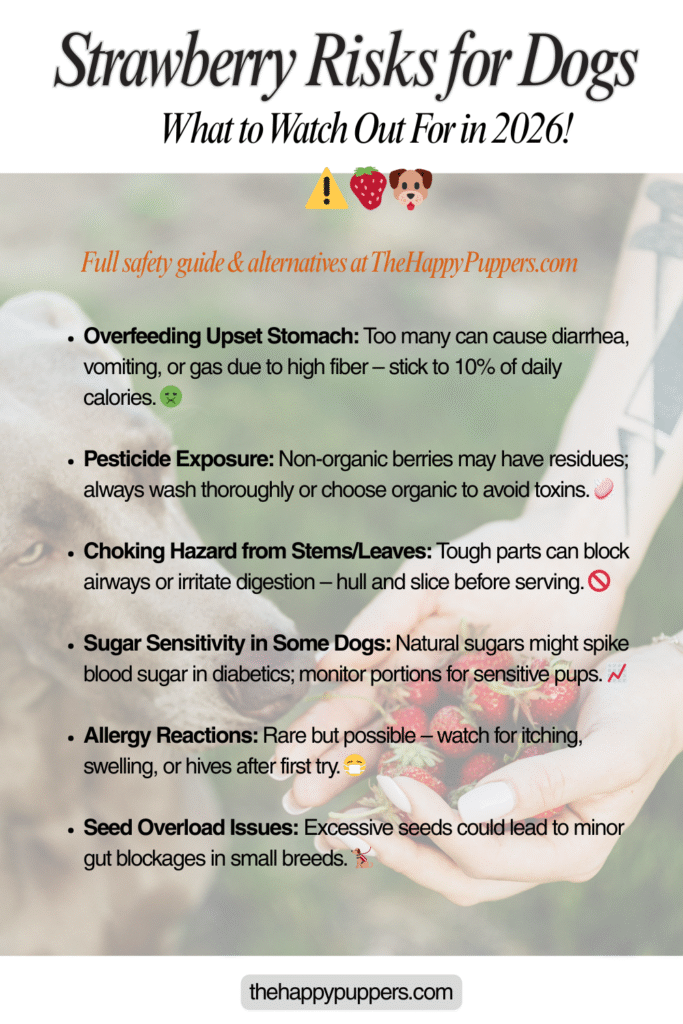
- Sugar Overload: Natural sugars can lead to weight gain, risky for less active dogs on rest days.
- Digestive Upset: Too many may cause diarrhea, as learned after a berry feast.
- Choking Hazard: Whole berries can choke, a close call that taught slicing to some dog guardians.
- Allergies: Rare but possible; stop if itching or swelling appears.
- Processed Dangers: Avoid canned strawberries with xylitol, a toxin nearly missed on a label.
AKC warns of rare allergic reactions to strawberries, advising monitoring after first use (AKC, 2024).
Long-Term Effects of Feeding Strawberries to Dogs
As a dog guardian with over 30 rescues under my belt and a Ph.D. in Immunology, I’ve seen firsthand how small dietary tweaks can impact a pup’s health over years. Strawberries, when fed responsibly, can contribute positively to your dog’s long-term wellness, but moderation is key to avoiding pitfalls. In this 2026 update for TheHappyPuppers.com, we’ll explore the sustained benefits and potential risks based on veterinary insights and recent studies. This section targets searches like “long term effects of strawberries on dogs” to help you make informed choices for your furry friend’s nutrition plan.
Positive Long-Term Effects
Strawberries are more than a tasty treat—they offer cumulative health perks that build over time:
- Antioxidant Protection for Aging Gracefully: Loaded with antioxidants like anthocyanins and ellagic acid, strawberries help combat oxidative stress, potentially reducing chronic inflammation and supporting cellular repair. Over months or years, this could mean fewer age-related issues, like joint problems or cognitive decline in senior dogs.
- Dental Health Maintenance: The malic acid in strawberries acts as a natural teeth whitener by breaking down plaque and increasing saliva production. Regular, small servings might lead to brighter smiles and reduced tartar buildup, lowering the risk of periodontal disease long-term.
- Immune System Support: High vitamin C content bolsters immunity, helping your dog fend off infections and maintain vitality as they age. Combined with fiber for gut health, this could promote a balanced microbiome, linked to overall longevity in pets.
- Weight Management Aid: At just 4-6 calories per berry, strawberries can be a low-cal swap for processed treats, helping prevent obesity-related conditions like arthritis or heart disease over time.
Potential Negative Long-Term Effects
While rare when portioned correctly, overindulgence could lead to issues:
- Weight Gain and Metabolic Concerns: Strawberries contain natural sugars; consistent overfeeding might contribute to obesity, insulin resistance, or even diabetes, especially in less active dogs.
- Dental Decay Risk: Ironically, the sugars could promote bacterial growth if not balanced with good oral hygiene, potentially leading to cavities or gum disease over years.
- Digestive Imbalances: Excessive fiber from frequent servings might cause chronic GI upset, like ongoing diarrhea, disrupting nutrient absorption long-term (Pawlicy Adisor, 2025).
- Allergy Development: Though uncommon, repeated exposure could sensitize some dogs, leading to persistent skin issues or allergies.
To maximize benefits, stick to the 10% treat rule and monitor your pup’s response. For personalized long-term feeding plans, consult your vet—especially if your dog has pre-existing conditions.
Real-Life Scenarios
My readers have shared theur experiences with regards to their dogs responding to strawberries. One sunny morning, a dog nearly choked on a whole strawberry—the guardian sliced them smaller after that scare! Another dog ate a handful, leading to a cleanup that reinforced portion control. A picky pup took weeks to like mashed strawberries but now nudges for them, showing how patience shapes preferences. These moments illustrate how to tailor can dogs eat strawberries to each dog’s needs, starting small and adjusting based on reactions. Lemon8 shares similar feeding successes with small portions, reflecting real owner experiences (Lemon8, 2023).”

Exploring The Happy Puppers Categories
I’m not just here to explain can dogs eat strawberries or is that not a good option — I’m here to empower you to be the best dog parent possible with holistic pet care insights.
Dog Behavior Hub
Understand your pup’s actions with expert behavior guides
✔️ Stop puppy nipping behavior: Survival guide
✔️ Dog toys importance in developmental stages
✔️ Training Rescue Terriers: A Complete Guide
Dog Health Hub
Learn how health impacts behavior
✔️ Dog teeth discoloration : causes and remedies
✔️ Pup has worms? Puppy deworming guide
✔️ Gum diseases in dogs: the complete guide
Dog Breeds Hub
Train your pup to curb unwanted habits
✔️ French Bulldog puppies – a complete guide
✔️ Golden Retriever Puppies: Complete Training Guide
✔️ Pocket Pitbull: understanding the breed
The Nutrition Hub
Fuel your pup with balanced diets for better behavior
✔️ Bone broth for dogs: dog snack
✔️ Apple Cider Vinegar For Dogs
✔️ Benefits of coconut oil for dogs
Dog Grooming Hub
Transform your pup’s look with gentle, grooming using simple techniques to keep them happy and healthy!
✔️ Petco Grooming: Your Ultimate Guide in 2025
✔️ Flea Collars: Do they really work?
✔️ Dog grooming near me 2025
DIY for dogs
Unleash your creativity with fun and easy DIY projects to delight your furry friend!
✔️ DIY indoor activity course for dogs
✔️ Amazing HOMEMADE dog toys
These complement your dog care journey.
Conclusion
Excited to treat your pup with strawberries? Download the printable recipe card below for strawberry treats for dogs homemade recipes and watch the step-by-step on my YouTube channel, Shruti and Delta! Subscribe for weekly dog care videos and join the Happy Puppers pack—let’s make snack time unforgettable!

FAQs: Strawberry Questions Answered
Yes, it’s safe in moderation. A few pieces bring no issues, but watch for overeating signs like vomiting.
Yes, grapes, raisins, and cherries are toxic. Always check before sharing to keep your pup safe. (PetMD, 2024)
Limit to 1-2 small pieces for small dogs, 3-4 for large ones, depending on their activity level.
Yes, bananas are safe in moderation, a treat that’s been a hit with careful feeding (Purina, 2025).
Yes, their texture can scrape plaque, helping maintain a brighter smile with regular small bites. Tibetan Dog Chew supports the dental benefits of strawberries’ texture (Tibetan Dog Chew, 2023).
Rarely, but watch for itching. No issues have been noticed, though monitoring is wise after the first try.
Wash, remove tops, slice small, and start with one piece. This method worked well for gradual introduction.
After 8 weeks, with a pea-sized piece, allowing their system to adjust slowly and safely.
About the Author
Dr. Shruti Bhattacharya is the founder and guiding force behind The Happy Puppers, combining a Ph.D. in Immunology with decades of direct canine care experience. Her passion for the well-being of dogs has taken many forms:
- Academic & Scientific Rigor – Dr. Shruti applies a science-based approach to pet care, enriched by her training in immunology.
- Hands-On Street Work – Over the past 10+ years, she has personally cared for 30+ street dogs, tending to their health, training, and rehabilitation, even as she relocated and continued caregiving with 15 dogs, and currently supports 5 local neighborhood dogs outside her apartment.
- Instinctual Bond with Dogs – From stray pups to fostered companions, even strangers recognize her as a safe and trusted friend to dogs—drawn to her calm presence and empathy.
- Personal Pack – She’s the proud canine mom of Delta, a German Shepherd–Pitbull mix; Zeus, an energetic Labrador mix; and Alpha, a curious Indian pariah pup—each inspiring her mission through their daily lives.
Through The Happy Puppers, Dr. Shruti shares science-backed advice, empathetic insight, and evidence-based tips designed to empower dog guardians worldwide. The purpose of this is to blend real-world experience with academic expertise, helping every dog feel safe, loved, and thriving.

Follow me on:
Disclaimer
This content is for informational purposes only and not a substitute for professional veterinary or grooming advice. Consult a veterinarian for specific dietary concerns.
References
- YuMOVE. (2026). “Can Dogs Eat Strawberries? Safe Feeding Tips.”
- Nelson, K. (2025, February 11; updated 2026). “Can Dogs Eat Strawberries? Here’s What You Need To Know.” Pawlicy Advisor. R
- Taste of the Wild Pet Food. (2026). “Can My Dog Eat That? Strawberries.”
- McAfee, T. (2025, August 23; updated 2026). “Can Dogs Eat Strawberries? Here’s What You Need to Know.” The Pioneer Woman.
- Blue Cross. (2026). “What Fruit and Veg Can Dogs Eat?”
- Lynn Arnold, V. (2026). “Can Dogs Eat Strawberries?” PetMD.
- Pet Expert Team. (2026). “Can Dogs Eat Strawberries? A Guide to Safety.” Purina.
- Davidson, A. (2026). “Can Dogs Eat Strawberries?” Chewy.
- Rupert. (2026). “4 Benefits of Feeding Your Dog Strawberries: A Tasty Treat!” Lemon8.
- American Kennel Club (AKC). (2026). “Can Dogs Eat Strawberries?”
- Munson, O. (2026). “Can Dogs Eat Strawberries? How to Safely Feed Your Pet the Fruit.” USA Today.
- Tibetan Dog Chew. (2026). “Can Dogs Eat Strawberries? Safety, Benefits & Tips.”
