

Last Updated on: December 10th, 2025
If you’ve ever watched your furry friend tremble or hide under the chair in the waiting room, you know how tough it can be to keep your dog calm during vet visit. I’ve been through it countless times with my own pack—Delta, my energetic German shepherd-pitbull mix who is absolutely calm; Zeus, the laid-back Labrador mix who surprisingly gets antsy in new places; and Alpha, my spirited exotic Indian pup who’s still learning the ropes. As a dog blogger who’s spent years diving into canine psychology and health, I’ve gathered insights from hands-on experiences and solid research to help you turn those dreaded trips into smoother experiences. Today, I’m sharing everything you need to know to achieve a calm dog during vet visit, drawing from real-life scenarios and expert-backed tips.
Disclaimer: This is not veterinary advice; consult a professional for your dog’s needs.
Topics covered in this blog post
Why Should you Keep your Dog Calm During Vet Visit?
Before we jump in, let’s talk numbers to set the stage. In the US, studies show that up to 78.5% of dogs experience stress or fear during veterinary exams, often leading to incomplete check-ups or even aggression in severe cases (Investigating risk factors that predict a dog’s fear during veterinary consultations, 2019). According to AVMA research, a study of dogs in vet waiting rooms found that 53% displayed four or more behavioral signs of fear, highlighting the prevalence of this issue. Additionally, over 82% of US dogs visit the vet at least once a year, making stress management essential for routine care. Globally, including in India, similar patterns have emerged, where around 70% of dogs require muzzling or restraint at clinics due to heightened stress. These stats highlight why proactive steps are crucial for your dog’s well-being.
Quick Tips for a Stress-Free Vet Trip
To keep your dog calm during vet visit, focus on preparation and positivity:
- Desensitize at Home: Practice handling paws, ears, and mouth with treats to build tolerance.
- Use Calming Aids: Try pheromone collars (like Adaptil) or thunder shirts for comfort.
- Stay Composed: Your calm energy reassures your pup—use distractions like high-value treats during the exam.
- Schedule Happy Visits: Non-medical clinic drop-ins with rewards create positive associations.
- Choose Wisely: Opt for Fear Free® certified vets to minimize stress from the environment.
Always consult your vet for personalized advice, especially if anxiety is severe. For the full details, read on!
At a Glance
Here’s a handy table summarizing the key takeaways from this guide. Use it as a quick reference to help your furry friend stay relaxed—remember, every dog is unique, so tailor these to your pup’s needs!
| Aspect | Key Tips | Why It Helps |
|---|---|---|
| Understanding Anxiety | Identify triggers like unfamiliar smells or past bad experiences. | Builds empathy and allows early intervention for a calmer response. |
| Signs of Stress | Watch for yawning, panting, trembling, or hiding. | Spotting early lets you act fast to prevent escalation. |
| Immediate Techniques | Use distractions like treats, T-touch massages, and stay calm yourself. | Provides quick relief during the visit to maintain composure. |
| Reducing Stress | Pre-exercise, pheromone sprays, and quiet waiting spots. | Lowers overall energy and sensory overload for smoother trips. |
| Advance Planning | Desensitize at home, schedule happy visits, pack comfort items. | Builds positive associations over time for low-stress appointments. |
| Calming Strategies | Counter-conditioning, muzzle training, thunder shirts. | Addresses deep fears with tailored, positive tools. |
| Long-Term Approaches | Consistent training, diet tweaks (e.g., omega-3s), behaviorist consults. | Fosters lasting trust and reduces anxiety in all situations. |
| Clinic Selection | Choose Fear Free® certified vets with quiet setups. | Controls the environment to minimize triggers from the start. |
| Meds & Supplements | Vet-approved options like trazodone or L-theanine; trial first. | Offers extra support for severe cases when behavior alone isn’t enough. |
| Expert Insights | Focus on happy visits and desensitization (per Cornell, AKC, VCA). | Backed by pros for evidence-based success. |
Why Do Dogs Get Anxious at the Vet?
Common triggers include:
- Sensory overload: Bright lights, echoing floors, and the mix of animal scents.
- Handling discomfort: Being poked, prodded, or restrained.
- Association with illness: Many visits happen when they’re not feeling well, reinforcing fear.
Recognizing these helps you empathize and prepare. My cousin Millie, who has a tiny toy poodle named Pip, noticed her pup’s anxiety spiked after a routine vaccine—Pip started whining the moment they pulled into the parking lot. By addressing this early, she turned things around with simple tweaks.
Signs Your Dog is Stressed or Anxious
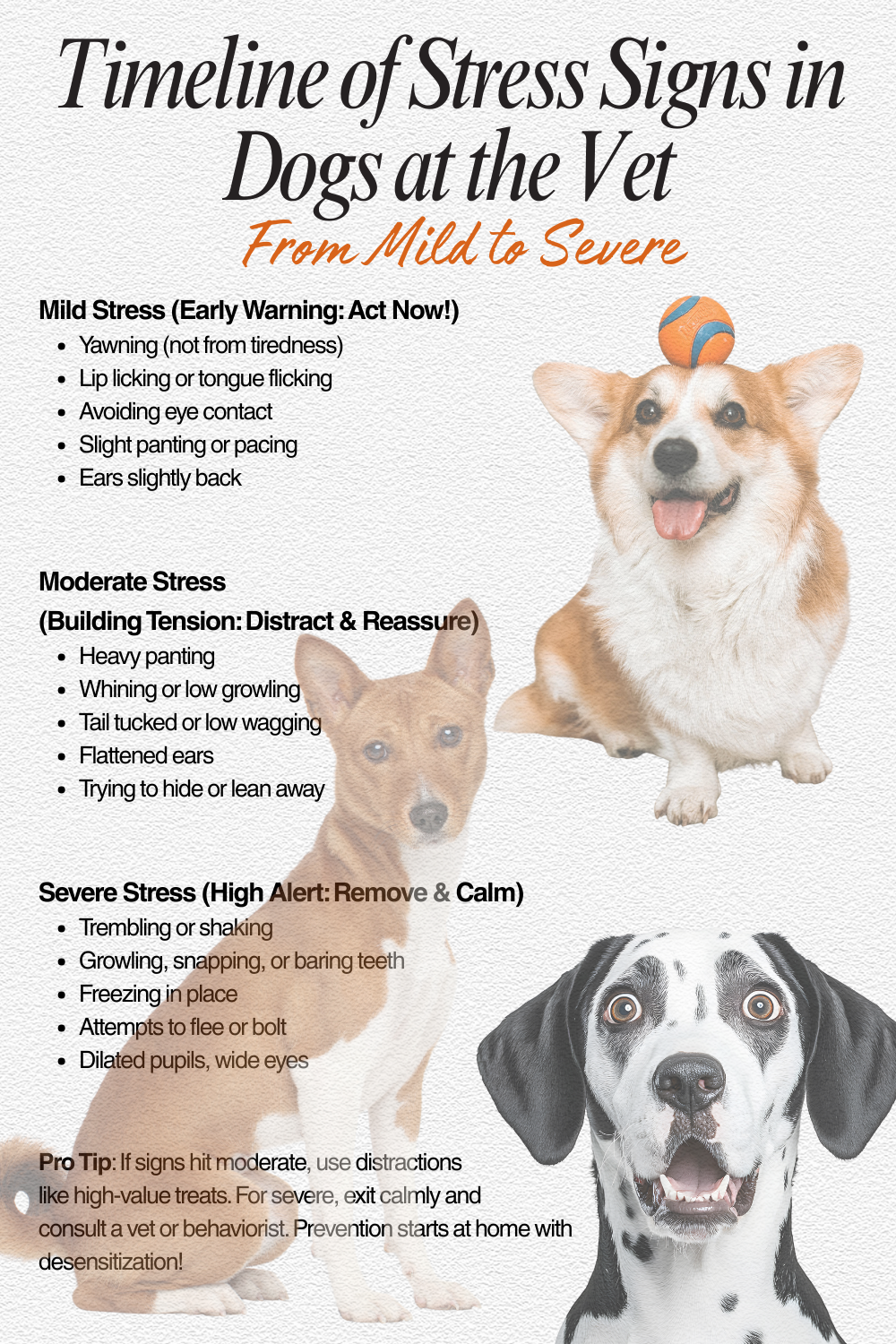
Spotting early warnings lets you intervene before things escalate, ensuring a calm dog during vet visit. Look for subtle cues like yawning (not from tiredness, but stress), lip licking, or avoiding eye contact. More obvious signs include trembling, panting excessively, whining, or trying to hide (Autumn Trails Vet, 2025). In extreme cases, growling or snapping might occur—not out of meanness, but fear.
Take Zeus, for example. He’s usually chill, but during one check-up, he started flattening his ears and tucking his tail the second we entered the door. I caught it early and distracted him with a favorite toy, which helped diffuse the tension. If your dog shows these, note them down to share with your vet—it could point to deeper issues like generalized anxiety.
To visualize the progression, here’s an infographic outlining a timeline of stress signs in dogs, from mild to severe, which can ramp up quickly in a vet setting.
How to Calm Anxious Dog at Vet: Immediate Techniques
When you’re already at the clinic, quick strategies can make a world of difference for a stressed dog during vet visit. Start by staying composed yourself—dogs pick up on our energy. Speak in a soft, reassuring tone, and avoid tense body language like gripping the leash too tightly (IAPWA, 2025).
One effective way is distraction: Bring high-value treats or a puzzle toy to shift focus. For Alpha, who gets fidgety, I use a lick mat smeared with peanut butter—it keeps him occupied while the vet checks his ears. Another tip: Use calming touches, like gentle ear massages or T-touch (circular motions on the body), which release endorphins (Lone Tree Vet, 2025).
Achieving a Calm Dog Vet Exam
During the actual exam, focus on maintaining that composure to ensure a calm dog vet exam. Position yourself where your dog can see you for reassurance, and use verbal cues like “good boy” paired with treats after each step. If possible, request the vet to explain procedures aloud in a calm voice—this demystifies the process and reduces surprises. In my experience with Alpha, holding his paw gently during the stethoscope check or IV drip helped him stay grounded, turning a potentially tense moment into a manageable one.
If your dog is highly reactive, consider arriving early to wait in the car until called, minimizing exposure to the bustling waiting room. Millie’s toy poodle benefited from this; Pip now enters the exam room with less fuss.
Tips to Reduce Dog Stress During Vet Visits
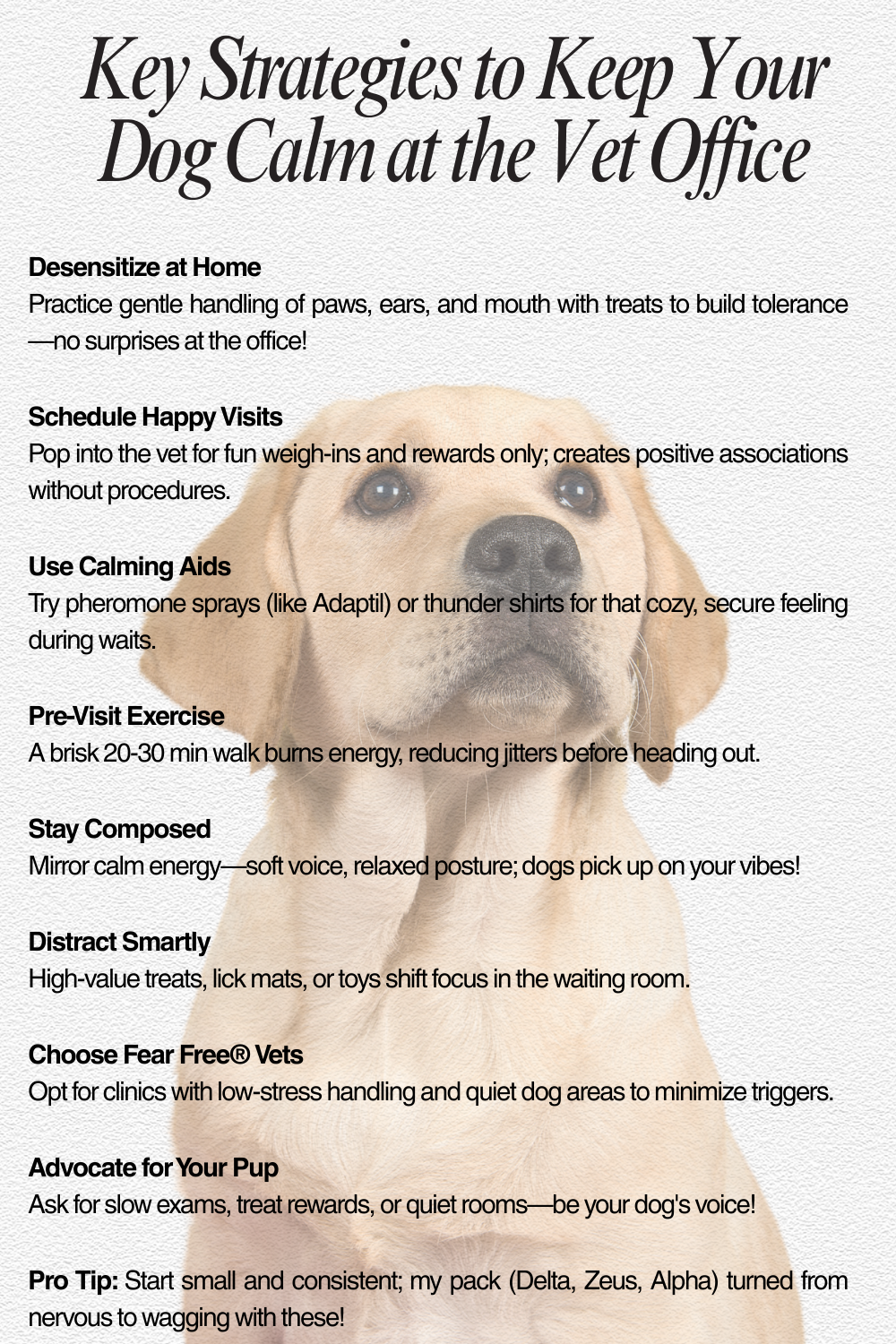
Reducing overall stress starts with the journey. Exercise your dog beforehand—a brisk walk burns off excess energy, promoting a calm dog during vet visit. For car rides, acclimate them gradually if motion sickness is an issue; start with short drives to fun places like the park. To keep the stress levels low, you can also give your dog some CBD oil in the dog treats half hour before the vet visit.
In the waiting room, choose a quiet corner away from other animals. Cover carriers for privacy if needed, and use pheromone collars or sprays (like Adaptil) to mimic comforting scents. During the exam, advocate for your dog—ask the vet to go slow or use treats as rewards (Dogs Trust, 2025, Petplan, 2025).
Remember Delta’s story? On a recent visit for his annual shots, I pre-walked him for 30 minutes, and he was noticeably more relaxed, even wagging his tail for the tech.
For a visual summary of these tips, check out this infographic that breaks down key strategies to keep your dog calm at the vet office.
Prepare Dog for Low Stress Vet Appointment: Advance Planning
Preparation is key to having a calm dog during vet visit. Begin weeks ahead with desensitization—simulate exams at home by gently handling paws, ears, and mouth while giving praise and treats. This builds tolerance.
Schedule “happy visits” to the clinic just for fun: Pop in for a weigh-in and treats, no procedures. Many vets encourage this to create positive associations (Adaptil, 2025). For puppies like Alpha, start socialization early—expose them to new people and sounds without overwhelming them (DCC Pets, 2025).
Pack a go-bag with favorites: Blanket from home, toys, and water. Inform staff about your dog’s triggers so they can accommodate, like using a separate entrance.
Calming Strategies for Dogs Scared of Vet
For dogs with deep-seated fears, tailored strategies ensure a calm dog during vet visit. Counter-conditioning pairs scary elements with good things; for example, show a stethoscope and immediately reward (University of Adelaide, 2025).
Muzzle training is underrated—teach it positively so it’s not punitive. Zeus wears one comfortably now for nail clips, reducing everyone’s stress. Natural aids like chamomile tea (vet-approved) or thunder shirts provide compression comfort.
In one scenario, one of my readers shared her rescue dog’s terror of scales. We worked through it by practicing at home on a similar surface with treats, and now the pup steps on willingly.
[Image placeholder: Dog wearing a thunder shirt, looking relaxed]
Make Vet Visits Stress Free for Anxious Dogs: Long-Term Approaches
To truly make vet visits stress-free for anxious dogs, think beyond one trip. Consistent training reinforces calm behaviors. Enroll in obedience classes focusing on relaxation cues like “settle.”
Monitor diet—omega-3s from fish oil can support brain health and reduce anxiety. Regular check-ins with a behaviorist if needed; I’ve consulted one for Alpha’s lingering fears, and it transformed our routine (Yass Vet, 2025).
Millie’s poodle, Pip, went from hiding to greeting the vet after months of these habits. It’s about building trust over time.
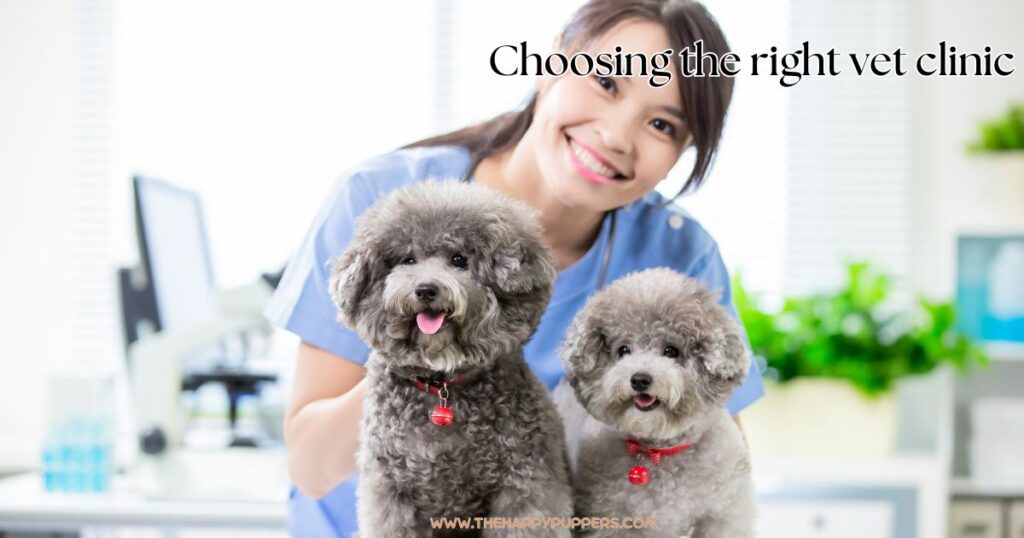
Choosing the Right Vet Clinic: Control the Controllable
One often-overlooked aspect of achieving a calm dog during vet visit is selecting a clinic that prioritizes low-stress environments. As Cornell’s resources emphasize, “control the controllable” by choosing vets certified in Fear Free® practices, which focus on reducing dog fear at vet through gentle handling and positive reinforcement (Vet Cornell).
Look for clinics with separate waiting areas for dogs (to avoid cat encounters, though we’re focusing on dogs here), quiet exam rooms, and staff trained in reading canine body language. Schedule during off-peak hours to minimize chaos. Resources from the American Veterinary Medical Association (AVMA) recommend asking about their approach to anxious pets—many offer pheromone diffusers or treat-based rewards as standard. In my experience with Alpha, switching to a Fear Free® clinic made a huge difference; he now associates visits with play rather than panic. This step can drastically reduce dog fear vet scenarios and promote a dog calm at vet office from the start.
Medications and Supplements: When to Consider Them
Sometimes, behavioral tweaks aren’t enough for a calm dog during vet visit. Vets might recommend anti-anxiety meds like trazodone or gabapentin, given 1-2 hours before. Always try at home to check side effects.
Supplements like L-theanine or CBD (hemp-based, THC-free) offer milder relief. The Chill Protocol uses meds for high-stress pets, improving exam quality (Vickery Place Animal Hospital, VetPlus Global, 2025).
But consult your vet first, do not start self-medicating your dog ever.
Here’s a quick comparison table of common calming aids to help you decide what’s best for your pup:
| Calming Aid | Description | Pros | Cons | Best For |
|---|---|---|---|---|
| Treats (e.g., high-value chews) | Food-based distractions like peanut butter licks or calming chews with chamomile. | Easy to use, no side effects, affordable. | Short-term only, may not work for severe cases. | Mild anxiety during waits. |
| Medications (e.g., trazodone) | Prescription anti-anxiety drugs administered before visits. | Effective for high stress, vet-prescribed. | Potential drowsiness, requires trial run. | Severe fear or aggression. |
| Pheromones (e.g., Adaptil collars) | Synthetic scents mimicking mother dog comfort. | Non-invasive, long-lasting (up to 30 days). | Variable effectiveness, scent-based. | General unease in new environments. |
Expert Quotes: Insights from Veterinary Professionals
As Dr. Katherine Houpt from Cornell University notes, “Creating positive associations through ‘happy visits’ and practicing handling at home can significantly reduce stress, allowing for better veterinary care without fear escalating into aggression”.
From the AKC, expert advice emphasizes: “Preparing your dog in advance with desensitization can turn a stressful event into a positive one”.
And from VCA Hospitals: “Reducing fear of veterinary visits involves recognizing signs early and using counter-conditioning to build trust”.
These insights reinforce the importance of tailored, evidence-based approaches.
Real-Life Scenarios: Lessons from My Pack and Readers
Zeus’s first calm dog during vet visit came after I desensitized him to the car by associating it with park trips. Now, he hops in eagerly.
A reader emailed about her senior beagle who panicked at blood draws. I suggested wrapping him in a familiar blanket and using distraction treats—voila, smoother sails.
Zeus once bolted in the waiting room, but pre-exercise and a calming chew turned him into a model patient. Alpha, being young, responds best to play-based prep, like turning handling into games.
These aren’t rare; they’re everyday wins that prove patience pays off.
Exploring More on The Happy Puppers
At The Happy Puppers, I cover everything a dog parent needs to know—from training and psychology to health and beyond. Check out these six main hubs
This hub is all about fun, hands-on projects you can do at home to enrich your dog’s life without breaking the bank. Think homemade toys, enrichment games, or simple setups to boost mental stimulation. It’s perfect for guardians who love getting creative to keep their pups engaged and happy.
Focused on preventive care, treatments, and overall wellness, this category dives into common health issues, vet advice, and how to spot early signs of trouble. From vaccinations to managing chronic conditions, it’s your go-to for keeping your dog thriving physically.
Here, we decode those quirky habits and behaviors that make our dogs unique—from tail wags to whining. Drawing from canine psychology, we explore why they act the way they do and how to guide them positively. Ideal for understanding and addressing things like fear or excitement.
Explore the traits, needs, and fun facts about different breeds (and mixes like my Delta!). Whether you’re adopting or just curious, this hub helps match lifestyles to breeds and offers breed-specific tips on care, training, and health.
All about keeping your pup looking and feeling their best—from nail trims to coat care. We cover at-home routines, professional services, and how grooming impacts health and comfort, with gentle techniques for sensitive dogs.
Nutrition is key to a happy, healthy dog! This hub breaks down balanced diets, treat ideas, supplements, and how food affects energy, mood, and immunity. We focus on age-specific, breed-tailored advice to fuel your pup right.
Call to Action: Let’s Make Every Tail Wag!
Ready to transform those vet trips? Start today with one tip—like a happy visit or home handling practice—and watch your dog’s confidence soar. Share your stories in the comments; I love hearing from my readers! For more visual demos, subscribe to my YouTube channel, Shruti and Delta, where I film real sessions with my pack. Don’t worry, we are not serious all the time. We have plenty of fun videos for you too. If this helped, sign up for my newsletter for exclusive tips on achieving a calm dog during vet visit. Your pup deserves stress-free care—let’s do this together!

Frequently Asked Questions
Start with home practice: Handle sensitive areas daily with rewards. Use pheromone products and schedule low-key visits to build positivity, ensuring a calm dog during vet visit.
This rule applies to rescues: 3 days to decompress, 3 weeks to learn routines, 3 months to feel secure. It helps manage anxiety by allowing gradual adjustment, useful for vet prep too.
Vets often suggest desensitization, positive reinforcement, pheromone diffusers, and sometimes meds like trazodone. Techniques like Fear Free handling minimize stress.
Yes, but only dog-safe ones like lavender, diluted and vet-approved. Avoid direct application—use diffusers for a subtle calm effect.
Aim for short sessions 3-5 times a week, keeping them fun and under 10 minutes to avoid overwhelming your pup.
Look for vet-approved options like Calming Bites with L-theanine or chamomile-infused treats. Always check for allergies and start with small doses.
Seek AVMA-recommended clinics with Fear Free® certification, quiet facilities, and staff trained in low-stress handling. Read reviews and visit beforehand.
About the Author
Dr. Shruti Bhattacharya is the founder and guiding force behind The Happy Puppers, combining a Ph.D. in Immunology with decades of direct canine care experience. Her passion for the well-being of dogs has taken many forms:
- Academic & Scientific Rigor – Dr. Shruti applies a science-based approach to pet care, enriched by her training in immunology.
- Hands-On Street Work – Over the past 10+ years, she has personally cared for 30+ street dogs, tending to their health, training, and rehabilitation, even as she relocated and continued caregiving with 15 dogs, and currently supports 5 local neighborhood dogs outside her apartment.
- Instinctual Bond with Dogs – From stray pups to fostered companions, even strangers recognize her as a safe and trusted friend to dogs—drawn to her calm presence and empathy.
- Personal Pack – She’s the proud canine mom of Delta, a German Shepherd–Pitbull mix; Zeus, an energetic Labrador mix; and Alpha, a curious Indian pariah pup—each inspiring her mission through their daily lives.
Through The Happy Puppers, Dr. Shruti shares science-backed advice, empathetic insight, and evidence-based tips designed to empower dog guardians worldwide. The purpose of this is to blend real-world experience with academic expertise, helping every dog feel safe, loved, and thriving.

Follow me on:
Disclaimer
This content is for informational purposes only and not a substitute for professional veterinary or grooming advice. Consult a veterinarian for specific dietary concerns.
References
- Dogs Trust, 2025. How to help your dog stay relaxed at the vets.
- IAPWA, 2025. 8 tips for calming your pet during vet visits.
- Vickery Place Animal Hospital, 2025. How to Keep Your Pet Calm During Vet Visits: The Benefits of a Chill Protocol.
- Autumn Trails Vet, 2025. How to Keep Your Pet Calm During Vet Visits: Tips for Charlottesville Pet Owners.
- Lone Tree Vet, 2025. How to Help Your Dog Stay Calm During Vet Visits.
- Cornell University College of Veterinary Medicine, 2025. How to make veterinary visits less stressful for dogs.
- VCA Hospitals, 2025. Reducing Fear of Veterinary Visits for Dogs.
- PDSA, 2025. How to keep your pet calm at the vet.
- Yass Vet, 2025. How to Help Your Dog or Cat with Anxiety at the Vet.
- AKC, 2025. How to Make Vet Visits Stress-Free.
- Adaptil, 2025. How to Prepare Your Dog for the Vets: Happy Dog Expert Explains.
- DCC Pets, 2025. Top Tips to Prepare Your Puppy for a Stress-Free Vet Visit.
- University of Adelaide, 2025. My Dog is Scared of the Vet.
- Petplan, 2025. Keep Calm: Your Pet’s Vet Visit.
- VetPlus Global, 2025. How to Prepare for a Vet Visit: Tips for a Stress-Free Trip.
- Cornell University College of Veterinary Medicine, 2024. How to make veterinary visits less stressful for dogs.
