
Last Updated On: Janury 21, 2026
Hey there, fellow dog lovers! If you’re considering adding a fluffy bundle of joy to your family, you’ve probably stumbled upon toy poodles. These little dynamos are more than just adorable—they’re smart, loyal, and full of personality. As someone who’s passionate about helping dog parents navigate the world of breeds, I’ve put together this in-depth guide to toy poodles. Whether you’re curious about their smarts, how they bond, or the best ways to care for them, I’ve got you covered. Let’s dive in and explore why toy poodles might just be the perfect fit for your home.
Toy poodles have captured hearts for generations, and it’s easy to see why. They’re the smallest variety of the poodle breed, known for their curly coats and lively spirits. But before we get into the details, a quick note: this guide draws from reliable sources like the American Kennel Club, which describes toy poodles as agile and graceful companions (American Kennel Club, 2026).
Topics covered in this blog post
Quick Answer Box: Toy Poodles at a Glance
If you’re short on time but curious about Toy Poodles, here’s a quick summary of key facts from our ultimate guide. These smart, fluffy companions are perfect for dog guardians seeking affection in a small package. Dive deeper below!
- Are Toy Poodles Good Companions? Yes! They’re affectionate, adaptable, and thrive in apartments—ideal for singles, families (with gentle kids), or seniors. Expect loyalty and playfulness, but provide mental stimulation to avoid boredom.
- What Rank Is a Poodle in IQ? #2 overall (per Stanley Coren)—Toy Poodles are quick learners, excelling in tricks and obedience. Puzzle toys keep their sharp minds engaged.
- Do Toy Poodles Get Attached to One Person? Often yes, earning the “velcro dog” nickname. They bond deeply but can love the whole family with early socialization—watch for separation anxiety.
- Is a Male or Female Toy Poodle Better? No clear winner! Males are more playful; females more independent. Choose based on personality—spay/neuter both for health benefits.
- What Is the 3-3-3 Rule with Dogs? A rescue/adoption guide: 3 days to decompress (overwhelmed phase), 3 weeks to settle (personality emerges), 3 months to bond fully (routine established). Patience is key!
What Makes Toy Poodles Stand Out?
Toy poodles trace their roots back to Germany, where larger poodles were bred as water retrievers. Over time, breeders downsized them for companionship, and by the 18th century, toy poodles were circus stars thanks to their tricks and athleticism. Today, they’re beloved for blending brains with beauty. Unlike some small breeds that can be yappy or fragile, toy poodles are sturdy and versatile, often participating in dog sports like agility despite their size.
Their history isn’t just fascinating—it’s practical. Originally water dogs, toy poodles retain a love for swimming, which can be a fun way to exercise them. If you’re near a lake or pool, consider incorporating water play into their routine for both fun and fitness (WAF, 2022).
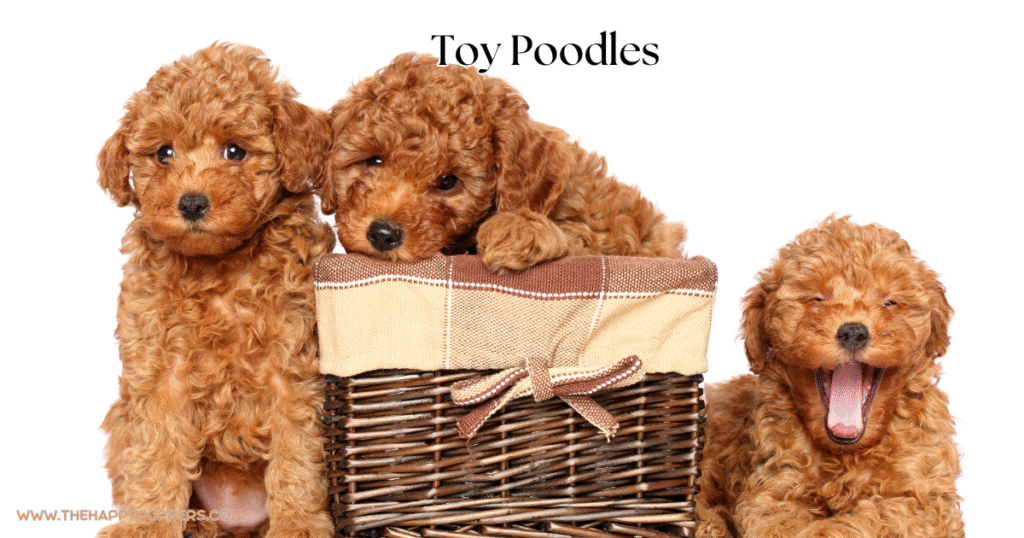
In terms of appearance, toy poodles sport that signature curly, dense coat that comes in colors like black, white, apricot, and red. They’re hypoallergenic-ish—meaning they shed minimally, which is a win for folks with mild allergies. But remember, no dog is 100% hypoallergenic; it’s always smart to spend time with one first. Allergies can vary, so testing with a visit to a breeder or rescue is key (Be More Bob, 2025).
Toy Poodle Colors and Coat Variations
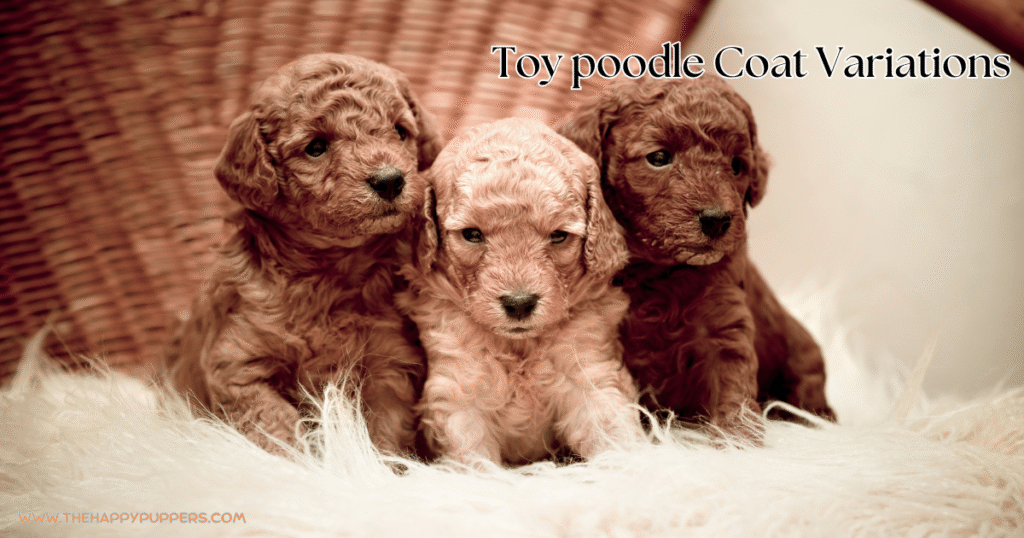
These fluffy fashionistas come in a rainbow of hues, influenced by genetics that can make each pup unique. Toy poodles’ coats are a genetic masterpiece, governed by loci like A (agouti for patterns), B (brown dilution), D (dilute for blues/silvers), and E (extension for reds). According to AKC standards, solids are preferred for shows, but patterns add flair for pets. Colors can fade with age (e.g., apricots lightening), and recessives might surprise in litters—always opt for DNA-tested breeders to avoid health-linked issues like skin sensitivities in dilutes.
Toy poodle colors chart
| Color/Pattern | Description | Genetic Notes | Care Tips & Health Insights |
|---|---|---|---|
| Black | Deep, glossy black; no fading. | Dominant B (non-brown), D (non-dilute); may carry recessives. | UV can cause rusting—use dog-safe sunscreen; links to strong health but test for von Willebrand’s. |
| White | Pure, creamy white; bright and clean. | Recessive ee (red restriction) + dilutions; often from faded creams. | Prone to tear stains—daily eye wipes; sensitive skin needs hypoallergenic products. |
| Apricot | Warm orange-red; may fade to cream. | ee red + modifiers; common in toys. | Fading normal—omega-3 supplements maintain vibrancy; monitor for allergies. |
| Red | Bold, mahogany red; holds intensity. | ee red; pheomelanin dominant. | Rare liver issues—vet checks key; high-protein diet enhances color. |
| Brown (Chocolate) | Rich brown tones, from light to dark. | bb brown; can dilute to cafe. | May fade—antioxidant-rich food helps; dental care crucial. |
| Cafe au Lait | Milky brown; soft and warm. | bb brown + dd dilute. | Skin dryness possible—moisturizing shampoos; cold-sensitive. |
| Blue | Steel gray-blue; born black, fades. | dd dilute on black base. | Allergies in dilutes—gentle grooming; test for dilute-related myopathy. |
| Silver | Light metallic gray; gradual fade. | dd dilute + time; born black. | Eye checks for PRA; winter coats recommended. |
| Cream | Pale yellow/off-white; subtle elegance. | ee red + dd dilute. | Sunburn risk—protective clothing; great for hypoallergenic homes. |
| Silver Beige | Soft beige-gray; diluted cafe. | bb brown + dd dilute + modifiers. | Rare—genetic testing advised; coat oils prevent flaking. |
| Parti | Multi-patch (e.g., black/white); bold. | S locus spotting; recessive. | Show DQ but pet fave—no health ties, but whites need sun care. |
| Phantom | Tan points on solid (like Rottweiler). | A locus tan points; rare. | Expressive—heart/eye tests; no major color-linked issues. |
| Sable | Dark-tipped hairs; dramatic fade. | Ay sable; often on reds. | Puppy changes—patience with clips; minimal health impact. |
| Brindle | Striped tiger pattern; unique. | K locus brindle; uncommon. | Striking—brushing prevents matting; neutral health. |
Toy Poodle Temperament: Playful and Devoted
When it comes to toy poodle temperament, these pups are a delightful mix of energy and affection (Purina UK). They’re confident, lively, and always up for a game of fetch or a cuddle session (Purina India ). Toy poodles thrive on human interaction and can be a bit reserved with strangers, making them excellent watchdogs despite their size. They’re not overly aggressive, though—proper socialization turns them into social butterflies who get along with other pets and people.
My cousin Millie adopted a toy poodle named Bella a few years back. Bella quickly became the star of family gatherings, charming everyone with her playful antics. But she also showed her devoted side, following Millie around like a shadow. That’s classic toy poodle temperament—loyal to their people while keeping things fun. Readers often share similar stories, such as how their toy poodle senses their moods and offers comfort, highlighting its empathetic nature.
Toy poodles’ temperament also makes them great for therapy work. Their alertness and gentleness suit visits to hospitals or schools, where they bring joy without overwhelming the sick.
Toy Poodle Size, Lifespan, and Looks
Toy poodles are compact, standing no taller than 10 inches at the shoulder and weighing 4 to 6 pounds. This makes them ideal for apartment living or homes without big yards. As for toy poodle lifespan, they often live 10 to 18 years, which is impressive for a small breed. With good care, many reach their mid-teens in great shape, outliving some larger breeds due to fewer joint strains (Scrumbles).
Their build is elegant, with a square frame and proud carriage. Coats can be clipped in styles like the puppy cut for easy maintenance or the fancy Continental for shows. Fun fact: That curly coat isn’t just for looks—it originally protected them in cold water during hunts. Modern clips keep them comfortable in various climates, and some owners opt for creative styles like the Miami clip for a sporty vibe.
Amazing Companions
Toy poodles make fantastic companions. They’re affectionate without being clingy, and their size means they can tag along almost anywhere—from coffee shops to road trips. Whether you’re a busy professional needing a low-key buddy or a retiree looking for a lap dog with spunk, toy poodles fit the bill. They’re great for singles or families, as long as kids are gentle—these pups don’t tolerate rough play.
Take Millie’s experience: Bella has been her constant companion through moves and life changes. On tough days, Bella’s playful energy lifts spirits, proving toy poodles aren’t just pets; they’re emotional support superstars. If you’re seeking a dog that bonds deeply and adapts to your lifestyle, toy poodles shine here. Many readers share how their toy poodle helps with anxiety, acting as a natural mood booster.
Toy Poodle Intelligence: What Rank Is a Poodle in IQ?
Poodles, including the toy variety, rank second in dog intelligence according to Stanley Coren’s “The Intelligence of Dogs.” That’s right behind Border Collies! This high IQ means toy poodles pick up commands quickly—often mastering tricks in just a few sessions. They’re adaptive learners, excelling in obedience, agility, and even therapy work (Coops and Cages, 2026).
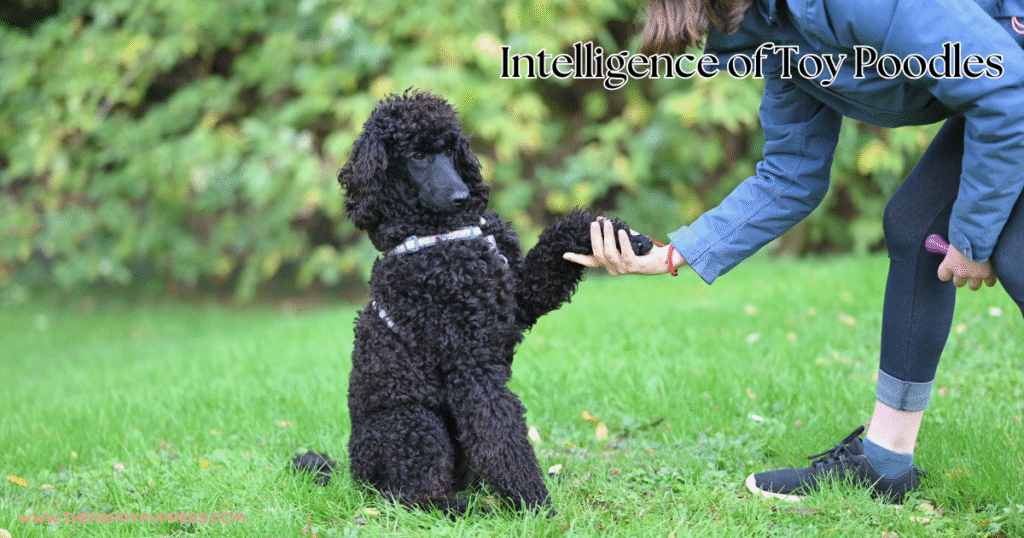
Why does this matter? A smart dog like a toy poodle needs mental stimulation to stay happy. Without it, they might get bored and bark or chew. Millie swears by puzzle toys for Bella; it keeps her sharp and prevents mischief. If you’re into training, toy poodles will keep you on your toes with their eagerness to please. Incorporate games like scent work or obedience rallies to channel their brains effectively (Potty Buddy, 2024).
Do Toy Poodles Get Attached to One Person?
Yes, toy poodles often form strong attachments to one primary person, earning them the “velcro dog” nickname. This loyalty stems from their poodle psychology—they’re people-oriented and crave close bonds. While they’ll be friendly with the whole family, they might favor the one who feeds, walks, or trains them most.
In real life, Bella latched onto Millie right away, shadowing her everywhere. It was sweet, but Millie had to work on independence training to avoid separation anxiety. If you’re a solo guardian, this attachment is a bonus; for families, encourage group interactions early to balance things out. Techniques like rotating who handles walks can help distribute bonds.
Male vs Female Toy Poodle: Which Is Better?
There’s no clear winner between male and female toy poodles—it boils down to personality and your preferences. Males tend to be more outgoing and playful, always ready for attention. Females might be a tad more independent and quicker to house-train. Both can be affectionate, but spaying or neutering helps curb any hormonal behaviors like marking.
Millie chose a female, and Bella’s calm independence suits her lifestyle perfectly. A friend of hers has a male toy poodle who’s a total goofball, entertaining the kids nonstop. Bottom line: Meet the pup and see the vibe, regardless of gender. Individual temperament trumps generalizations, so observe interactions during visits.
Understanding the 3-3-3 Rule with Dogs
The 3-3-3 rule is a handy guideline for adopting dogs, including toy poodles, to manage expectations during adjustment.
- First 3 Days: Your new pup might be overwhelmed—hiding, not eating much, or seeming shut down. Focus on a quiet space and gentle bonding.
- First 3 Weeks: Their true personality emerges as they settle into routines. Introduce basic training and vet check-ups here.
- First 3 Months: They’re fully integrated, with deep bonds formed.
Millie used this with Bella: The initial days were shaky, but by month three, Bella was thriving. It’s a reminder that patience pays off in building a happy home. Apply it loosely for puppies versus adults, adjusting for age-specific needs.
Caring for Your Toy Poodle: From Grooming to Health
Caring for toy poodles is straightforward but requires consistency. Let’s break it down into key areas to ensure your pup stays healthy and happy.
Toy Poodle Grooming Essentials
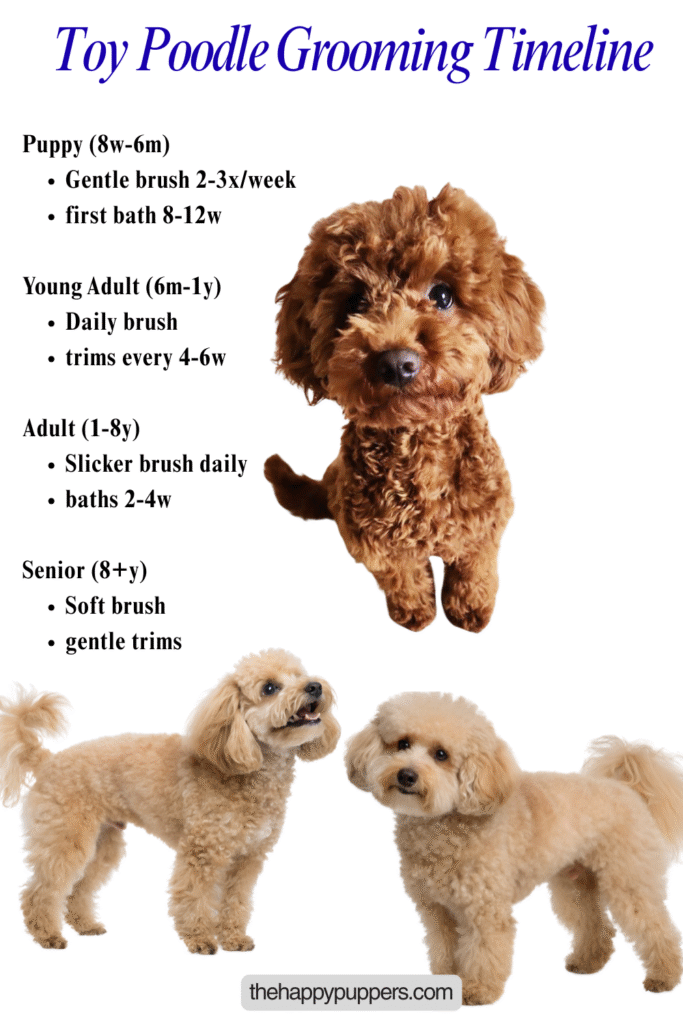
Grooming is key due to their curly coats that mat easily (Royal kennel Club).
- Brush daily to prevent tangles using a slicker brush (DCC Pets, 2026).
- Schedule professional trims every 4-6 weeks to maintain shape (Pooch and Mutt, 2025).
- Bathe every 2-4 weeks with dog-safe shampoo to keep skin healthy.
- Check and clean nails, teeth, and ears weekly to avoid infections (Vets Love Pets, 2025).
Toy poodle shedding is minimal, making them a top choice for those with allergies, but regular grooming prevents any loose hair buildup. Millie learned the hard way when Bella got a small mat; now, grooming is a bonding ritual. For beginners, start with simple tools and build up. See this before-and-after for inspiration on transformations (Pet Konnect, 2024).
Ready to keep your toy poodle’s curly coat in top shape? Download our free grooming timeline printable, outlining stages from puppyhood to senior years with easy checklists and reminders for a mat-free, healthy fur baby.
Exercise and Playtime
Despite their size, toy poodles have moderate energy.
- Aim for 30-45 minutes of daily activity: short walks, indoor fetch, or swimming if possible.
- Mental games like hide-and-seek or agility courses count too, preventing boredom.
Regular play supports their joint health, as noted in 2025 AVMA reports on small breed wellness.
Training Tips
Thanks to their IQ, training toy poodles is a breeze with positive reinforcement.
- Use treats sparingly to avoid weight gain—opt for praise or toys.
- Start with basics like sit and stay, then advance to tricks like roll over or dance.
- Consistency is key; short, daily sessions work best for their attention spans.
For toy poodle training tips for beginners, focus on building trust first—use high-value rewards and keep sessions fun and under 10 minutes to hold their attention. Avoid punishment; instead, redirect unwanted behaviors like jumping with commands like “off.” Incorporate socialization classes early to build confidence.
Harness your toy poodle’s #2 IQ ranking with our beginner-friendly training cheat sheet printable—includes step-by-step basics, progress trackers, and tips to tackle attachment or anxiety for a well-behaved companion.
Nutrition for Optimal Health
Feed high-quality, small-breed food divided into 2-3 meals to maintain energy levels. Puppies need more frequent feeds to prevent low blood sugar (hypoglycemia). Add omega-3s for coat shine—Millie mixes fish oil into Bella’s meals. For more on balanced diets, check AVMA’s pet nutrition guidelines. Avoid table scraps to prevent obesity, a common issue in small breeds.
Common Health Issues in Toy Poodles
Toy poodles are hardy, but watch for:
- Patellar luxation (kneecap slips), affecting mobility (Zigly Pet Care).
- Progressive retinal atrophy (vision loss), genetic and testable (Trupanion, 2025, Sploot, 2024).
- Dental disease due to small mouths—brush teeth regularly (Pedigree, 2023).
- Von Willebrand’s disease (clotting issue), screened via blood tests (HUFT Blog).
Regular vet visits and genetic tests help catch issues early (Medium, 2022). According to PetMD, 2023, ear infections are common due to floppy ears, so clean weekly. As Dr. Alexander England, a veterinarian, notes: “Toy Poodles can be prone to developing joint conditions, which can be painful and affect their quality of life. As per Lyka, 2025 diet rich in real food ingredients with anti-inflammatory properties, like turmeric and ginger, can support their joint health and mobility”.
To make caring for your toy poodle even easier, we’ve created a handy printable checklist that covers everything from monthly grooming to health tracking—perfect for busy dog guardians staying on top of their pup’s needs.
Toy Poodle Puppies: Adorable and Energetic
Toy poodle puppies are tiny fluffballs bursting with curiosity. They weigh just 1-2 pounds at 8 weeks and grow quickly, reaching full size by 9-12 months. Early socialization is crucial to curb shyness and build a well-rounded adult. Look for reputable breeders who health-test parents for genetic issues.
Raising toy poodle puppies involves puppy-proofing your home, starting potty training right away, and providing chew toys to soothe teething. Millie recalls Bella’s puppy phase as chaotic but rewarding—lots of play and short training bursts worked wonders. If you’re searching for toy poodle puppies for sale near me, prioritize ethical sources like rescues or certified breeders via AKC if you are in the US. Avoid online scams by visiting in person.
Puppies require vaccines starting at 6-8 weeks, with boosters every 3-4 weeks until 16 weeks. Monitor for signs of hypoglycemia, like lethargy, and keep small meals frequent.
This comparison highlights why toy poodles need extra care for their petite frames (Pets Best, 2024)
Toy Poodle for Sale: Finding Your Perfect Pup
When searching for a toy poodle for sale, prioritize ethics to avoid supporting unethical breeding. Prices range from $1,000-$3,000 from breeders, but rescues offer great options at lower costs, often $200-$500. Check health clearances for hips, eyes, and blood, and visit in person to see living conditions. Avoid puppy mills—signs include no parent meetings or poor hygiene.
Millie’s advice: Adopt if possible; Bella came from a shelter and has been flawless. For more, explore ASPCA resources on responsible adoption or their guide to finding rescues.
Toy Poodle Cost Breakdown
| Expense | Estimated Annual Cost (USD) |
|---|---|
| Purchase/Adoption | $1,000-$3,000 (one-time; toy poodle price range varies by breeder/location) |
| Vet Visits & Vaccinations | $200-$500 (includes check-ups, spay/neuter) |
| Grooming (Professional + Supplies) | $300-$600 |
| Food & Treats | $200-$400 |
| Toys, Bedding, & Accessories | $100-$300 |
| Training Classes or Tools | $100-$200 |
| Insurance or Emergency Fund | $200-$400 |
| Total First Year | $1,700-$4,500 |
Based on 2025 AVMA data showing average pet spending at $1,700 annually, up $200 from prior years.
Pros and Cons of Owning a Toy Poodle
Pros:
- Highly intelligent and trainable, perfect for tricks and obedience.
- Low-shedding coat, great for allergy sufferers.
- Long lifespan with proper care, offering years of companionship.
- Adaptable to small spaces like apartments.
- Loyal and affectionate, forming deep bonds.
- Versatile in activities, from laps to light sports.
Cons:
- Requires regular grooming to prevent matting and skin issues.
- Prone to separation anxiety if left alone too long—needs company.
- Sensitive to cold weather; may need sweaters.
- Potential for dental and joint issues, requiring vigilant health monitoring.
- Can be vocal if bored or understimulated.
- Higher initial costs for quality breeding and care.
This list helps weigh if a toy poodle fits your lifestyle, balancing joys with responsibilities.
Curious if a toy poodle fits your home? Answer these quick questions on space, grooming, and training. Perfect for dog guardians exploring small breeds—results in seconds!

Toy Poodle vs. Other Small Breeds
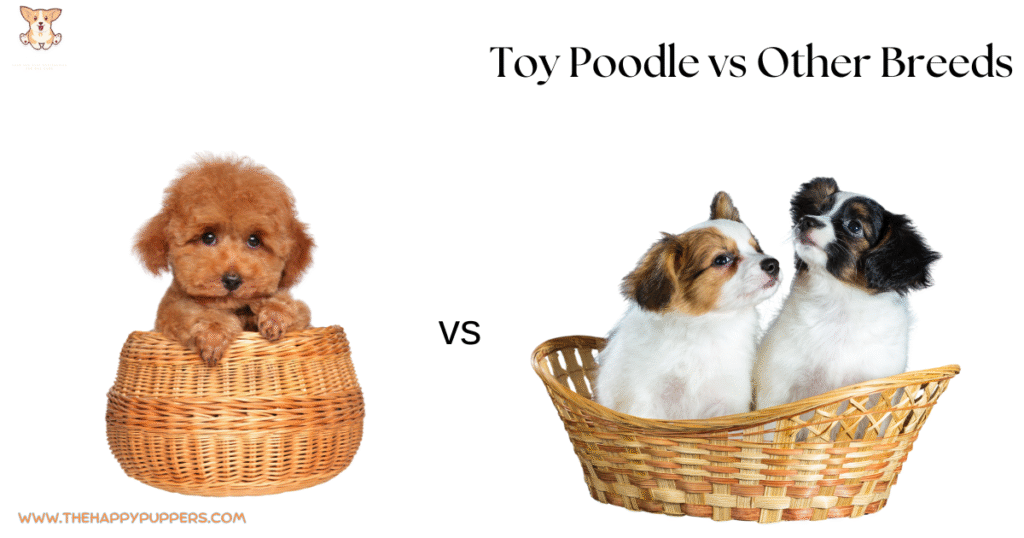
Wondering how toy poodles stack up against similar small breeds? These comparisons can guide your choice based on lifestyle needs.
Toy Poodle vs. Miniature Poodle: A Health and Size Comparison
| Aspect | Toy Poodle | Miniature Poodle |
|---|---|---|
| Size | Under 10 inches, 4-6 lbs | 10-15 inches, 10-15 lbs |
| Lifespan | 10-18 years | 10-18 years |
| Common Health Issues | Patellar luxation, dental problems, eye issues, more prone to fragility | Similar, but less risk of injury due to larger size, epilepsy possible |
| Exercise Needs | Moderate, indoor-focused to protect joints | Moderate, can handle more vigorous play |
| Grooming | High, daily brushing to prevent mats | High, but coat volume may require similar effort |
Toy Poodle vs. Chihuahua: Size, Temperament, Care
| Aspect | Toy Poodle | Chihuahua |
|---|---|---|
| Size | 4-6 lbs, under 10 inches | 2-6 lbs, 5-8 inches |
| Temperament | Playful, intelligent, affectionate | Bold, sassy, loyal |
| Care Needs | High grooming, moderate exercise | Low grooming, low exercise |
| Health | Joint issues, dental, eye problems | Heart problems, hydrocephalus, dental |
| Lifespan | 10-18 years | 12-20 years |
| Trainability | High, eager to please | Moderate, can be stubborn |
For another angle, toy poodles vs. Yorkshire Terriers often comes up—Yorkies are feistier but require similar grooming, while poodles win on hypoallergenic traits.
Toy Poodle Mixes: Popular Hybrids Like Poochons
If a purebred toy poodle isn’t quite the fit, consider toy poodle mixes—often called “doodles”—which blend poodle traits with other breeds for unique personalities. Drawing from similar breeds on sites like (Chewy, 2025), popular mixes include the Poochon (Toy Poodle x Bichon Frise), Maltipoo (Toy Poodle x Maltese), and Cockapoo (Toy Poodle x Cocker Spaniel). These hybrids often inherit the poodle’s intelligence and low-shedding coat, making them hypoallergenic favorites.
Comparison table of key toy poodle mixes:
| Mix Breed | Parent Breeds | Size | Temperament | Characteristics | Health Notes |
|---|---|---|---|---|---|
| Poochon | Toy Poodle x Bichon Frise | 6-12 lbs, 9-12 inches | Charming, energetic, affectionate, loyal, fun-loving | Curly or wavy coat, minimal shedding, playful energy from both parents | Prone to joint issues like patellar luxation; lifespan 12-15 years |
| Maltipoo | Toy Poodle x Maltese | 4-6 lbs, 8-14 inches | Sweet, gentle, affectionate, playful, cuddly | Soft, wavy coat, low shedding, inherits Maltese’s lap-dog vibe | Dental problems common; lifespan 10-15 years, watch for eye issues |
| Cockapoo | Toy Poodle x Cocker Spaniel | 6-19 lbs (toy size smaller), 10-15 inches | Outgoing, friendly, sociable, affectionate, eager to please | Curly or wavy coat, minimal shedding, blends spaniel’s warmth with poodle smarts | Ear infections from floppy ears; lifespan 12-15 years, high trainability |
These mixes, like the Poochon with its bundle-of-energy personality or the Maltipoo’s gentle cuddliness, often appeal to families seeking a hypoallergenic companion with added traits. Always adopt from ethical breeders or rescues, as hybrids can vary widely in appearance and health.
Real-Life Stories: Toy Poodles in Action
Beyond facts, hearing from guardians brings toy poodles to life. One reader shared how their toy poodle, Max, alerted them to a home intruder—proving their watchdog instincts despite the size. Another recounted training their pup for therapy visits, highlighting that high IQ in action at nursing homes.
Millie’s Bella loves hiking short trails, debunking the “fragile” myth. These stories show toy poodles as resilient companions ready for adventure. A blog reader from a bustling city noted how their toy poodle navigates urban life effortlessly, from subway rides to park playdates, emphasizing adaptability.
What Experts have to say about Toy Poodles?
As noted by The Spruce Pets, “Toy poodles are charismatic and intelligent, making them excellent for obedience training but prone to separation anxiety if not properly socialized” (The Spruce Pets, 2025).
Additionally, a veterinarian advises: “Puppies should be fed a diet formulated specifically for puppies or designated for all life stages. For Toy Poodle adults, dental-focused diets may be recommended by your veterinarian to help prevent dental disease” (PetMD, 2025).
Key Statistics on Toy Poodles
In the US, poodles (including toy varieties) ranked #5 in AKC’s 2025 most popular breeds, holding steady with breeds like French Bulldogs at #1 and Labs at #2, with over 10,000 registrations annually (AKC, 2025). Their average lifespan of 14-17 years beats many small breeds, contributing to their appeal.
Health-wise, about 20% may face patellar luxation, per vet surveys. In 2025, US pet owners spent around $1,700 annually on care, up $200 from prior years, per AVMA, with grooming and vet costs driving much of it for breeds like toy poodles (AVMA, 2025). The 2025 AVMA Pet Ownership and Demographics Sourcebook notes stable pet populations, with dogs averaging 1.6 per household and total US dogs at around 89.7 million.

Globally, toy poodles are rising in popularity; in India and other nations like the UK and Australia, urban dwellers favor them for apartment-friendly size and low-maintenance traits, with pet industry growth hitting $900 million in India alone and similar booms elsewhere driven by hybrid demand.
Explore More on The Happy Puppers
At The Happy Puppers, I cover everything a dog parent needs to know—from training and psychology to health and beyond. Check out these six main hubs
This hub is all about fun, hands-on projects you can do at home to enrich your dog’s life without breaking the bank. Think homemade toys, enrichment games, or simple setups to boost mental stimulation. It’s perfect for guardians who love getting creative to keep their pups engaged and happy.
Focused on preventive care, treatments, and overall wellness, this category dives into common health issues, vet advice, and how to spot early signs of trouble. From vaccinations to managing chronic conditions, it’s your go-to for keeping your dog thriving physically.
Here, we decode those quirky habits and behaviors that make our dogs unique—from tail wags to whining. Drawing from canine psychology, we explore why they act the way they do and how to guide them positively. Ideal for understanding and addressing things like fear or excitement.
Explore the traits, needs, and fun facts about different breeds (and mixes like my Delta!). Whether you’re adopting or just curious, this hub helps match lifestyles to breeds and offers breed-specific tips on care, training, and health.
All about keeping your pup looking and feeling their best—from nail trims to coat care. We cover at-home routines, professional services, and how grooming impacts health and comfort, with gentle techniques for sensitive dogs.
Nutrition is key to a happy, healthy dog! This hub breaks down balanced diets, treat ideas, supplements, and how food affects energy, mood, and immunity. We focus on age-specific, breed-tailored advice to fuel your pup right.
Wrapping Up: Is a Toy Poodle Right for You?
Toy poodles pack a lot of personality into a small package—intelligent, loyal, and endlessly entertaining. If you’re ready for grooming commitments and daily play, they’ll reward you with unwavering companionship. Ready to bring home your own toy poodle? Start by researching rescues or breeders today, and remember, the right match makes all the difference. What draws you to toy poodles? Their intelligence? Low shedding? Size for apartments? Affectionate nature? Mention your choices in the comment section below.

Don’t stop here—subscribe to The Happy Puppers for weekly tips on dog care and psychology. And check out my YouTube channel, Shruti and Delta, for fun videos on training and adventures with my pups. Share your toy poodle stories in the comments—I’d love to hear them!
Frequently Asked Questions About Toy Poodles
Yes, toy poodles excel as companions with their affectionate, adaptable nature. They’re ideal for various lifestyles, provided they get mental stimulation and love.
Poodles rank #2 in intelligence among dog breeds, making toy poodles quick learners for tricks and commands.
Toy poodles often bond strongly with one person but can be loving with the whole family through socialization.
Neither is better; males are often more playful, females more independent—choose based on individual temperament.
It’s an adoption timeline: 3 days for decompression, 3 weeks for settling, 3 months for full bonding and routine establishment.
Toy poodles are considered hypoallergenic due to minimal shedding and dander, ranking high among toy poodle hypoallergenic breeds, but no dog is 100% allergy-proof—test with exposure.
Toy poodles typically cost $1,000-$3,000 from breeders, or $200-$500 from rescues, plus ongoing expenses like grooming ($300-$600/year).
No, toy poodles have low shedding thanks to their curly coat, making them suitable for allergy sufferers with regular grooming.
About the Author
Dr. Shruti Bhattacharya is the founder and guiding force behind The Happy Puppers, combining a Ph.D. in Immunology with decades of direct canine care experience. Her passion for the well-being of dogs has taken many forms:
- Academic & Scientific Rigor – Dr. Shruti applies a science-based approach to pet care, enriched by her training in immunology.
- Hands-On Street Work – Over the past 10+ years, she has personally cared for 30+ street dogs, tending to their health, training, and rehabilitation, even as she relocated and continued caregiving with 15 dogs, and currently supports 5 local neighborhood dogs outside her apartment.
- Instinctual Bond with Dogs – From stray pups to fostered companions, even strangers recognize her as a safe and trusted friend to dogs—drawn to her calm presence and empathy.
- Personal Pack – She’s the proud canine mom of Delta, a German Shepherd–Pitbull mix; Zeus, an energetic Labrador mix; and Alpha, a curious Indian pariah pup—each inspiring her mission through their daily lives.
Through The Happy Puppers, Dr. Shruti shares science-backed advice, empathetic insight, and evidence-based tips designed to empower dog guardians worldwide. The purpose of this is to blend real-world experience with academic expertise, helping every dog feel safe, loved, and thriving.

Follow me on:
Disclaimer
This content is for informational purposes only and not a substitute for professional veterinary or grooming advice. Consult a veterinarian for specific dietary concerns.
References
- American Kennel Club. (2026). Poodle (Toy) – Dog breed information.
- American Veterinary Medical Association. (2025b). Evolving pet owner economics: What the data reveal for veterinary teams
- Be More Bob. (2026). Toy poodles complete guide to the tiny yet mighty companion.
- Chewy. (2025). Toy poodle.
- Coops and Cages. (2026). Poodle.
- DCC Pets. (2026). Everything you need to know about raising a poodle in India.
- Gerard, J. (2022). What you need to know before buying a toy poodle. Medium.
- Heads Up For Tails. Toy poodle dog.
- Lyka. (2025). Toy poodle breed guide.
- Pedigree. (2023). Facts every toy poodle owner should know.
- Pet Konnect. (2024). Choosing the perfect companion a guide to toy dog breeds.
- PetMD. (2025). Toy poodle dog breed health and care.
- PetMD. (2023). Types of poodles.
- Pets Best. (2024). Toy poodle dog breed guide.
- Pooch and Mutt. (2025). Toy poodle.
- Potty Buddy. (2024). Toy poodle dog breed information characteristics.
- Purina India. Toy poodle.
- Purina UK. Poodle (Toy).
- Royal Kennel Club. Poodle (Toy).
- Scrumbles. Toy poodle breed guide.
- Sploot. (2024). Everything a toy poodle dog breed parent must know.
- The Spruce Pets. (2025). Toy poodle: Dog breed characteristics & care.
- Trupanion. (2025). Toy poodle dog breed guide.
- Vets Love Pets. (2025). Toy poodle breed guide.
- World Animal Foundation. (2022). Toy poodle.
- Zigly. (2026). Toy poodle.
