


If your dog has just had their first Cytopoint shot (or your vet has suggested one), you’re probably doing what I did: googling “Cytopoint side effects” at midnight while watching your pup sleep. I’m Dr. Shruti, an immunologist (Ph.D.) and mom to Delta, Zeus and Alpha. I’ve cared for more than 30 street dogs over the last ten years, and itchy, allergic skin is one of the most common problems I see.
In this guide I stick to what the official Zoetis label and the European regulator (EMA) actually report: which side effects happen, how rare they are, and the signs that mean you should call your vet straight away. This is information, not a diagnosis. Your vet knows your dog best.
Topics covered in this blog post
Cytopoint Side Effects at a Glance (Quick Answer)
- Most dogs have no side effects from Cytopoint. In the placebo-controlled field safety study of 245 dogs, adverse events were no more common in treated dogs than in the placebo group (Zoetis label via Drugs.com).
- From worldwide reports after approval, these are rare (1–10 dogs in every 10,000 treated): allergic reactions (anaphylaxis, facial swelling, hives), vomiting and/or diarrhea, and neurological signs (seizures, wobbliness/ataxia) (Zoetis US package insert; EMA product information).
- Very rare (<1 in 10,000): immune-mediated disease such as immune-mediated haemolytic anaemia or thrombocytopenia, and injection-site pain or swelling (EMA).
- Emergency signs: facial swelling, hives, trouble breathing, collapse, pale gums or a seizure. Call your vet or an emergency clinic right away.
About Cytopoint
For dogs suffering from atopic dermatitis, there is a new injectable medicine called Cytopoint. Using a monoclonal antibody to target the itching associated with this ailment, Cytopoint offers a focused approach, in contrast to standard drugs that often come with a range of adverse effects.

What is Cytopoint?
Cytopoint is an example of a biologic therapy, which means it is made from naturally occurring substances and modified to combat illness. A monoclonal antibody is the protein that makes it up. The itchiness that dogs with atopic dermatitis feel is thought to be caused in large part by a molecule called interleukin-31 (IL-31), which this antibody neutralizes. Cytopoint provides relief from itching and enhances the quality of life for dogs with IL-31 blockage. (AKC, 2025)
What is Cytopoint used for?
Canine atopic dermatitis
Canine atopic dermatitis is a skin ailment marked by persistent itching, redness, and inflammation; Cytopoint is mostly used to treat this illness. Environmental allergens like pollen, mold, and dust mites can set off atopic dermatitis, which in turn can have a major influence on a dog’s comfort and general health.
Cytopoint can make a world of difference for dogs suffering from this ailment by significantly lowering the itching and other symptoms. Another perk is that it lasts a long time, so dogs can feel better for longer in between injections, which is great news for both dog guardians and vets.
So that you can make an informed decision about this treatment choice for your furry friend, we will go over the possible side effects of Cytopoint, what to watch out for, and how to manage them in the next sections of this blog article.

How Cytopoint helps in Canine atopic dermatitis?
One major step forward in the management of canine atopic dermatitis is Cytopoint, a monoclonal antibody immunotherapy. Interleukin-31 (IL-31), a cytokine essential to the itch signal pathway, is its target and neutralizer, which is why it works so well.
Cytopoint works by entering the bloodstream after administration and binding to IL-31; this stops IL-31 from binding to the receptors on nerve cells. A quick and effective way to alleviate itching is by blocking the transmission of the itch signal to the brain. Cytopoint is a safer alternative to conventional treatments because of its tailored approach, which reduces systemic effects.
How Common Are Cytopoint Side Effects?
Honestly, much less common than most internet forums suggest. Cytopoint (lokivetmab) is a caninised monoclonal antibody, which means it’s built to look like a dog’s own antibody. It doesn’t go through the liver and kidneys the way pills do; it’s broken down like any other protein. That’s one reason the label lists so few side effects.
Regulators use a standard scale: “rare” means more than 1 but fewer than 10 dogs out of every 10,000 treated, and “very rare” means fewer than 1 in 10,000. Every reaction on the Cytopoint label is in one of these two groups (EMA). Rare isn’t never, though, so it’s still worth knowing the signs.
Can Cytopoint Cause Vomiting or Diarrhea?
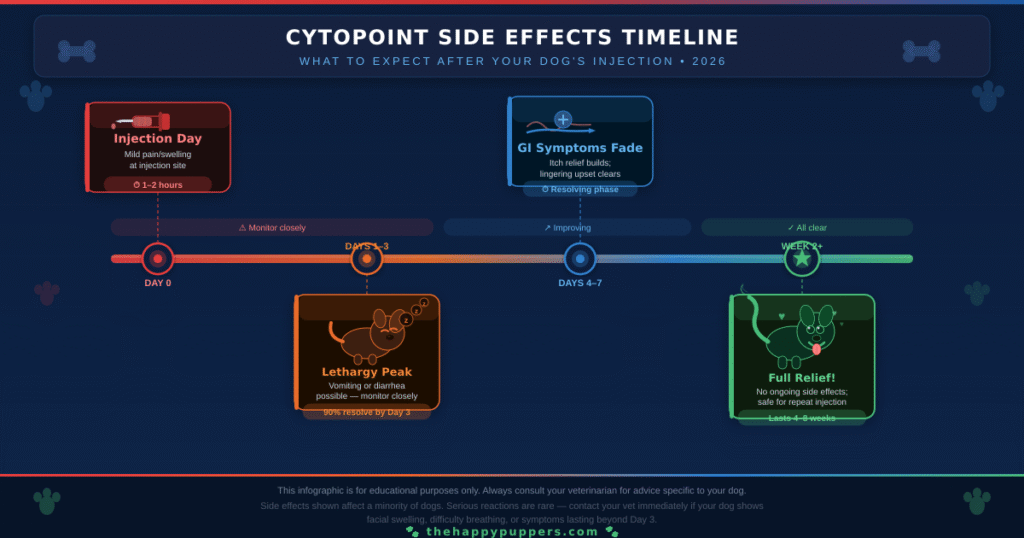
Yes, but rarely. The label lists vomiting and/or diarrhea as a rare event, and notes it may happen as part of an allergic (hypersensitivity) reaction. So if your dog vomits and has a swollen face, hives or breathing changes, treat it as an emergency, not a tummy upset. A single episode in an otherwise bright dog is usually fine to watch at home with water and a bland meal (see my guides on dog vomiting and vomiting and diarrhoea). Repeated vomiting, blood, or a dog who won’t drink needs a vet visit.

Lethargy and Tiredness After the Shot
Some guardians notice their dog is sleepier the day of the injection. Remember the day itself: a car ride, a vet visit, a needle. Many itchy dogs also sleep better once the itching settles. Lethargy isn’t on the post-approval list, but if your dog is weak, wobbly, or has pale gums, that’s not “just tired”. Call your vet.
Allergic Reactions (Facial Swelling, Hives, Anaphylaxis)
This is the side effect I’d most want every guardian to recognise. Signs usually appear soon after the injection:
- swelling of the face, lips, muzzle or around the eyes
- hives (raised bumps under the fur)
- vomiting or diarrhea together with the above
- fast or noisy breathing, pale gums, weakness or collapse
As an immunologist, here’s the simple version: in a few dogs the immune system overreacts to the injected protein. It’s treatable, but quick treatment matters, so go to your vet or an emergency clinic immediately. Many vets ask you to stay a little while after the first injection for exactly this reason.

Can Cytopoint Cause Seizures in Dogs?
Seizures, convulsions and ataxia (wobbly walking) are listed on the label as rare post-approval reports (1–10 in 10,000 dogs) (Zoetis). These are spontaneous reports, so they show the event happened after Cytopoint, not that Cytopoint definitely caused it. If your dog already has epilepsy, mention it to your vet before the shot. If your dog has a seizure after the injection, keep them safe from falls, time the seizure, and call your vet. A seizure lasting more than 5 minutes, or one seizure after another, is an emergency. More here: seizures in dogs.
Immune-Mediated Problems (Very Rare)
In very rare cases (<1 in 10,000), dogs have developed immune-mediated diseases such as immune-mediated haemolytic anaemia (the immune system destroying red blood cells) or thrombocytopenia (low platelets) (EMA). Watch for pale or yellow gums, unusual bruising, dark urine, or sudden weakness.
Can Cytopoint Cause Aggression or Behaviour Changes?
Aggression is not listed as a side effect on the US or EU Cytopoint label. If your dog seems grumpy or irritable after the shot, the more common reasons are pain or soreness, stress from the vet visit, or underlying skin pain (ear infections and infected skin hurt). Don’t ignore it, though: tell your vet, and they can report it to Zoetis. Every report helps keep the safety data accurate.
Long-Term Side Effects of Cytopoint
In a laboratory safety study, dogs received 7 consecutive monthly injections at higher-than-normal doses (3.3 and 10 mg/kg), and Cytopoint was shown to be safe (label). There’s no evidence that Cytopoint causes cancer; I couldn’t find any study or label warning linking the two. The main long-term issue is that it can stop working in a few dogs (next section).
Why Cytopoint Sometimes Stops Working (Anti-Drug Antibodies)
Uncommonly, a dog’s immune system makes antibodies against Cytopoint itself. These may be temporary and harmless, or persistent and make the injection less effective in a dog who used to respond well (Zoetis label). If the itch comes back sooner and sooner, talk to your vet; it may be time to look at other options.
Cytopoint and Apoquel Together: Is It Safe?
In the field safety study, dogs safely received Cytopoint alongside many other medicines, including oclacitinib (Apoquel), steroids, cyclosporine, antihistamines, antibiotics, parasiticides, allergen immunotherapy and vaccines (label). Vets sometimes overlap the two while waiting for Cytopoint to kick in. If a vaccine is given the same day, the EU label advises using a different injection site. Your vet decides whether the combination makes sense for your dog.
Who Shouldn’t Get Cytopoint? (Contraindications)
- Dogs that have had a hypersensitivity reaction to Cytopoint before
- Dogs under 3 kg (EU label)
- Pregnant, lactating or breeding dogs (not tested)
Cytopoint controls the itch but doesn’t cure the allergy. Fleas, food allergy and skin or ear infections still need finding and treating (EMA).
Cytopoint Overdose: What If My Dog Got Too Much?
Cytopoint is given by your vet, dosed by body weight (the US minimum dose is 0.9 mg/lb, or 2 mg/kg), so accidental overdose at home isn’t really possible. In the lab study above, dogs given about 5 times the minimum dose (10 mg/kg) monthly for 7 months stayed safe. If you’re worried about a dosing error, ask your clinic to check the record.
Cytopoint for Food Allergies and Atopy
Cytopoint is labelled for itch from allergic dermatitis (which includes food and flea allergy) and for atopic dermatitis (environmental allergy). Its side effects are the same whatever the cause of the itch. For food allergy, though, the real long-term fix is an elimination diet with your vet. Cytopoint just keeps your dog comfortable meanwhile. Read more on allergic dermatitis and allergies in dogs.
How Cytopoint Works (Mechanism of Action)
When an allergic dog’s skin is triggered, immune cells release a messenger called interleukin-31 (IL-31). It travels to itch nerves and tells the brain “scratch!” Cytopoint is a monoclonal antibody that grabs IL-31 before it reaches the nerve, so the itch signal never arrives. Unlike steroids or Apoquel, it doesn’t damp down the whole immune system; it targets one messenger. Relief usually starts within a day and lasts about 4–8 weeks (the EMA summary reports onset within 8 hours and an effect lasting 28 days).
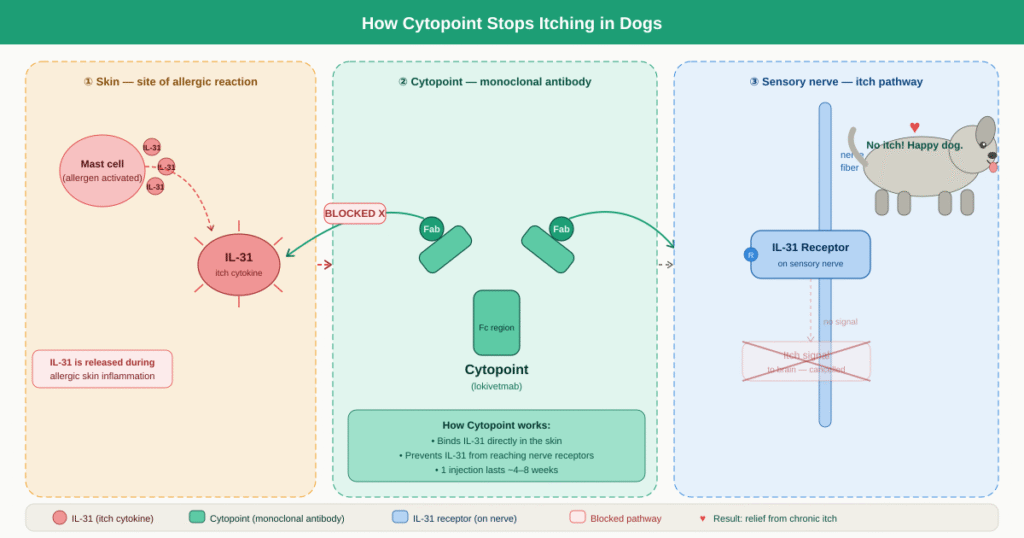
- Skin — a mast cell releasing IL-31 during an allergic reaction
- Cytopoint — the monoclonal antibody (Y-shape) intercepting IL-31 before it can travel to the nerve
- Sensory nerve — the IL-31 receptor left unoccupied, itch signal cancelled
- Happy dog — the end result of Cytopoint doing its job
The Many Advantages of Cytopoint for Dogs
Cytopoint is a promising alternative to conventional methods of treating atopic dermatitis in dogs because of its many useful properties:
- Within one day of dosing, dogs experiencing severe pruritus can begin to feel relief from itching thanks to Cytopoint.
- Because just one injection of Cytopoint lasts for four to eight weeks, dog guardians can save time and effort by not having to treat their pets as often.
- There is less chance of systemic side effects and broader immune suppression with Cytopoint because it targets IL-31 specifically.
- Dogs’ overall health, the healing of skin lesions, and their ability to sleep are all improved when inflammation and itching are reduced.
- Veterinary administration of Cytopoint simplifies disease management for dogs by doing away with the requirement for daily medication.
How This Treatment Compares to Others?
The effectiveness of Cytopoint in treating canine atopic dermatitis should be evaluated in comparison to other standard treatments, including steroids and Apoquel.
Steroids:
- To alleviate inflammation and irritation, steroids effectively inhibit the immune system.
- The provide speedy symptom relief; commonly used for extreme situations.
- Drawbacks include serious adverse effects, including as altered behavior, liver and kidney damage, and an increased vulnerability to infections, can occur with prolonged use. Conditions like Cushing’s disease can develop when steroids impact the adrenal glands.
Apoquel:
- The anti-itch and inflammation drug Apoquel (oclacitinib) works by blocking the action of Janus kinase (JAK) enzymes.
- It can be taken orally and gives fast relief from itching.
- Some dog guardians may find it difficult to provide the medication everyday because of this issue. Infection risk owing to immunological suppression, nausea, vomiting, and diarrhea are some of the possible adverse effects.

Cytopoint
- identifies IL-31 and blocks its signaling to prevent itching.
- Immediate and ongoing alleviation with minimal systemic adverse effects,easy injection administration, and targeted approach that decreases the likelihood of immune suppression.
- Must be administered by a veterinarian, and there is a possibility that certain dogs might have adverse responses or reactions at the injection site.
To summarize, Cytopoint provides an alternative to conventional treatments for canine atopic dermatitis, such as steroids and Apoquel, by providing a novel, focused approach. It is a great alternative for enhancing the quality of life for dogs with this chronic illness because it provides fast and long-lasting relief with little systemic effects.
What to Do After the Injection: My Checklist
- Stay at or near the clinic for a short while after a first injection, if your vet suggests it.
- Note the date and time of the shot.
- Over the next 24–48 hours, check the face, skin, gums and breathing, and watch for vomiting.
- Keep fresh water available and feed normally unless your vet says otherwise.
- Note when the itch improves and when it returns. This helps your vet time the next dose.


When to Call Your Vet Immediately
- Facial swelling, hives, trouble breathing, collapse or pale gums
- A seizure or sudden wobbliness
- Repeated vomiting or diarrhea, or blood in either
- Pale or yellow gums, bruising or dark urine in the weeks after
- No itch relief after a month (the label suggests a second dose can be tried after a month, then considering alternatives)
TIPS FOR DO-IT-Yourself CARE
To alleviate minor adverse effects, it is helpful to provide supportive care at home:
- Make sure your dog drinks enough of water, particularly if they’re sick with the stomach flu or diarrhea. Provide little water regularly.
- When your dog’s digestive system isn’t cooperating, try feeding it bland foods like boiled chicken and rice. Stay away from greasy and rich foods.
- Finding a peaceful and cozy spot to let your dog relax is essential. Make sure to ease up on the exertion until they’re feeling better.
- Keep a careful eye on their condition and make note of any changes in their symptom journal as part of the monitoring process.

Prospective Modifications to the Course of Therapy
To alleviate unwanted symptoms, your dog’s vet may suggest modifying his current treatment regimen:
Adjustments to the Dosage
- If your dog is having negative reactions to Cytopoint, your vet may recommend a reduced dosage to see if it helps with the side effects while still getting the therapeutic benefits for your dog.
Changing the injection frequency could potentially aid in side effect management. - To lessen the likelihood of side effects, for instance, it may be prudent to prolong the time between injections.
Non-Conventional Medicine
- Your vet may recommend other medications including steroids, antihistamines, or Apoquel if Cytopoint is not well-tolerated. This will depend on your dog’s medical history.
- Medicated shampoos, sprays, or lotions used topically to affected areas of skin may alleviate symptoms without causing systemic adverse effects.
- To alleviate symptoms of atopic dermatitis and lessen the need for medication, some people find that changing their diet or taking supplements (such as omega-3 fatty acids) helps.
- One way to control symptoms and cut down on medication is to make changes to your surroundings that limit your exposure to known allergens. This includes things like pollen and dust mites.
If your dog experiences any adverse effects from Cytopoint, the following actions can help you manage them effectively. Keep them comfortable and get the best care possible by working closely with your veterinarian.
Alternatives to Cytopoint If Side Effects Worry You
- Apoquel: Daily pill for itch; monitor infections.
- Natural Options: Omega-3s or turmeric for dogs.
- Allergy Testing: Identify triggers.
Cytopoint Side Effects FAQ
How long do Cytopoint side effects last?
The label doesn’t give a duration. Mild signs like a single episode of vomiting usually pass quickly. Allergic reactions and seizures need a vet straight away, not waiting.
What are the most common side effects of Cytopoint?
Side effects are uncommon. The ones reported most often after approval are allergic reactions (facial swelling, hives), vomiting and/or diarrhea, and neurological signs such as seizures or wobbliness. All are rare (1–10 in 10,000 dogs).
Can Cytopoint cause seizures in dogs?
Seizures and ataxia are listed as rare post-approval reports on the Zoetis and EMA labels. Tell your vet beforehand if your dog has a seizure history.
Can my dog have Cytopoint and Apoquel together?
They were used together safely in the label’s field study. Your vet will decide if your dog needs both.
Does Cytopoint cause aggression?
Aggression isn’t listed on the label. Behaviour changes after a shot are more often pain or stress, but report any change to your vet.
Is Cytopoint safe long-term?
Monthly injections at higher-than-normal doses for 7 months were safe in a lab study. In some dogs, anti-drug antibodies can make it less effective over time.

Conclusion
To sum up, Cytopoint is an encouraging option for the management of canine atopic dermatitis, which improves the quality of life for several dogs by significantly reducing itching. When compared to more conventional medications like steroids and Apoquel, it is a good alternative because to its tailored action mechanism and low systemic adverse effects. Be wary of any adverse effects and keep a careful eye on your dog following administration, as is the case with any medicine.
You can better handle any negative responses if you are knowledgeable about the typical and less common side effects, when to contact your veterinarian, and how to take care of yourself at home. To make sure your dog gets the finest care possible, it’s a good idea to think about possible therapy alterations and look into alternative remedies.
The possible advantages and disadvantages of Cytopoint are brought to light by first-hand accounts from other dog guardians and vets. If you want to know more about your dog’s treatment options, these stories can assist.
Maintaining an open line of contact with your vet is essential for the effective management of atopic dermatitis with Cytopoint. You and your dog can overcome any negative affects and provide your dog the relief they need to live a long, healthy life if you work together. Do not hesitate to contact your veterinarian for individual guidance regarding Cytopoint and your dog’s treatment regimen.
Take Action Now
Feel free to leave a remark below and tell us about your Cytopoint experiences. By sharing your experiences, you may assist other dog guardians in making educated choices regarding their canine’s health. Talk to your vet about your dog’s atopic dermatitis treatment choices and any worries you may have about your pet’s condition.
If you wish to be a proactive dog guardian to your pup, join The Happy Puppers family today! The subscription option is present in the sidebar. If you like watching videos, subscribe to the YouTube channel of The Happy Puppers, Shruti and Delta. Remember to ring the notification bell and set it to ALL so that YouTube does not miss out on notifying you about any future video releases. If you have any queries about this blog post or any other on The Happy Puppers blog, please leave them in the comment section, I will be happy to help
See you in my next blog post
About the Author
Dr. Shruti Bhattacharya is the founder and guiding force behind The Happy Puppers, combining a Ph.D. in Immunology with decades of direct canine care experience. Her passion for the well-being of dogs has taken many forms:
- Academic & Scientific Rigor – Dr. Shruti applies a science-based approach to pet care, enriched by her training in immunology.
- Hands-On Street Work – Over the past 10+ years, she has personally cared for 30+ street dogs, tending to their health, training, and rehabilitation, even as she relocated and continued caregiving with 15 dogs, and currently supports 5 local neighborhood dogs outside her apartment.
- Instinctual Bond with Dogs – From stray pups to fostered companions, even strangers recognize her as a safe and trusted friend to dogs—drawn to her calm presence and empathy.
- Personal Pack – She’s the proud canine mom of Delta, a Basenji mix; Zeus, an energetic Labrador mix; and Alpha, a curious Indian pariah pup—each inspiring her mission through their daily lives.
Through The Happy Puppers, Dr. Shruti shares science-backed advice, empathetic insight, and evidence-based tips designed to empower dog guardians worldwide. The purpose of this is to blend real-world experience with academic expertise, helping every dog feel safe, loved, and thriving.
Learn More…
🏆 The Happy Puppers was named one of the Top 100 Best Pet blogs on Feedspot in 2025.

Disclaimer
This content is for informational purposes only and not a substitute for professional veterinary or grooming advice. Consult a veterinarian for specific dietary concerns.
References
- Zoetis US Cytopoint package insert (rev. 26 Feb 2026): https://www.zoetisus.com/content/_assets/docs/vmips/package-inserts/cytopoint-product-information.pdf
- EMA/EU Cytopoint product information (2023): https://ec.europa.eu/health/documents/community-register/2023/20230804160062/anx_160062_en.pdf
- EMA Cytopoint summary of opinion: https://www.ema.europa.eu/en/documents/smop-initial/cvmp-summary-positive-opinion-cytopoint_en.pdf
- Cytopoint label text (field and lab safety studies): https://www.drugs.com/vet/cytopoint.html
- Michels GM et al. (2016) Vet Dermatol 27:478-e129, dose-determination trial of lokivetmab (cited in the label)
