

Topics covered in this blog post
Remove the dog tear stains under your pup’s eyes and make your pup look even cuter.
I have no doubt that your pup is cute. Honestly, I am yet to meet a pup who is not cute and handsome. However, there is one way you can enhance your pup’s beautiful features. No! I am not talking about coloring your pup’s fur or getting beauty enhancement treatment done for your boy or girl. I am talking about addressing the dog tear stains which develop under your pup’s eyes.
I have heard a common misconception amongst a lot of dog guardians that tear staining only occurs in dogs with light colored fur. However, Delta does not have light colored fur yet he has mild tear stains under his eyes. The primary disadvantage of dogs with light colored fur is that the stains are more visible due to the light color of the fur. However, dog tear stains can seem unsightly and may be the result of a few underlying medical concerns.
Keep reading to understand the causes behind dog tear stains and how to get rid of them easily and effectively.
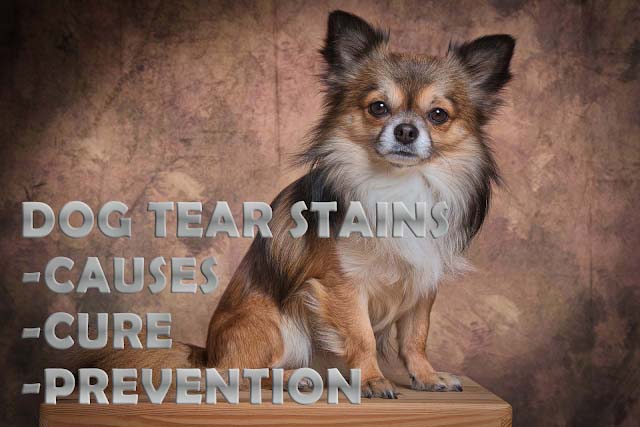
What are dog tear stains?
Dog tear stains also known as eye stains or tear marks generally refer to the occurrence of discoloration or residue left behind by the dog’s eye discharge. Dogs which are prone to have higher eye discharge than others are said to have epiphora or weepy eyes. This behavior is most commonly observed in breeds like Boston terriers, Bulldogs or Pugs.
The tear stains usually look like rusty-red or brown colored stain present on the insides of your pup’s eyes. Such stains may also be found around your dog’s private parts or mouth. The reddish color comes from porphyrins, iron-containing pigments made when the body breaks down old red blood cells. Dogs pass them out in tears, saliva and urine, and they darken in light.
Red stains are generally indicative of a standard tear stain while if the stain looks rusty brown or dark brown in color, it might be indicative of an yeast infection which develops due to the presence of constant moisture and bacteria.
What are the causes behind occurrence of tear stains in dogs?
Now that you know what the tear stains look like, it is time to understand the reasons behind the appearance of the tear stains on your dog in the first place. Tear masks generally occur due to the overabundance of tears streaming down the exterior of your dog’s face instead of passing through the natural channels of the tear ducts. There are a variety of factors which may contribute to this situation occurring in your dog.
My advice would be to consult a vet if it seems that your dog is having excessive tear production. It will help to determine if there is any underlying medical issue causing the problem.
However, a few of the common causes which lead to excess tear production in dogs are as follows:
Medical causes underlying excess tear production in dogs:
Eye or ear infections: Occurrence of eye infection like conjunctivitis also known as ping eye tends to cause excessive watering in both humans and dogs. Thus, never ignore the periodic veterinary checks of your dog.
Allergy and other irritants:
Many common environmental factors like pollen, smoke, dust, seasonal irritants, cleaning products as well as environmental irritants can cause an allergic reaction in your dog. This allergic reaction can lead to excess production of tears from the eyes. Even if there is no involvement of any kind of environmental allergen, your dog’s eyes may try to clean themselves of any dirt or dust leading to epiphora.
Presence of diseases:
Painful eye problems such as glaucoma, ulcers and eyelid problems cause extra tearing, and a blocked tear duct stops tears from draining (click here to know all that you must know as a dog guardian about cataracts in dogs). This leads to production of unnatural discharge and eye tear stains. If you see any sign of your dog displaying glaucoma, consult your vet without any delay.
Scarring:
One of the most common cause behind eye stain is the damage caused by your own dog due to repeated rubbing of the eye if it feels irritated to him or her. This scratching tendency can lead to scarring or the tissue around the eye or the cornea itself. The scarring can cause more irritation and staining. Thus, you must know how to prevent the formation of tear stains in dogs in the first place.
Lack of a good nutritional diet:
We all try to choose the best and the most wholesome diet for our pup. However, commercially available dog food especially those which are of the cheap variant may contain excess amounts of fillers and preservatives, both o which can have an adverse reaction on your pup. You must also carefully monitor the water that your dog drinks. If the water us high in iron, minerals or other contaminants, it can lead to increased formation of eye stains in dogs.
Presence of shallow eye sockets:
Some dog breeds are brachycephalus like Bulldogs, Shih Tzu, Boxers, Pug etc. The dogs belonging to these breeds have broad and short skulls which lead to shallow eye sockets for dogs. The existence of shallow eye sockets indicates that the eyes will take longer and have a harder time draining the tears properly through the eye duct and will cause to excess tearing. This problem increases multifold when such dogs suffer from duct lockage or eye irritation.
Lack of grooming or long hair:
If your dog has long hair around the eye region, the hair may curl up and enter the eyes causing tear production. Long hair also tends to wick the tears away from the eyes of your dog to down the dog’s face. Hair can also cause blockage of the dog’s tear ducts leading to prevention of tear entry into the natural tear duct channels. However, that being said, short hair dogs are also prone to dog eye stains. It does not matter whether your dog has a long or a short coat. To keep the eye stains away, regular grooming is essential and cannot be ignored at any cost.
Presence of inverted eyelids:
This is more commonly seen with dogs possessing shallow eye sockets. This condition is referred to as entropion. In such a condition, the eyelids of the dog tend to fold inwards against the eye. Due to this the eyelashes tend to irritate the cornea, in some cases, even scratch them. Such dogs may also suffer from blocked tear ducts.
Ingrown eyelashes:
Just like humans have the problem of ingrown hair, dogs suffer from the problem of ingrown eyelashes. An ingrown eyelash can cause several problems like block the tear duct or cause a constant general irritation to the eye leading to excess tearing and watering of the same.
Teething: Puppies generally have their puppy teeth come in when they are around 8-10 weeks old. Their adult teeth replace the puppy ones when they are 4 to 7 months old. Many owners notice more tear staining while puppies are teething; it often settles once the adult teeth are in.
How to remove dog tear stains:
Keep the eye as clean as possible:
Try and keep the eye area as clear as possible. Clean the eyes early and often times in a day. Do not allow the stain any chance to set in. For this purpose, you can use a good tear stain remover. These normally come in powder, liquid, wipe or in a paste form.
Liquid removers are a great option for softening the crust first and then removing them from your dog’s fur. They are gentle on your dog’s skin. On the other hand, the paste dog eye stain removers are amazing at fighting against the bacteria present in your dog’s rolls and wrinkles. Paste removers are highly recommended for wrinkly dogs like Pugs, Boxers etc. Wipes are the best option for removing the gunk that tends to build around the eye physically. Last but not the least, powder removers are the best option for keeping the face of your dog dry, however they are not really recommended for regular use.
Trim the deep stained regions:
If the tear stains are light, you can just soak and wipe the tear marks to lighten and remove them completely. However, if you are new to this problem, you may have already allowed the stains to set in deep, thus it will be difficult to completely eliminate them. Under such condition, the best route to follow is trim the stained regions and allow new hair to populate the area. This will definitely take time but if you keep cleaning your pup’s face regularly, you will definitely see an improvement in the discoloration over time.
If your pup has a short coat, you won’t need to trim. In this case, just make sure you clean the region everyday to prevent any new stain from coming in and wait for the old hair to shed as per the natural shedding cycle.
Aside from everyday cleaning and grooming, the other manner to eliminate dog tear stains is to prevent them for occurring in the first place. If they don’t occur, there is nothing to get rid of, right? Read on further to fight how you can prevent such stains from occurring on your pup’s face.
Home remedies for dog tear stains:
Many over-the-counter tear stain products haven’t been proven to work, and some can hurt the eyes (VCA). Here’s what’s safe to try at home and what to skip.
What not to use near your dog’s eyes
Skip hydrogen peroxide, bleach, whitening products and anything with tea tree, lemongrass or other essential oils. Hydrogen peroxide can badly damage the eye if it splashes in (VCA), and tea tree oil is one of the most common causes of essential-oil poisoning in pets (Merck). A soft cloth dampened with warm water or saline, or a vet-approved pet eye wipe, is all you need.
Apple cider Vinegar:
Apple cider vinegar is amazing for dogs. You can check out the full benefits of apple cider vinegar for dogs here. You’ll often read that apple cider vinegar in the water bowl prevents tear stains. There’s no research to support it, and vinegar stings if it gets near the eyes, so I don’t recommend it for tear stains.
Coconut oil:
Some owners like coconut oil to keep the fur from soaking up tears, but keep it out of the eyes. It also helps prevent the moisture from soaking into the hair of your dog. Check out the other, super amazing benefits of coconut oil right here.
Probiotics:
There’s some evidence that a daily probiotic may help with tear staining, although it can take a couple of months (VCA). Ask your vet for a dog probiotic rather than relying on yoghurt, which some dogs don’t digest well.
Prevention of the formation of tear stains in dogs:
You must have heard, prevention is always better than cure. Why allow something to happen when it can be prevented in the first place? As I have explained above, the first step to prevent formation of the dog tear stains is to keep cleaning the much as and when you see them. Some level of discharge is to be expected from your dog’s eyes. Thus, cleaning it as soon as possible will prevent it for setting in. To make this task a daily routine have a container of good quality dog eye wipes and clean your pup’s eyes every night before bed time.
There are also other methods which can be used if you wish to prevent the formation of the stains at all:
Improvement in your dog’s diet:
If your dog’s diet is wholesome comprising of real whole food, it will not only help in reducing the tear stains, it will also help to maintain a better health and prevention of the tear stain formation in your dog.
Better food:
Dog tear marks can also be caused by specific items (like over processed food) which are present in commercially available dog diet. Hard water or presence of specific compounds can lead to increased formation of tear stains or even lead to allergic reactions in your pup causing elevated tearing. However, there are a few commercially available dog diets which specifically focus on removal of the tear stains. If you do not wish to switch your dog’s diet to raw (check out the full benefit of the raw dog diet here), you can go for these specific dog diets.
Use treats and food additives focused on reducing tear stains:
There are many dog treats available which focus on reducing tear marks in dogs. Some of these treats and powders contain antibiotics like tylosin, so read the label carefully. You can discuss these options with your veterinarian before you start administering any of these to your beloved pup.
Better the quality of water:
If your dog is facing rusty colored stains, the condition can be made worsened by presence of excessive minerals in your dog’s water. Provide your dog only filtered water for a few weeks and check if that makes any difference to your dog’s tear marks.
Furthermore, make sure that your dog is only drinking water from clean bowls or water sources, Do not allow them to drink from puddles. Also make sure that your dog’s water bowl is clean and does not have any cracks which may be harboring harmful bacteria. Always go for a stainless-steel bowl for your dog’s water dish.
Be extra careful during the allergy season:
Dogs too suffer from allergies, just like humans. Allergies can lead to excessive watering of the eyes. If your pup ran through freshly raked leaves during your walk or romped through a pollen filled field, he or she is likely to have excessive tearing of the eyes a few hours later.
Keep the moist regions dry:
You can use paper towels to absorb the excess water around you dog’s mouth after they finish drinking water to avoid the eater getting accumulated in the folds of your dog’s skin. Keep powders away from the eyes and nose; a dry soft cloth is enough.
Be careful under such conditions. Use an eye rinse and flush out the irritants before they have a chance to instigate the allergic reaction. Consult your vet regarding the best flush for your dog’s eyes.
You can also make homemade dog eye wipes and clean your dog’s eye an folds everyday. Check out two amazing recipes of homemade dog eye cleaners here.
Keep the facial hair short, properly combed and clean:
Keep the facial hair of your dog short can help reduce or prevent staining in two ways:
The stain won’t be able to last long if the hair is regularly trimmed and further, shorter hair is much easier to clean compared to longer ones. As mentioned above, the longer hair can be harder to get rid of tear marks.
Once your vet has ruled out an eye problem, tear stains are usually a cosmetic issue. You don’t want your dog to get hurt treating something that is so minor. Thus, always be wary of few treatments which can cause more harm than good to your pup.
Antibiotics:
As I mentioned above, dog tear stains are a very minor problem, mostly falling in the cosmetic category. It by no means warrants the use of any kind of treatment with antibiotic. Antibiotics can have severe side effects on your dog if overused. Always consult your doctor before administering any antibiotic to your dog like tetracycline or tylosin. Some popular tear stain supplements, including the original Angels’ Eyes, have contained the antibiotic tylosin. In 2014 the FDA sent warning letters to their makers because tylosin isn’t approved for use in dogs or cats (AVMA), and vets no longer recommend low-dose antibiotics because they breed antibiotic-resistant bacteria (VCA). Check the label, and ask your vet before using any tear stain supplement.
Whitening products:
There are commercially available dog products which claim that they can literally whiten your dog’s fur. The guardians who have dogs with white fur might be overjoyed to hear of such a product. However, always consult your veterinarian before buying or administering such product to your dog. These products might contain harsh chemicals or even minor quantities of bleach which can cause irritation and rashes on your dog’s skin. All the products might not even be mentioned on the cover of the ointment.
Some final thoughts:
Most tear stains are a cosmetic issue, but new or one-sided tearing, squinting or colored discharge needs a vet check, because eyelid problems, ulcers, blocked tear ducts and glaucoma can all cause extra tears. Be consistent in clearing your dog’s eyes, provide good quality food and water and all will be well with your dog.
