

Updated on: June 12, 2026
In recent times, coconut oil has gained the reputation of being the most sought-after oil when it comes to a beauty product or healthy living for humans. However, it is not far behind in the canine world either. Dog lovers/parents are diving in and exploring the benefits of coconut oil for dogs.
So the main question: Is coconut oil for dogs a good option?
I’d say, coconut oil for dogs is Pandora’s box of goodness. In this post, I have done a comprehensive review of the A to Z benefits of coconut oil and I have come up with 22 ways coconut oil can be a boon in your dog’s life. So read till the end to find out why you should buy that organic coconut oil bottle/jar today itself for your dog.
Topics covered in this blog post
🟢 Quick Answer: Is Coconut Oil Good for Dogs?
Yes — but only in moderation and with your vet’s approval.
Coconut oil can provide real benefits for many dogs, especially when used topically for dry skin, hot spots, cracked paws, and dull coats. Small oral amounts may help with mild constipation, pill hiding, and coat shine. However, it is high in calories and fat, so it carries risks like pancreatitis, weight gain, and digestive upset if overused.
Best Practices (2026 Update):
- Topical use: Safe and most effective for skin/coat issues.
- Oral use: Start with ¼ teaspoon for small dogs, max 1–2 teaspoons depending on size. Always introduce slowly.
- Best type: Virgin, organic, cold-pressed.
- Key Rule: Consult your veterinarian first — especially if your dog has pancreatitis history, is overweight, or has allergies.
Bottom Line: Coconut oil is a helpful occasional tool for many US dog parents, not a daily superfood. When used responsibly, it can be one of the simplest ways to support healthier skin, softer fur, and happier pups.
Coconut oil for dogs, one oil many solutions
As a dog mom who has rescued Delta, Zeus, Alpha, and Archie, I’ve personally used small amounts of virgin coconut oil to help with their occasional constipation (it worked as a gentle lubricant), to coat pills, and to improve their dull coats. The results were noticeable — softer fur and easier digestion days — but I always started tiny and watched closely for each of my kids (dogs).
Coconut Oil Benefits at a Glance
| Use Case | How to Apply | Expected Results (with moderate, monitored use) |
|---|---|---|
| Dry skin / hot spots | Thin layer topically 1–2x per week, rinse after 10–15 min | Softer skin, reduced itching, better moisture |
| Dull or dry coat | Small oral dose in food + occasional topical | Shinier, softer fur; less matting |
| Paw pad care | Rub small amount on clean pads | Softer pads, protection from hot/cold/dry surfaces |
| Mild digestive support | Tiny oral amount mixed in meals | May ease mild constipation; watch closely for loose stool |
| Brain / senior support | Vet-guided small oral dose | Possible mild cognitive or energy support via MCTs |
What Is Coconut Oil?
Coconut oil is extracted from mature coconuts and is rich in saturated fats (about 90%), especially medium-chain triglycerides (MCTs) like lauric, caprylic, and capric acids. These MCTs are metabolized quickly for energy rather than being stored as fat.
For dogs, always choose virgin, organic, cold-pressed coconut oil to maximize potential benefits and avoid additives.
Safety First: When to Skip Coconut Oil
Before trying coconut oil, understand the risks. Coconut oil is very calorie-dense (around 120 calories per tablespoon) and high in saturated fat, which can cause problems for some dogs (AKC, 2025).
Key risks include:
- Pancreatitis — High-fat foods can trigger inflammation of the pancreas, leading to vomiting, diarrhea, abdominal pain, and lethargy. Dogs with a history of pancreatitis or hyperlipidemia should avoid it.
- Obesity and weight gain — With over 50% of US dogs considered overweight, extra calories from coconut oil can contribute to weight issues if not strictly limited.
- Allergies or skin reactions — Some dogs may experience itching, redness, hives, or worsening of allergies. Topical use can sometimes clog pores or lead to licking and secondary infections.
- Digestive upset — Loose stools, greasy feces, or diarrhea are common when first introduced or overdosed.
According to the AKC, “Long-term feeding of coconut oil can lead to obesity in dogs and even trigger pancreatitis.” PetMD adds that while very small amounts are unlikely to cause issues, regular use in dogs is not recommended (PetMD, 2024).
Vet perspective: Dr. Linda Simon and other AKC experts note that evidence for many claimed benefits remains limited, and any use should be vet-approved.
“While some dogs may benefit from small amounts of coconut oil for occasional skin or coat support, veterinary evidence is mixed and long-term use is generally not advised. Start extremely low, monitor for any side effects like diarrhea or lethargy, and stop immediately if issues appear. This is not a substitute for proper veterinary care.”
— Based on guidance from AKC experts (Dr. Linda Simon, Dr. Jamie Whittenburg) and PetMD reviews.
Always consult your veterinarian before starting coconut oil, especially if your dog has any health conditions, is on medication, or is overweight. Your vet knows your dog’s full history.
🎯 Quick Quiz: Is Coconut Oil Right for Your Dog?
Now that you’ve seen the potential benefits and important safety considerations, let’s make this personal!
Take this quick 8-question quiz to get a personalized score and practical recommendation tailored to your dog. It only takes about 60 seconds.
Instructions: Answer each question honestly and add up your points at the end.

15+ Ways Coconut Oil May Support Your Dog
Skin and Coat Health
When ingested in diet
Natural virgin coconut oil has antibacterial, antiprotozoal, antimicrobial and antifungal properties (Shilling, M., et al. 2013). Thus, it allows the skin to heal from the inside out. Due to the presence of lauric acid, coconut oil also repels and kills fleas (CoCoTherapy, 2026).
When applied topically
- Prevents yeast and fungal contact with your dog’s skin.
- Soothes irritated skin, sting, bites, heals cracked paws, abrasions and hot spots (Innovet Pet, 2025)
- Prevents flaking and adds moisture to the skin.
- Keeps your dog’s nails healthy and strong.
- Keeps the fur smooth, soft and prevents the development of bad odor.
- Can act as a natural detangling agent when dealing with matted fur and tangles.
- Prevent excessive shedding by relieving the itch due to allergy mediated skin conditions.
- Acts as a key ingredient for the DIY dog paw balm (link present in the section of coconut oil for dogs paw pads).
As a moisturizer
Rub a few drops of coconut oil on your hands and pat it on your dog’s fur. Make sure you run your fingers through his/her fur and massage it a little down to the skin. You can also apply coconut oil directly on your dog’s skin and nails once a week.
To treat hotspots in dogs
Apply an even layer of coconut oil on the hotspot region. Make sure that the hotspot area is completely covered. This will keep the area free of bacteria while keeping it moisturized.
To treat mange in dogs
Mange in dogs is caused by infection by parasitic mites. Coconut oil is known to kill mange causing mites and also prevent any new infections from occurring. You can also use coconut oil based shampoos to prevent mites infection in your dog.
Alternatively, you can use 100% virgin coconut oil to lather your dog completely. Take some oil in your fingers and run it through your dog’s coat through the fur to the skin and massage so that the oil sinks into the skin. One tablespoon should be enough to cover your dog completely. Remember to not use too much of oil since this can lead to a buildup of oil on the coat of your dog.
For Fur Health
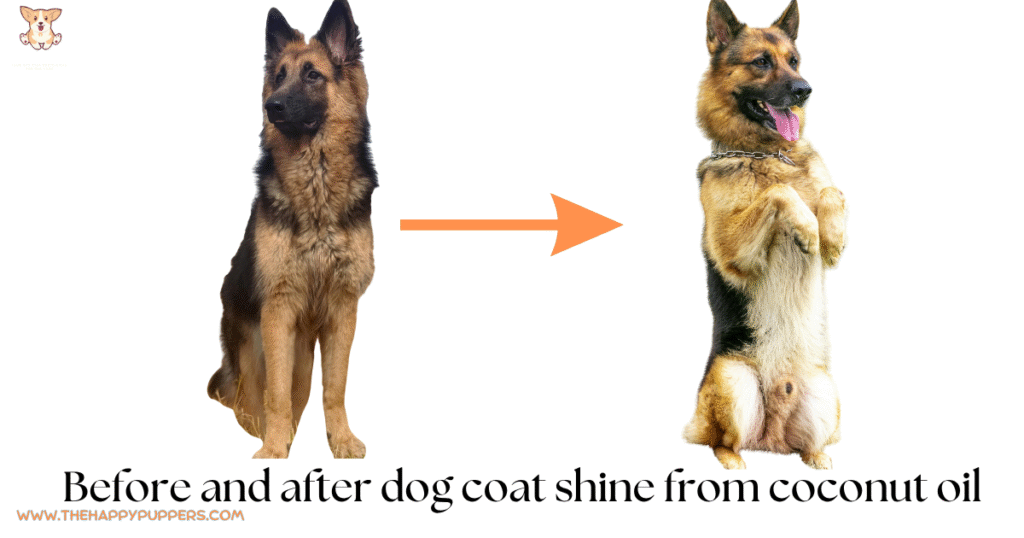
Shinier coat
For humans, there are a ton of products which boost hair shine, reduce frizz, damage control etc. Even though dogs do not need extensive hair care like humans, if it has been a while since their previous trip to the groomers, the coat may look a little dry and dull.
Coconut oil is the easiest hack to bring back the lost shine to your dog’s coat. The lauric acid present in coconut oil has the ability to enter the hair shaft of the dog. This not only improves the appearance of the dog’s coat, it also improves the overall health of the skin and fur.
Remove matting from dogs fur
If you notice matting on your dog’s fur, massage some warm coconut oil on the fur. Warm coconut oil will help loosen up the matting in your dog’s fur. Allow the oil to sit for a few mins before you start to gently brush your dog’s hair to get rid of the tangles.
To prevent shedding
Coconut oil can help reduce excessive shedding in dogs. Even though genetics is the primary reason behind dog’s shedding, shedding can increase if your dog has dry skin and coat. Coconut oil can promote a healthier coat and fur in your dog. It will not completely stop the shedding. However, it will make the shedding levels more manageable.
If you are specifically trying to reduce the shedding, apply a slight amount of coconut oil on your dogs fur. Allow it to sit for 5 mins. Following this, rinse off the excess oil with water and towel dry your dog. This process can be done once every week to reduce the shedding.
Paw and Nose Care
Coconut oil works wonderfully as a natural paw balm for cracked or dry paw pads. Rub a small amount on clean paws to moisturize and protect them from hot pavement, ice, or dry air. For a dry nose, a thin dab of coconut oil can soothe and hydrate the sensitive skin. Many dog parents find it gentle and effective for these areas, though always monitor for licking and use sparingly.
Digestive Support
Recently, Delta faced a severe bout of constipation. Passing stools was very difficult for him and there was also some blood in his stools due to his stools being extremely dry. We started him on coconut oil, and within eight hours of the first dose, he could poop without putting too much pressure on himself. I also don’t have to fear feeding him his vet-prescribed tablets anymore. Simply coat it in coconut oil, and he eats it like a treat. I am so happy that the days of putting the tablet in his mouth and holding him down so that he swallows it are behind me. I wish I had found this sooner.
Virgin coconut oil supplementation influenced fecal consistency in dogs with chronic enteropathy (Vecchiato et al., 2023, Chewy, 2025).
Oral and Dental Care
The antimicrobial properties of coconut oil allow it to prevent harmful bacteria from colonizing your dog’s mouth. Bacteria accumulation in dog’s mouth can lead to periodontitis and gum diseases by the time the dog is a couple of years old. It also helps prevent bad breath.
Coconut oil for fleas
The lauric acid of coconut oil can kill and keep fleas at bay. Brushing your dogs coat with coconut oil should work as a topical flea prevention method (Yumwoof., 2026).
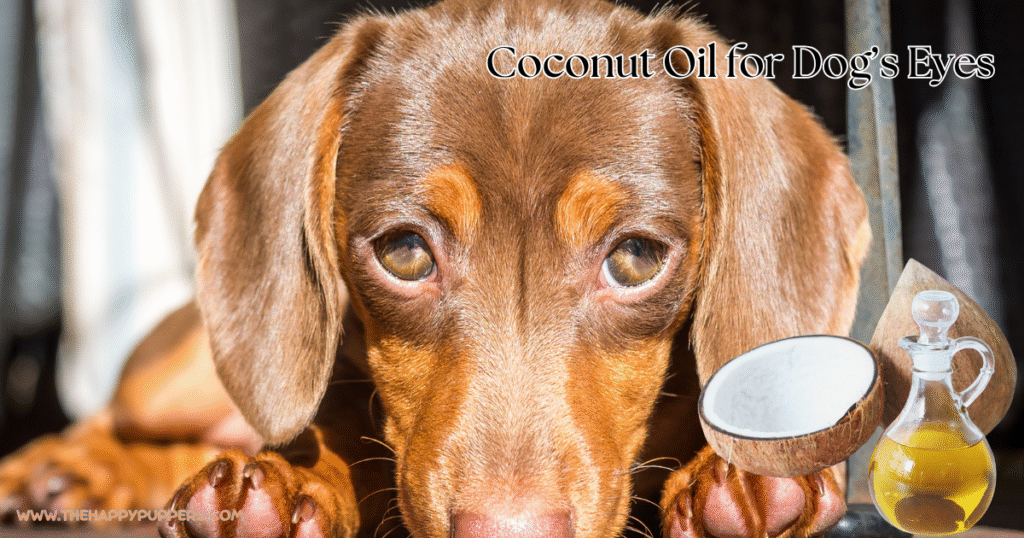
Coconut oil for dogs eyes:
- Coconut oil is the safest option to use around or in your dog’s eyes.
- Coconut oil prevents bacteria and yeast buildup. It also creates a water-resistant layer on the skin to repel deposition of tears. Thus, tears are unable to soak into your dog’s skin.
Coconut oil for dog tear stains:
To remove dog tear stains, massage some coconut oil with a soft lint-free cloth on the stain. If you use a light-coloured cloth, you will see the red or brown buildup collecting on your cloth. You should repeat this twice a day until the stain is gone or you don’t see the stain coming off on the cloth anymore.
Coconut oil for treating small wounds in dogs
As I have mentioned before, coconut oil is rich in antibacterial properties. Applying coconut oil on small wounds and bruises can allow them to heal faster (Green Valley Oils, 2026). Coconut oil works similar to Neosporin. It also keeps the wounds from getting infected.
Coconut oil for ear care
Not only can coconut oil relieve the stress and soothe your dog’s ears, it can also remove and repel ear mites (otodectes Cynotis mites). Coconut oil also helps prevent ear infection in dogs.
Coconut oil for ear mites
If you notice the presence of lesions or dried blood in your dog’s ears, their is a chance that your dog is infected with ear mites. Coconut oil has antibacterial and antiviral properties which makes it the perfect natural remedy for ear mites. coconut oil can also trap the eggs of ear mites, thus preventing any new ear mites from infecting your dog.
For treatment of ear mites, apply a small quantity of coconut oil on the inside of your dogs ears. Do this everyday for a week. If you do not notice any decline in the coffee colored extracts, contact your veterinarian.
Coconut oil as an antioxidant
Free radicals produced by the body tends to cause ageing in animals and humans. These free radicals steal electrons from other molecules of the cells and cause cell death. Cell death causes ageing of the organism. Free radicals are the reasons behind cancer, degenerative eye diseases and a variety of other diseases which can reduce the life of your pup.
Antioxidants are responsible for destroying these free radicals and prevent ageing. Antioxidants give electrons to these free radicals so that they don’t steal the electrons from other cells. Coconut oil, being a rich source of antioxidants, can be very beneficial in preventing ageing in your dog.
Coconut oil for dog’s brain
As per a study done by the National Institutes of Health, dogs belonging to the senior years who were given a diet rich in MCTs showed a significant improvement in their cognitive abilities.
This study shed light on another component present in coconut oil i.e. ketones. Ketones are generated in the body when fats are broken down. Ketones play an important role in improving brain health across several species. When dogs consume coconut oil, the fat present in coconut oil gets converted to ketones. These ketones act as alternative brain fuel keeping your dog sharp and intelligent even during his or her advanced years of life (Pawlicy Advisor, 2025).
Coconut oil for dog seizures
It has been observed that the ketones produced by the oxidation of fats present in coconut oil can reduce seizures in dogs. Another study conducted by NIH found that dogs who were regularly fed coconut oil for a period of three months showed a remarkable reduction in their epileptic episodes.
It is not yet understood as to how ketones reduce epilepsy. However, these results has been observed across several studies. One probable theory is that the brain of such dogs benefit from the presence of an alternative fuel source like ketones. Maybe their brains find it hard to utilize glucose as an energy source, thus the availability of ketones fulfills the energy requirements of the brain and reduces seizures.
Coconut oil for dog constipation:
When consumed in the diet, the triglycerides of coconut oil get converted into monoglycerides and free fatty acids in the digestive tract. These lead to better nutrient absorption and digestion.
The MCTs in coconut oil destabilize the membranes of the harmful bacteria causing bacterial death. The fatty acids especially caprylic acid and lauric acid kill Candida and other harmful organisms without harming the gut-friendly bacteria. Coconut oil has also been observed to heal inflamed tissue and provide lubrication in the digestive tract allowing for easier passage of stools.
Coconut oil for kennel cough:
- Coconut oil, due to its antiviral property is one of the most helpful home remedies for healing kennel cough caused by the Bordetella virus (Canine Craving, 2025).
- Give two teaspoons to your pup daily until the cough is cured.
- Also, if your pup’s appetite is suppressed due to congestion, the fragrant aroma of the coconut oil will get some appetite back.
Amazing herbal remedies for kennel cough in dogs
Coconut oil for dogs joints:
Coconut oil not only relieves pain in case of arthritic dogs, it can also be used to give your pup’s limbs a nice massage after a long walk or hike. Regular use of coconut oil also prevents joint issues and arthritis in senior years.
For dog arthritis
- Regular feeding of coconut oil has been observed to improve mobility and lessen pain in case of arthritic dogs.
- The MCTs of coconut oil has been observed to reverse the ligament damage which is primarily responsible for aggravating the arthritis symptoms.
Arthritis in dogs, the do’s and don’ts for a dog guardian
Coconut oil for puppies
One of the primary concerns of dog guardians regarding coconut oil is that at what age should they start using coconut oil for their dogs? Fortunately coconut oil is a safe natural ingredient for use on puppies as well. By the time the pup is off 4-6 weeks of age (around the time you o bring the puppy home), he or she is ready to get a free kicks of coconut oil on a daily basis.
Other amazing benefits of coconut oil
- Helps balance insulin levels
- Boosts your pup’s immune system
- Helps control body weight
Bonus tip: You can coat your dog’s tablets in coconut oil and offer it to him or her. When presented like this, the tablet is considered and eaten as a treat instead of medicine.
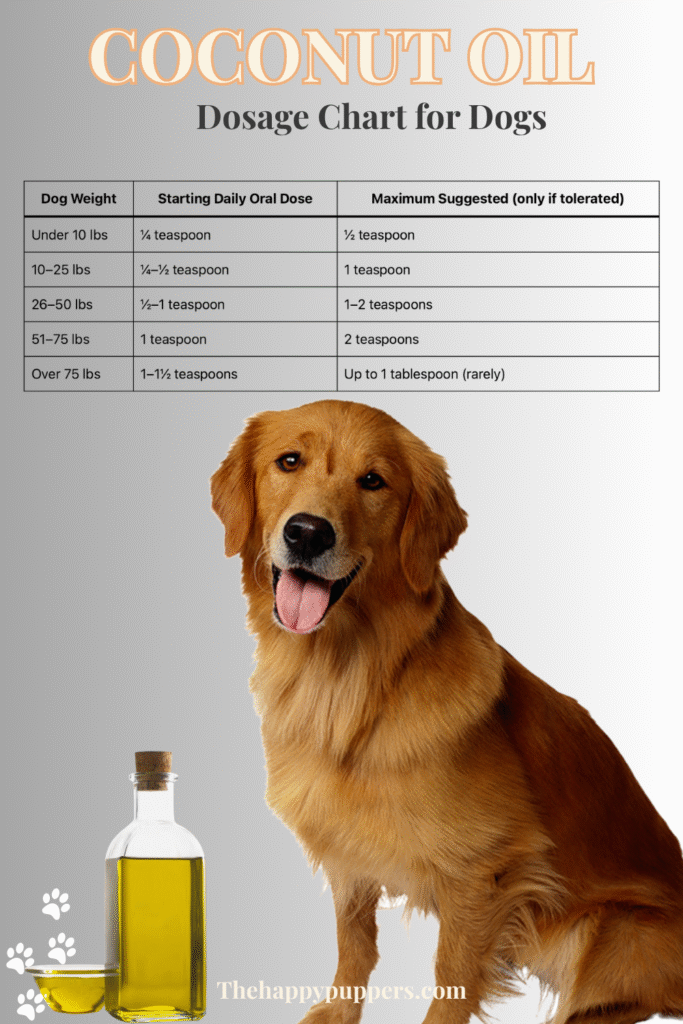
Recommended Dosage for Dogs
Start very small and increase slowly over 1–2 weeks while watching for loose stools.
| Dog Weight | Starting Daily Oral Dose | Maximum Suggested (only if tolerated) |
|---|---|---|
| Under 10 lbs | ¼ teaspoon | ½ teaspoon |
| 10–25 lbs | ¼–½ teaspoon | 1 teaspoon |
| 26–50 lbs | ½–1 teaspoon | 1–2 teaspoons |
| 51–75 lbs | 1 teaspoon | 2 teaspoons |
| Over 75 lbs | 1–1½ teaspoons | Up to 1 tablespoon (rarely) |
How to Use Coconut Oil for Dogs
Coconut oil is solid at room temperature, so gently warm a small amount in your hands or place the jar in warm water until it melts to a liquid or soft consistency. Always start with tiny amounts and watch your dog closely for any signs of stomach upset, loose stools, or skin irritation.
For Oral Use (mixed in food or as a treat)
Scoop a very small amount (start with ¼ teaspoon for small dogs) and mix it thoroughly into your dog’s regular meal. You can also use it to coat pills or tablets — Delta loves taking his medicine this way because it tastes good and slides down easily. Introduce it slowly over several days so your dog’s digestive system can adjust. Never exceed the recommended dosage in the table above without your vet’s okay.
For Topical Use on Skin, Coat, or Hot Spots
Rub a small amount of coconut oil between your palms until it’s warm and easy to spread. Gently pat or massage it into your dog’s fur and down to the skin. For hot spots or dry itchy areas, apply a thin, even layer directly on the affected spot. Leave it on for 5–10 minutes so it can moisturize and soothe, then rinse thoroughly with lukewarm water. If the coat still feels greasy, follow up with a light dog shampoo and rinse again. Many parents apply this once a week for best results without buildup.
As a Conditioner for Shinier Coat
After bathing your dog, apply a small amount of coconut oil to the damp coat while it’s still wet. Massage it through the fur, let it sit for 2 minutes, then rinse lightly. This helps bring back shine and softness, especially if the coat looks dull between grooming visits.
For Removing Matting or Tangles: Warm a small amount of coconut oil and massage it directly into the matted area. Let it sit for a few minutes to loosen the tangles, then gently brush through with a slicker brush or comb. The oil acts as a natural detangler and makes brushing much easier.
For Paw Pad Care and Dry Nose: Clean the paws or nose first, then rub a tiny dab of coconut oil onto the pads or nose. Massage it in well so it absorbs. This creates a protective, moisturizing barrier against hot pavement, ice, salt, or dry indoor air. Reapply as needed, but wipe off excess to prevent slipping or excessive licking.
DIY Paw Balm Option: Mix coconut oil with a little beeswax or shea butter (melt together gently and pour into a small container to cool). Once solid, it makes an easy-to-apply balm that stays on longer than plain oil. This is especially helpful for cracked or rough paw pads year-round.
For Ear Use
Put a small amount of coconut oil on a cotton pad and clean the inside of your dog’s ear canal. You can do this either every day or every alternate day depending on how much your dog’s ear is bothering him/her.
For teeth use
- You can apply some coconut oil to a slightly damp gauze piece or a soft toothbrush and brush your dog’s teeth gently.
- To target bad breath, add a few drops (1-2) of parsley oil to the toothbrush along with coconut oil.
- You can make a home-made pro-biotic mouthwash for your pup by mixing a human pro-biotic capsule supplement with 1 tablespoon of kefir or coconut milk and provide it to your pup as a post-meal supplement.
- Bonus tip: If your dog is not very fond of dental chews and it’s not possible for you to make him or her brush every day, you can coat the dental chew in coconut oil and provide to him or her. Since dog’s love the flavor of coconut oil he/she would love to chew on the chew bone.
Important Tips for Safe Use:
- Always do a small patch test on the skin first and wait 24 hours to check for redness or irritation.
- Wipe or rinse off any excess after application so your dog doesn’t ingest too much through licking.
- Use only virgin, organic, cold-pressed coconut oil.
- If your dog shows any digestive upset, greasy stools, or skin reaction, stop immediately and contact your vet.
These methods are simple, use what you already have at home, and can be a nice occasional addition to your grooming routine when your vet approves.
How to Safely Use Coconut Oil for Dogs
Step-by-step guide on how to safely use coconut oil for dogs, including oral and topical methods, dosage guidelines, and important safety tips.
- Prepare the Coconut Oil
Coconut oil is solid at room temperature. Gently warm a small amount in your hands or place the jar in warm water until it becomes liquid or soft.
- Oral Use (Mixed in Food or as Treat)
Scoop a very small starting amount (¼ teaspoon for small dogs) and mix it thoroughly into your dog’s regular meal. You can also use it to coat pills. Introduce slowly over several days.
- Topical Use on Skin, Coat, or Hot Spots
Rub a small amount between your palms until warm. Gently massage into your dog’s fur and skin. For hot spots or dry areas, apply a thin layer, leave for 5–10 minutes, then rinse thoroughly with lukewarm water.
- Use as Conditioner for Shinier Coat
After bathing, apply a small amount to the damp coat, massage through the fur, let it sit for 2 minutes, then rinse lightly.
- Paw Pad Care and Dry Nose
Clean the paws or nose first, then rub a tiny dab of coconut oil and massage it in well. This creates a protective moisturizing barrier.
- Monitor Your Dog and Adjust
Always do a small patch test first and wait 24 hours. Watch closely for any digestive upset, loose stools, or skin irritation. Stop use and contact your vet if any issues appear.
Explore More on The Happy Puppers
Looking for more ways to care for your dog? Browse our complete guides across all major categories:
- Dog Nutrition – Safe foods, natural supplements, homemade treats & diet tips
- Dog Health – Symptom guides, home remedies, senior care & preventive wellness
- Dog Grooming – Shedding solutions, paw care, ear cleaning & coat maintenance
- Dog Behaviors – Training, anxiety, separation issues & positive reinforcement methods
- Dog Breeds – Breed profiles, temperament guides & lifestyle compatibility
- DIY for Dogs – Homemade toys, enrichment activities, paw balms & natural cleaners
You May Also Like
- Shedding in Dogs: Natural Ways to Manage Excessive Shedding
- Itching in Dogs: Causes, Remedies, and When to See the Vet
- Caring for Dog Paw Pads: Year-Round Protection Tips
- Senior Dog Care: 16 Amazing Tips for Happy Golden Years
- DIY Dog Grooming: Complete Guide for Healthy Skin and Coat

Final Thoughts & CTA
Coconut oil can be a helpful occasional addition for many dogs — especially when used topically for skin, coat, and paw support — as long as it is introduced carefully and with your veterinarian’s approval. As a dog mom to Delta, Zeus, Alpha, and Archie, I’ve personally seen noticeable improvements in coat shine, softness, and overall comfort when using small amounts the right way. However, every dog is unique, and what works wonderfully for one may not suit another.
Important Reminder Always talk to your vet before starting coconut oil. They know your dog’s complete health history and can help you decide if it’s a safe choice for your pup.
Share Your Experience Have you tried coconut oil with your dog? Did it help with dry skin, coat shine, hot spots, or something else? Drop your safe experiences and tips in the comments below — I read every single one and love learning from fellow dog parents!
If you found this guide helpful, feel free to share it with other dog guardians who might benefit.
Want more practical dog care tips? Subscribe to our YouTube channel for weekly videos on natural remedies, training, grooming, and real-life stories with Delta, Zeus, Alpha & Archie: 👉 The Happy Puppers YouTube Channel
Thank you for being part of this community. Wagging tails and happy pups all around! 🐾
Frequently Asked Questions
Coconut oil can be used safely in very small amounts for some dogs, especially topically, but it is not recommended for regular oral use due to risks like pancreatitis and weight gain. Always consult your vet first.
Start with ¼ teaspoon for small dogs and go up slowly. See the dosage table above and never exceed the suggested maximum without vet approval.
Yes, many dog parents apply a thin layer topically to soothe irritated skin and hot spots while adding moisture.
It can, especially in dogs prone to pancreatitis or those who are already overweight, because it is high in calories and fat. Use with extreme caution or avoid oral use.
MCTs in coconut oil may support cognitive function in senior dogs as an alternative brain energy source (Pan et al., 2018).
Yes, a small amount rubbed on clean paw pads can help moisturize cracked pads and provide protection from harsh surfaces.
Virgin, organic, cold-pressed coconut oil is best because it retains more natural compounds.
It may soothe itching caused by dry skin or allergies when applied topically, but it does not cure underlying allergies.
About the Author
Dr. Shruti Bhattacharya is the founder and guiding force behind The Happy Puppers, combining a Ph.D. in Immunology with decades of direct canine care experience. Her passion for the well-being of dogs has taken many forms:
- Academic & Scientific Rigor – Dr. Shruti applies a science-based approach to pet care, enriched by her training in immunology.
- Hands-On Street Work – Over the past 10+ years, she has personally cared for 30+ street dogs, tending to their health, training, and rehabilitation, even as she relocated and continued caregiving with 15 dogs, and currently supports 5 local neighborhood dogs outside her apartment.
- Instinctual Bond with Dogs – From stray pups to fostered companions, even strangers recognize her as a safe and trusted friend to dogs—drawn to her calm presence and empathy.
- Personal Pack – She’s the proud canine mom of Delta, a German Shepherd–Pitbull mix; Zeus, an energetic Labrador mix; and Alpha, a curious Indian pariah pup—each inspiring her mission through their daily lives.
Through The Happy Puppers, Dr. Shruti shares science-backed advice, empathetic insight, and evidence-based tips designed to empower dog guardians worldwide. The purpose of this is to blend real-world experience with academic expertise, helping every dog feel safe, loved, and thriving.
Learn More…
🏆 The Happy Puppers was named one of the Top 100 Best Pet blogs on Feedspot in 2025.

Disclaimer
This content is for informational purposes only and not a substitute for professional veterinary or grooming advice. Consult a veterinarian for specific dietary concerns.
References:
- American Kennel Club. (2025). Coconut oil for dogs.
- Canine Craving. (2025). Benefits of coconut oil for dogs.
- Chewy. (2025). Coconut oil for dogs.
- CoCoTherapy. (2026). How to choose the best coconut oil for dogs and cats – 2026 guide.
- Green Valley Oils. (2026). Can I add coconut oil to my dog’s food?
- Innovet Pet. (2025). Coconut oil for dogs.
- Pan, Y., Landsberg, G., Mougeot, I., Kelly, S., Xu, H., Bhatnagar, S., Gardner, C. L., & Milgram, N. W. (2018). Efficacy of a therapeutic diet on dogs with signs of cognitive dysfunction syndrome (CDS): A prospective, double-blinded, placebo-controlled clinical study. Frontiers in Nutrition, 5, Article 127.
- Pawlicy Advisor. (2025). Can dogs eat coconut?
- PetMD. (2024). Coconut oil for dogs.
- Shilling, M., Matt, L., Rubin, E., Paul, M., Blosser, S., Maupin, K., … & Klein, M. (2013). Antimicrobial effects of virgin coconut oil and its medium-chain fatty acids on Clostridium difficile. Journal of Medicinal Food, 16(12), 1079–1085.
- Yumwoof. (2026). Dog food with coconut oil.
